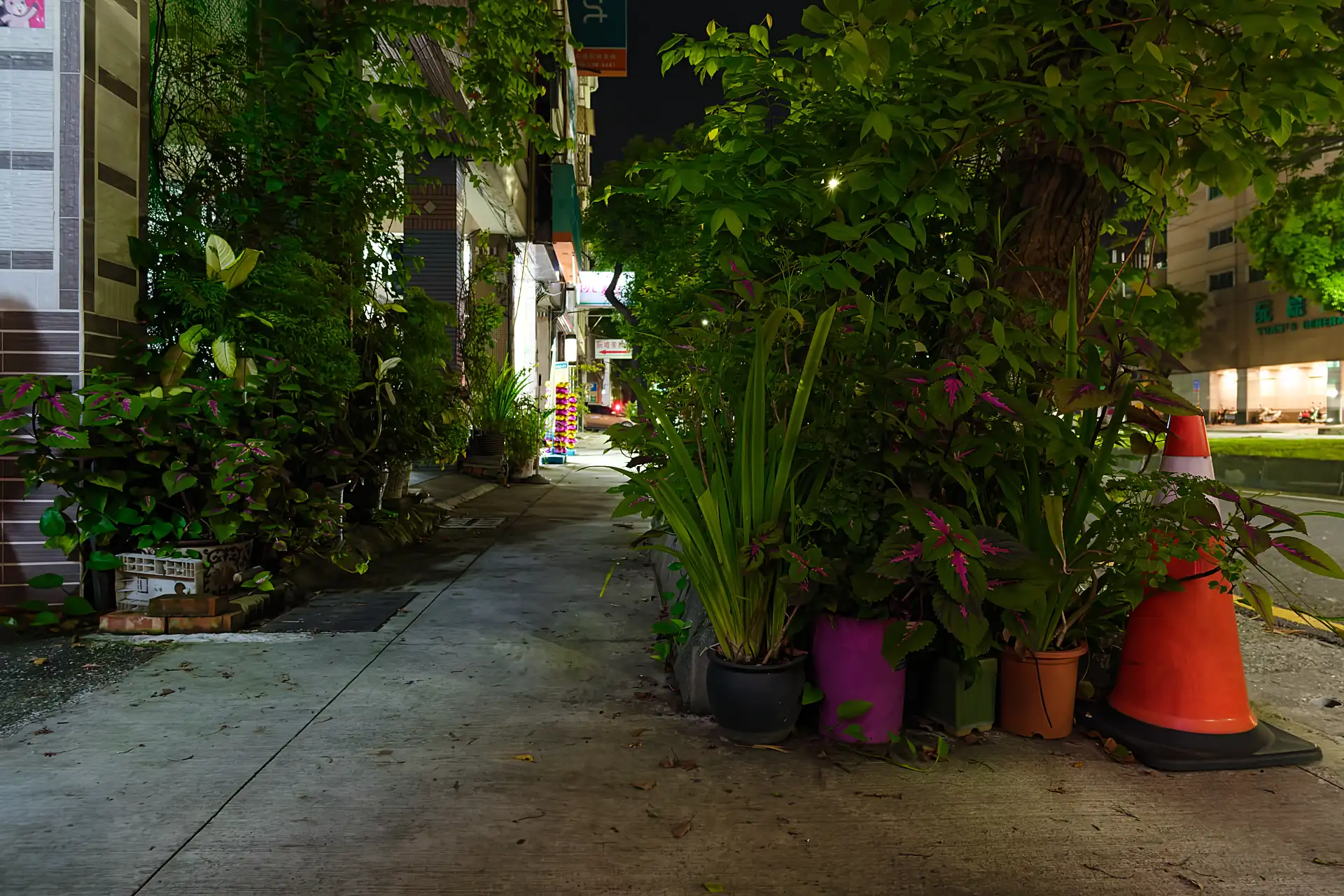
Revisiting the place I lived for my first three years in Taiwan…
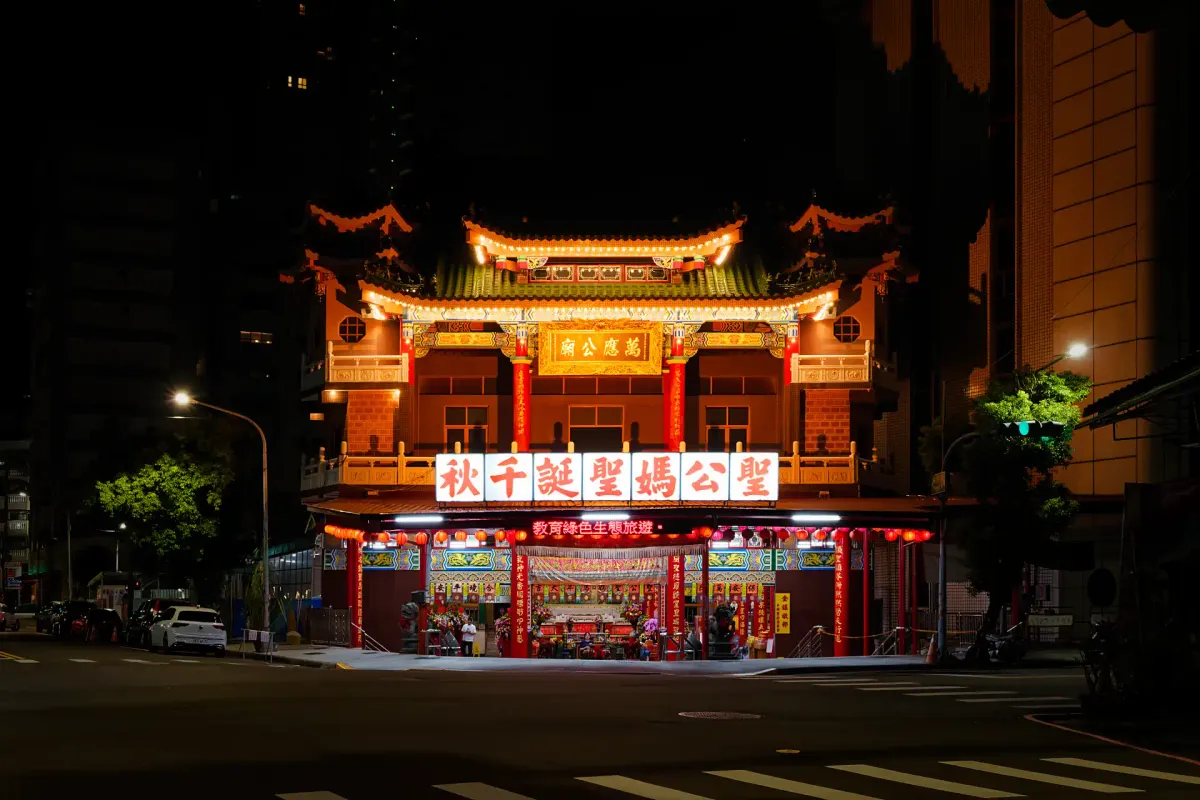
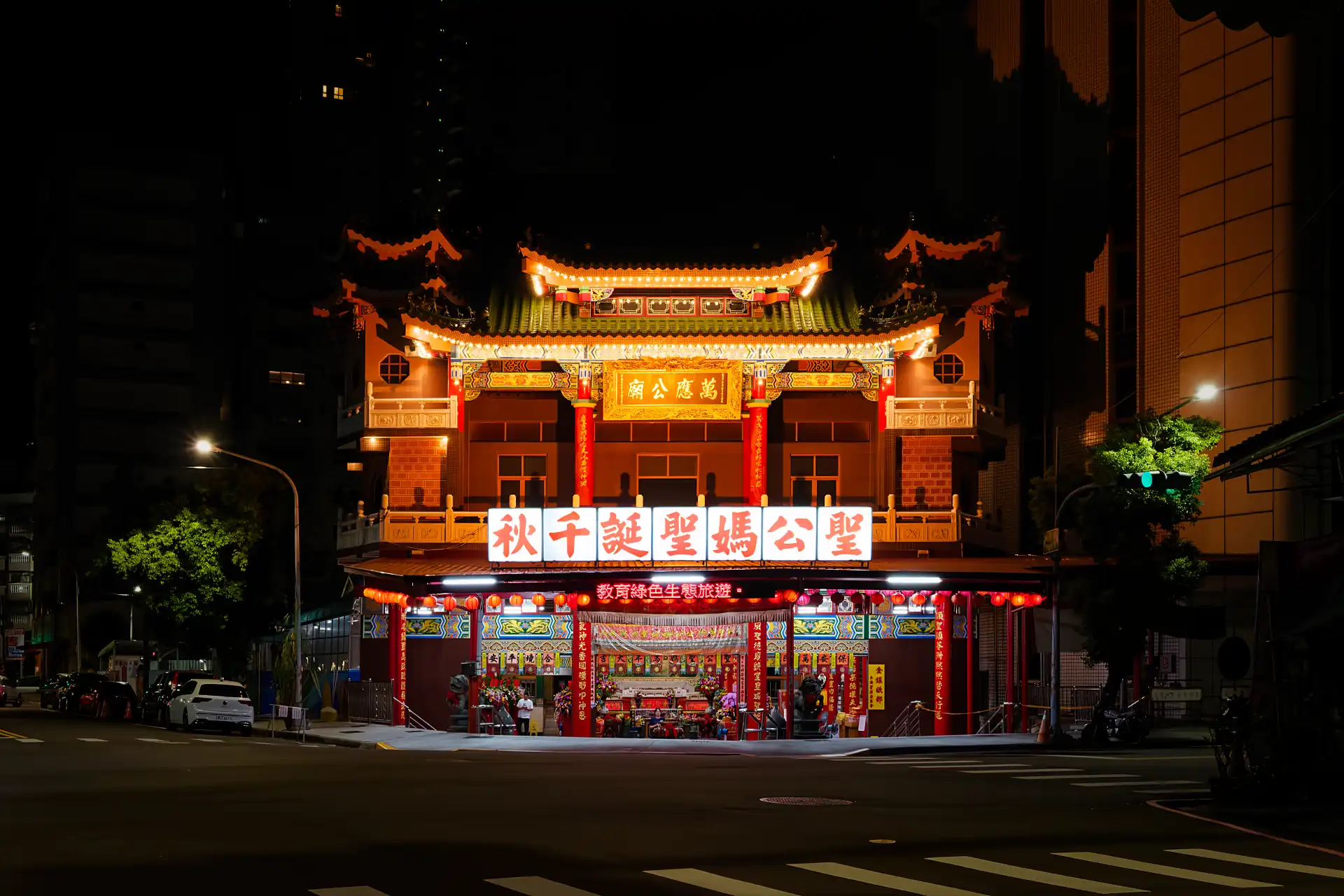
Lingya Shenggongma Temple. Photo: Zhen-Kang.
It’s six months since I moved to my current apartment, a few kilometers (or four MRT stops) from where I used to live. I love my new neighborhood, but sometimes when I’m near the old one, I do feel momentarily nostalgic. It was a great place to live.
With these thoughts in mind, earlier this week, I went back for a nighttime walk around my old haunts. The late-night timing wasn’t unusual: in my first summer here, daytime temperatures pushed my daily walks late into the evening, and now they’re habitual.
Taiwan is ranked 4th safest country in the world, even ahead of Singapore and Japan. Places that look sketchy are totally fine to explore, alone, even at midnight. The sense of safety, and lack of fear of fellow human beings, is pervasive and liberating.
It’s within this relaxed context that I find walking alone at night affords some space and quiet on this high-energy, densely-populated island.
(Taiwan has 647 people per square kilometer. Te Waipounamu / the South Island, where I lived in New Zealand, had 9.)
I took my camera with me for my walk—but not my tripod. Some of the photos aren’t very sharp, but they’re accurate.
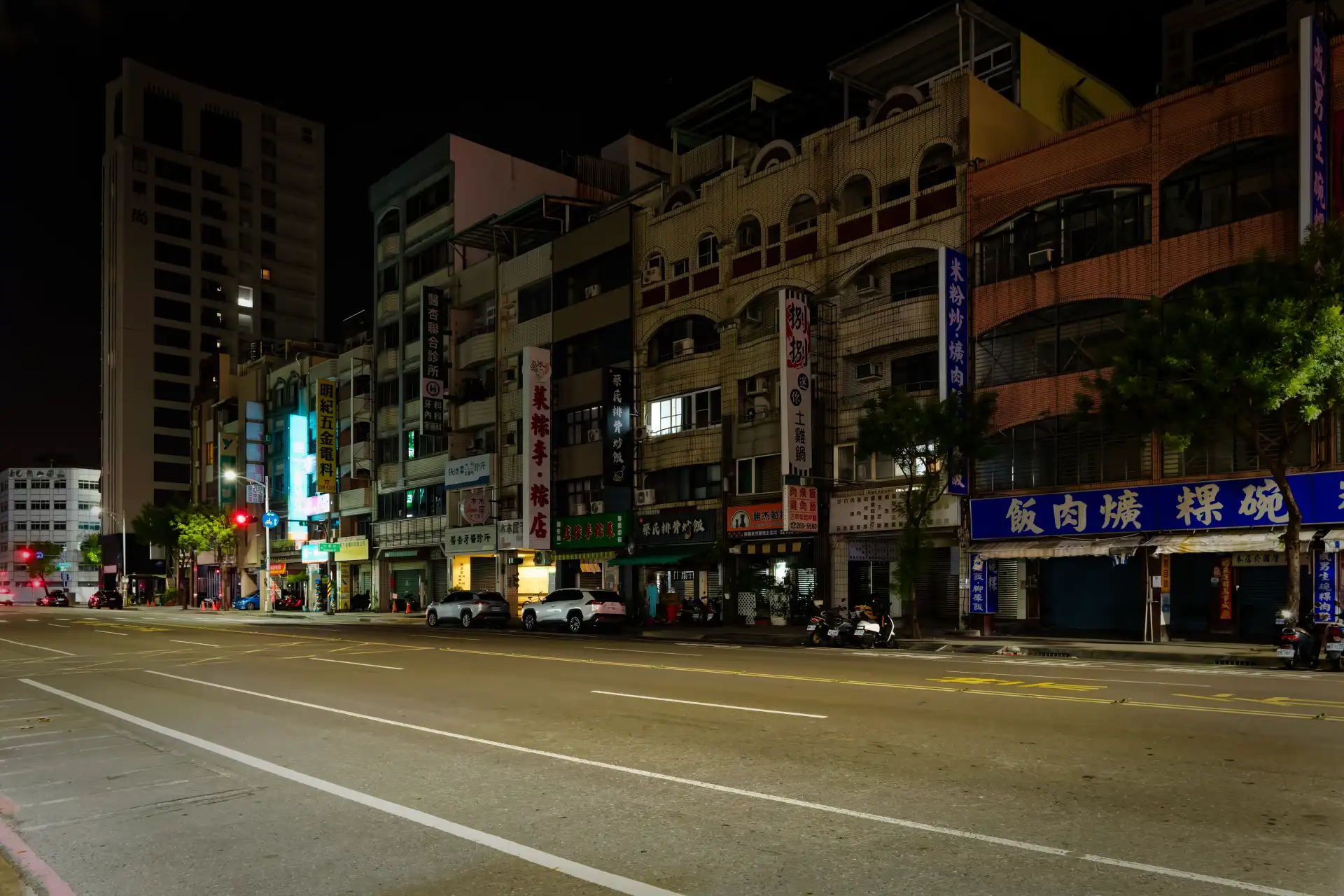
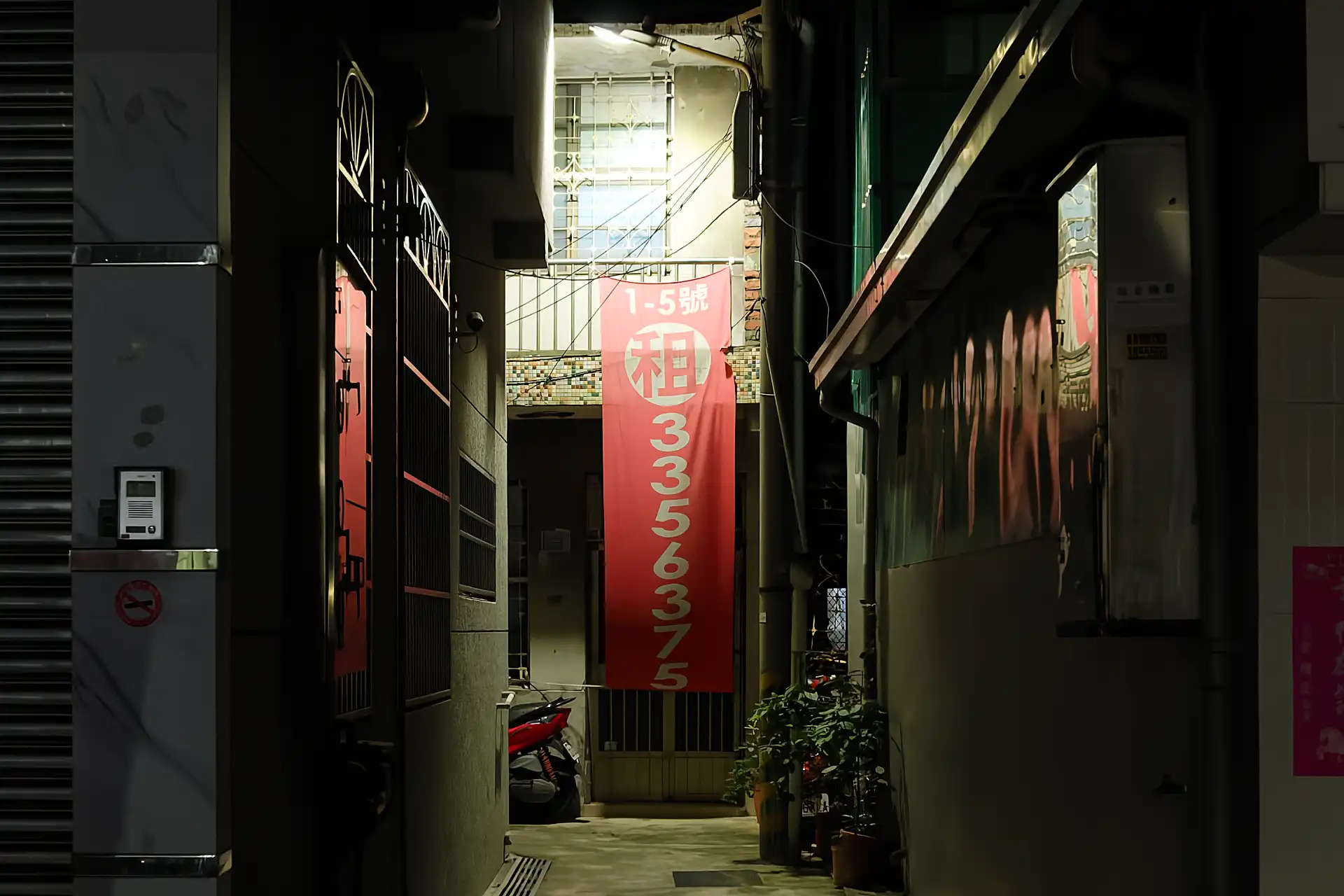
Here, I present a few dozen pics of my old neighborhood, taken within two blocks of my previous apartment:
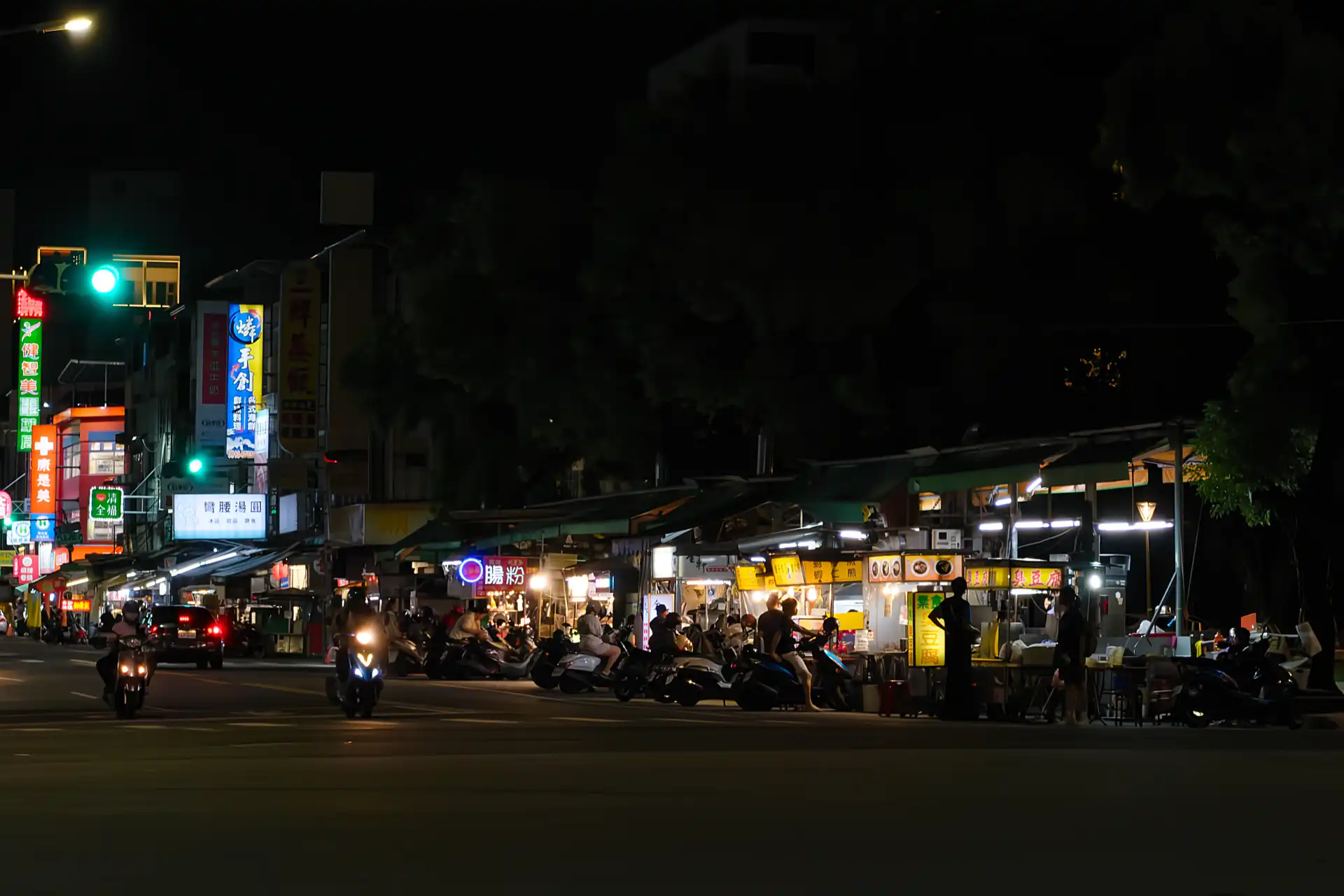
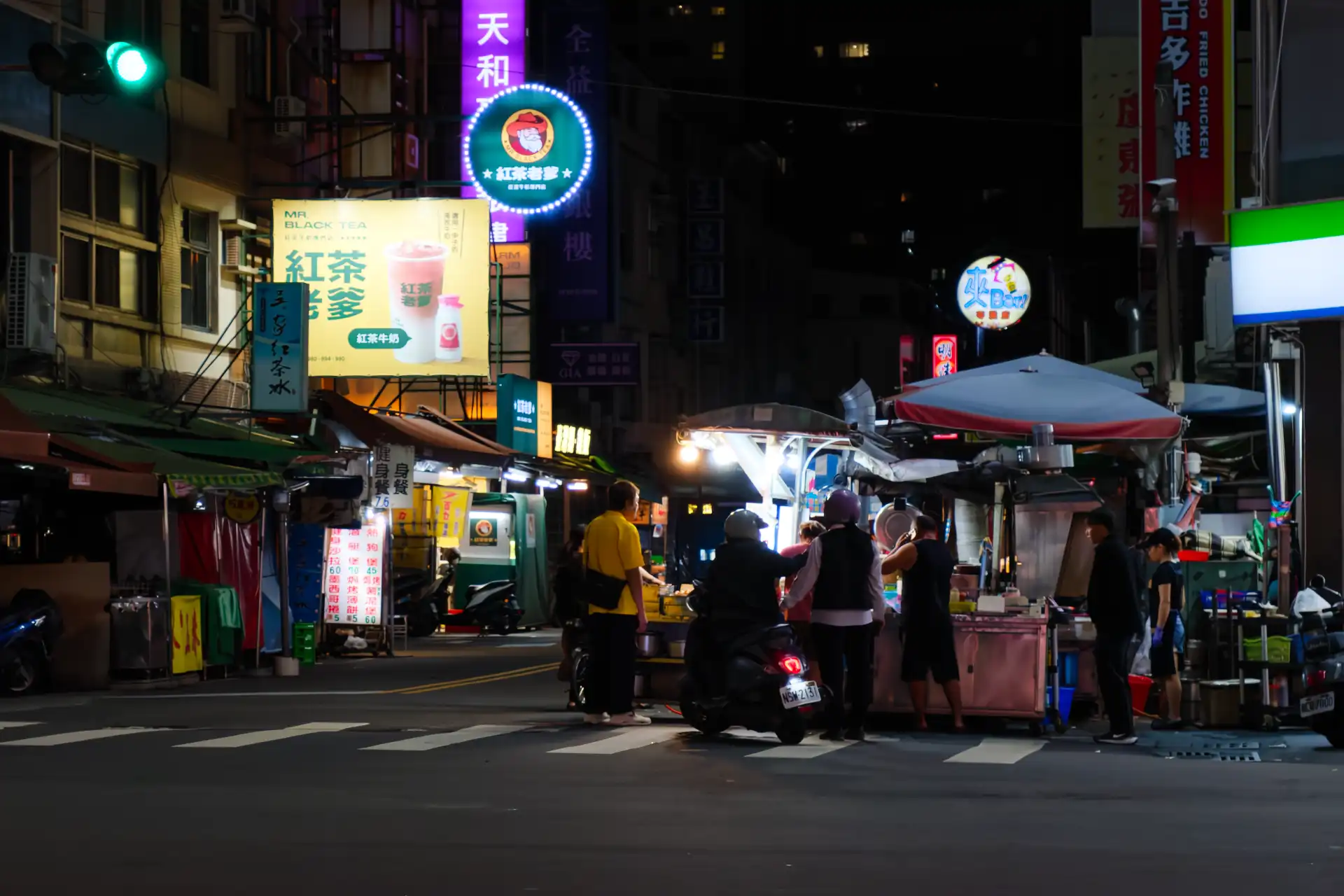
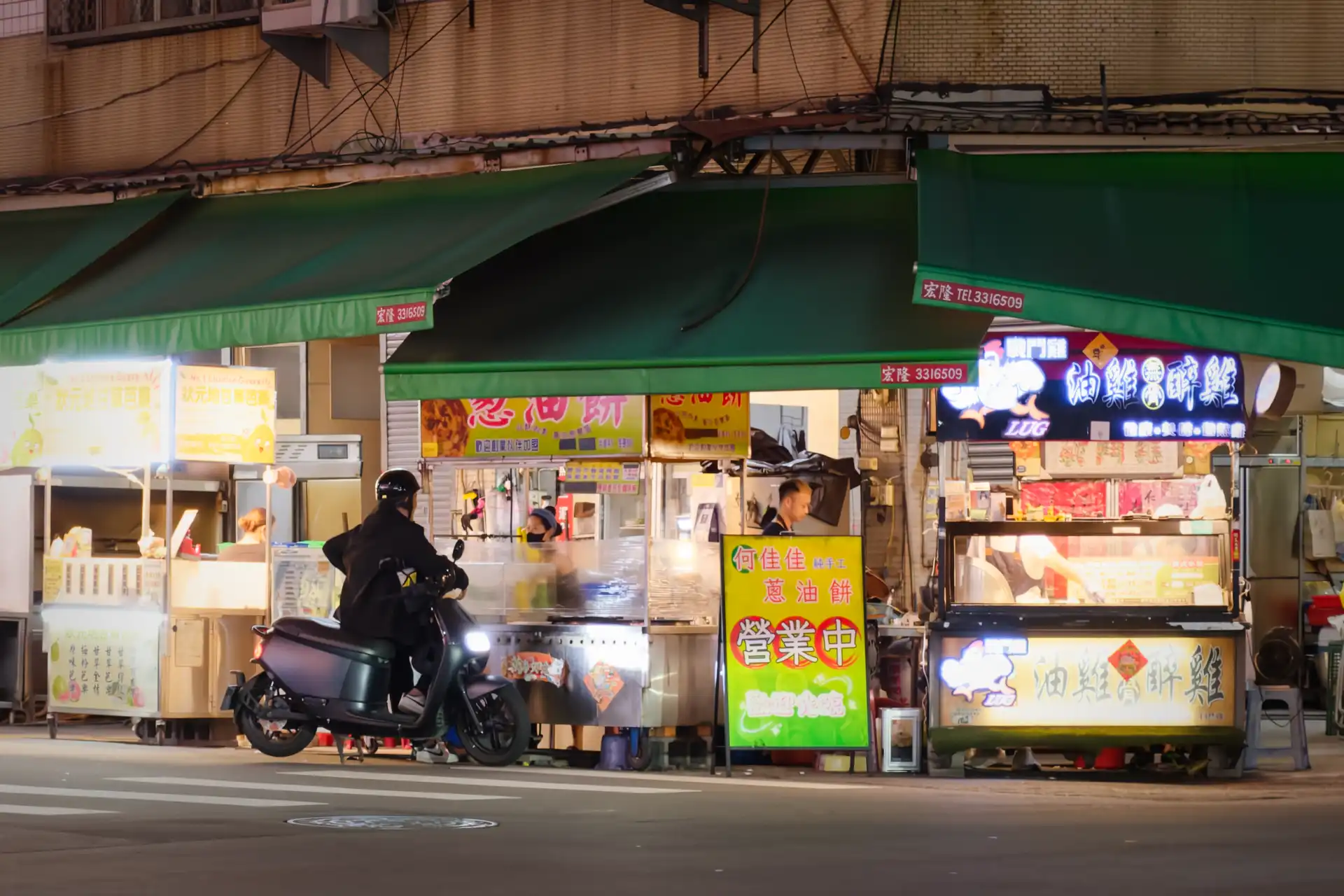
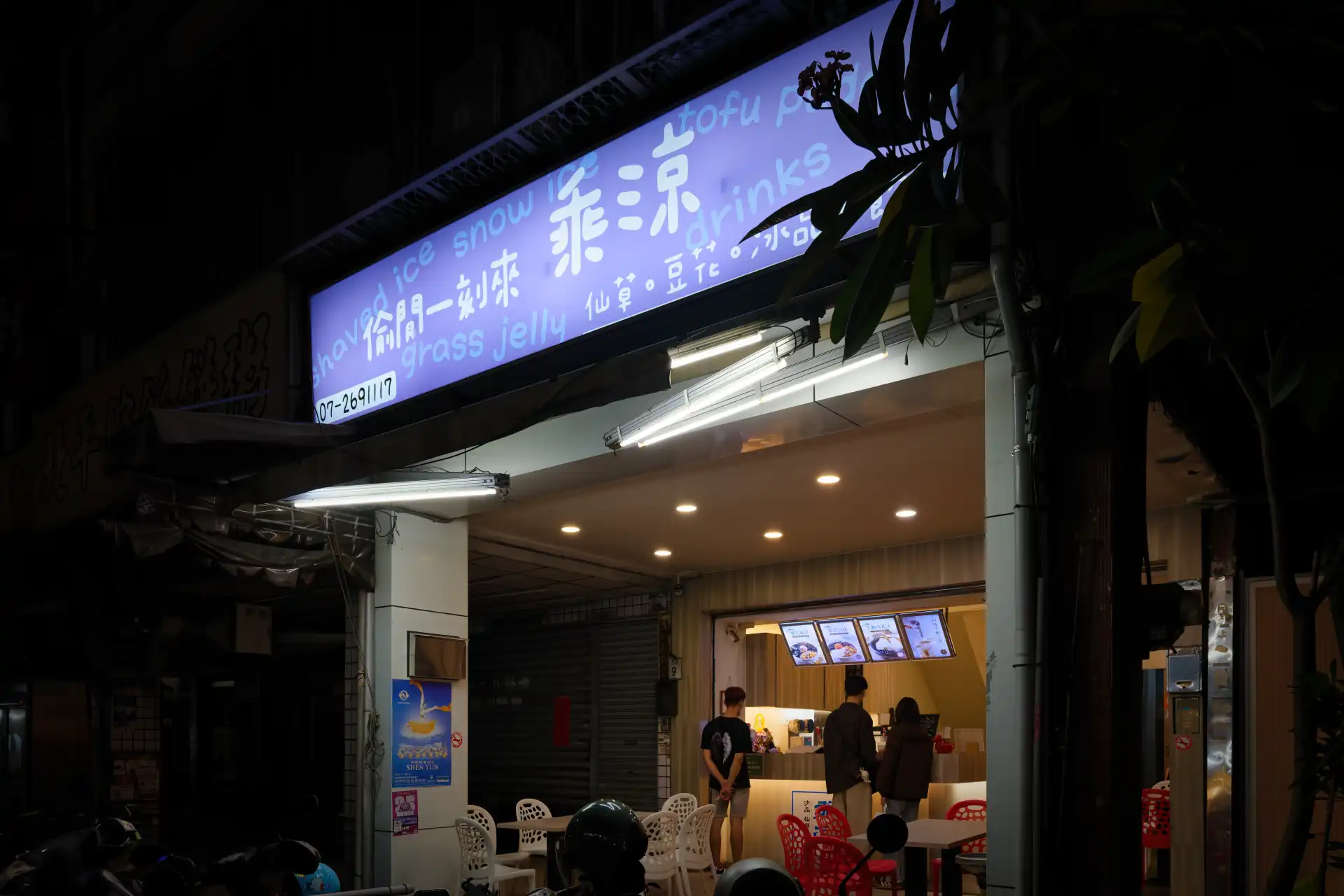
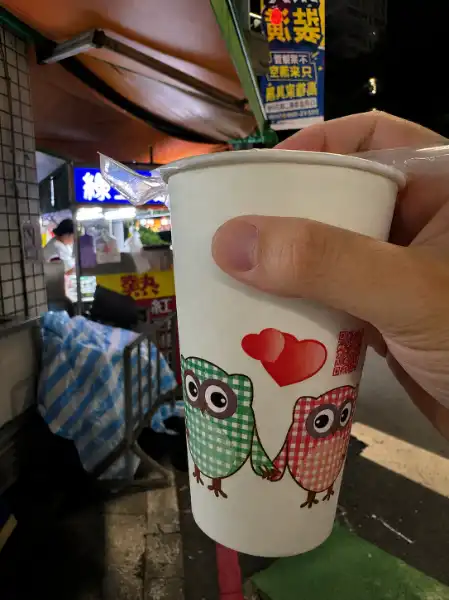
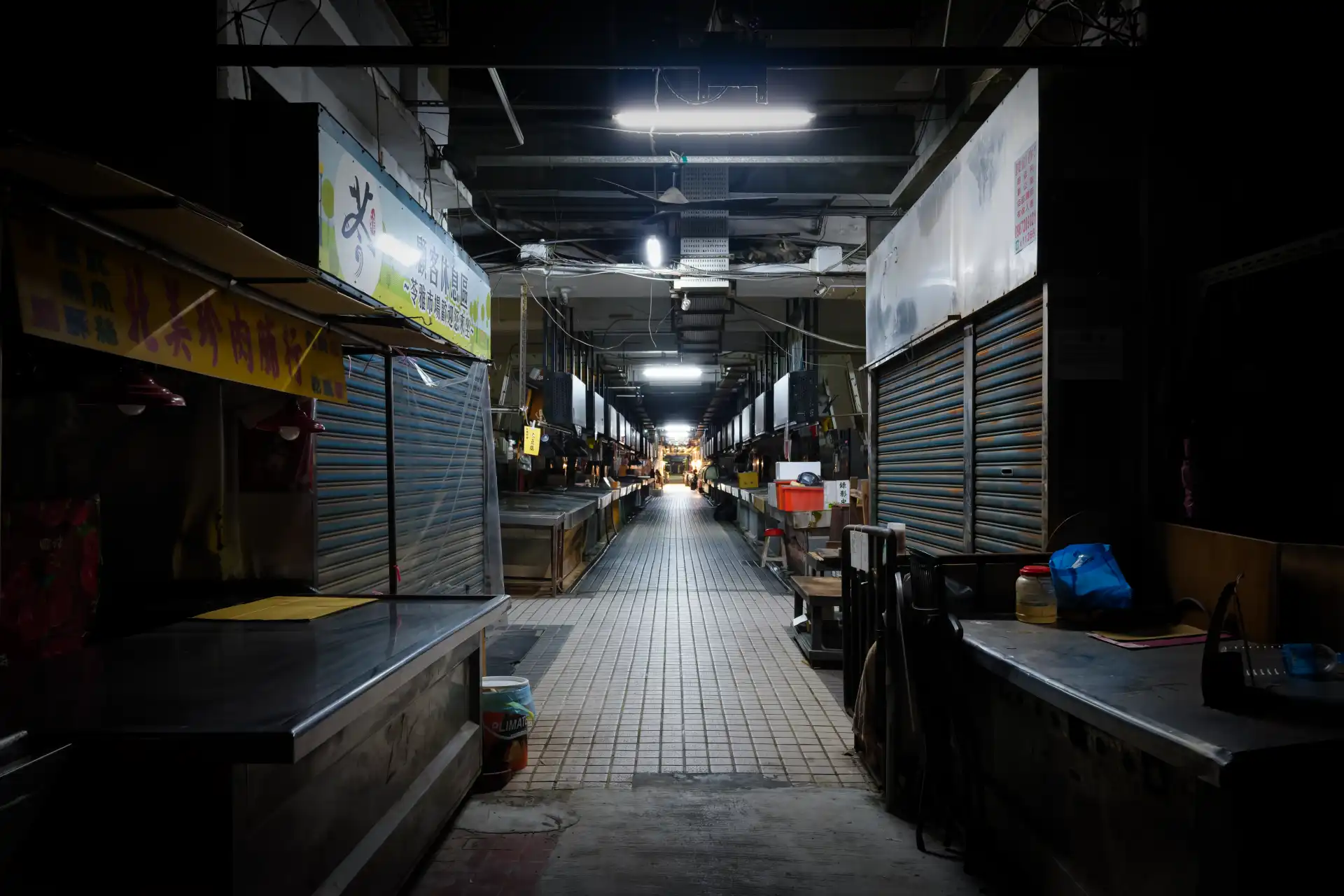
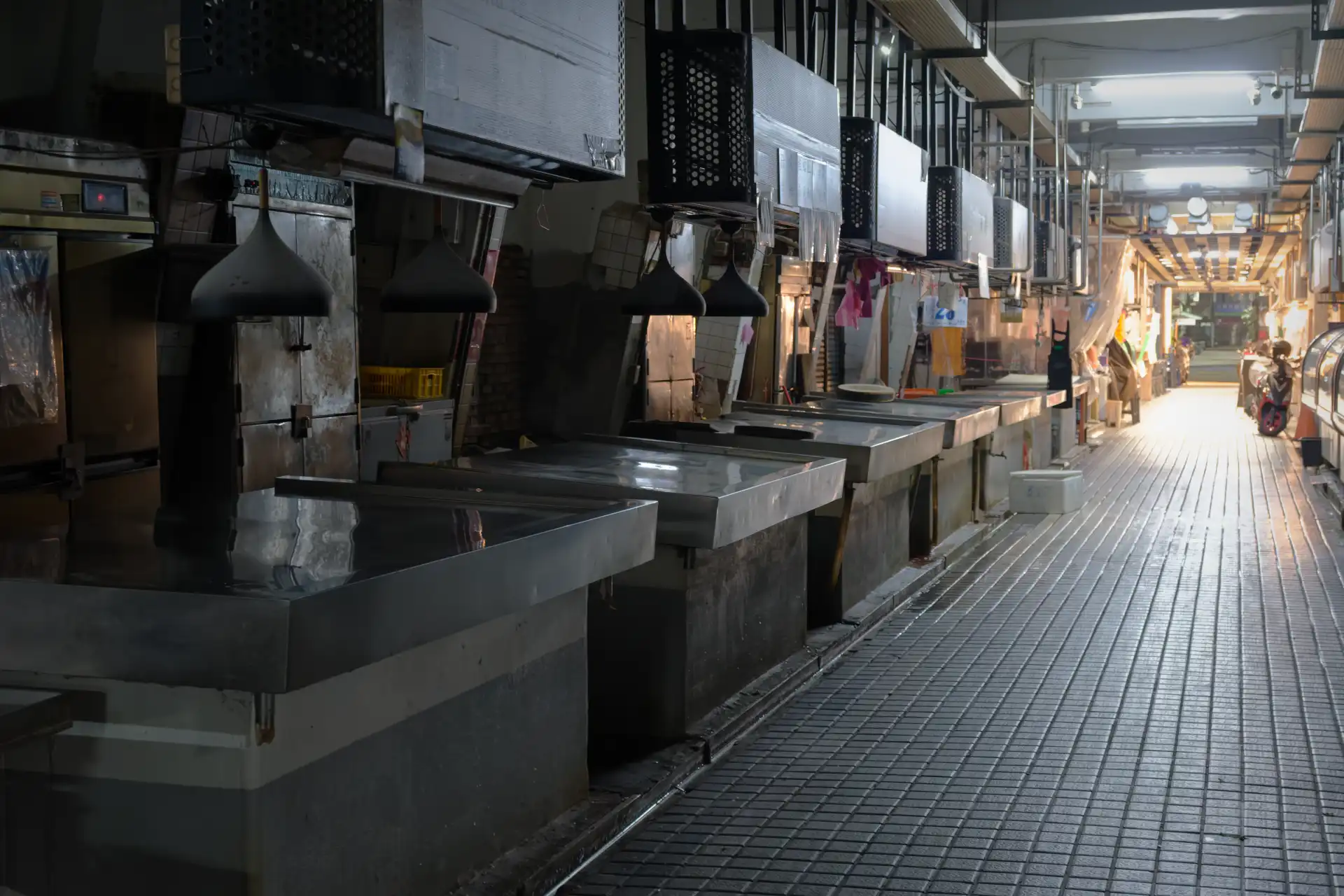
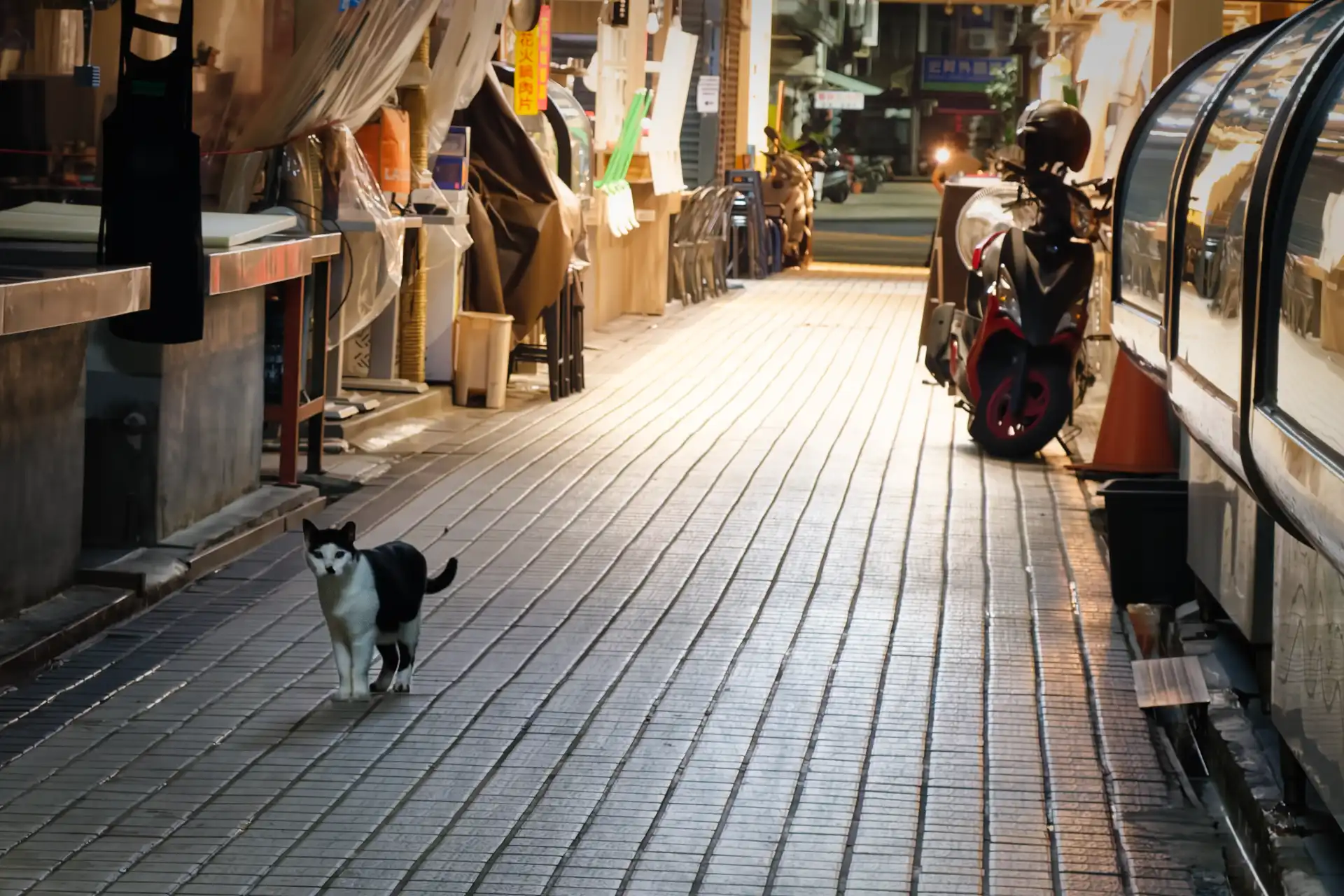
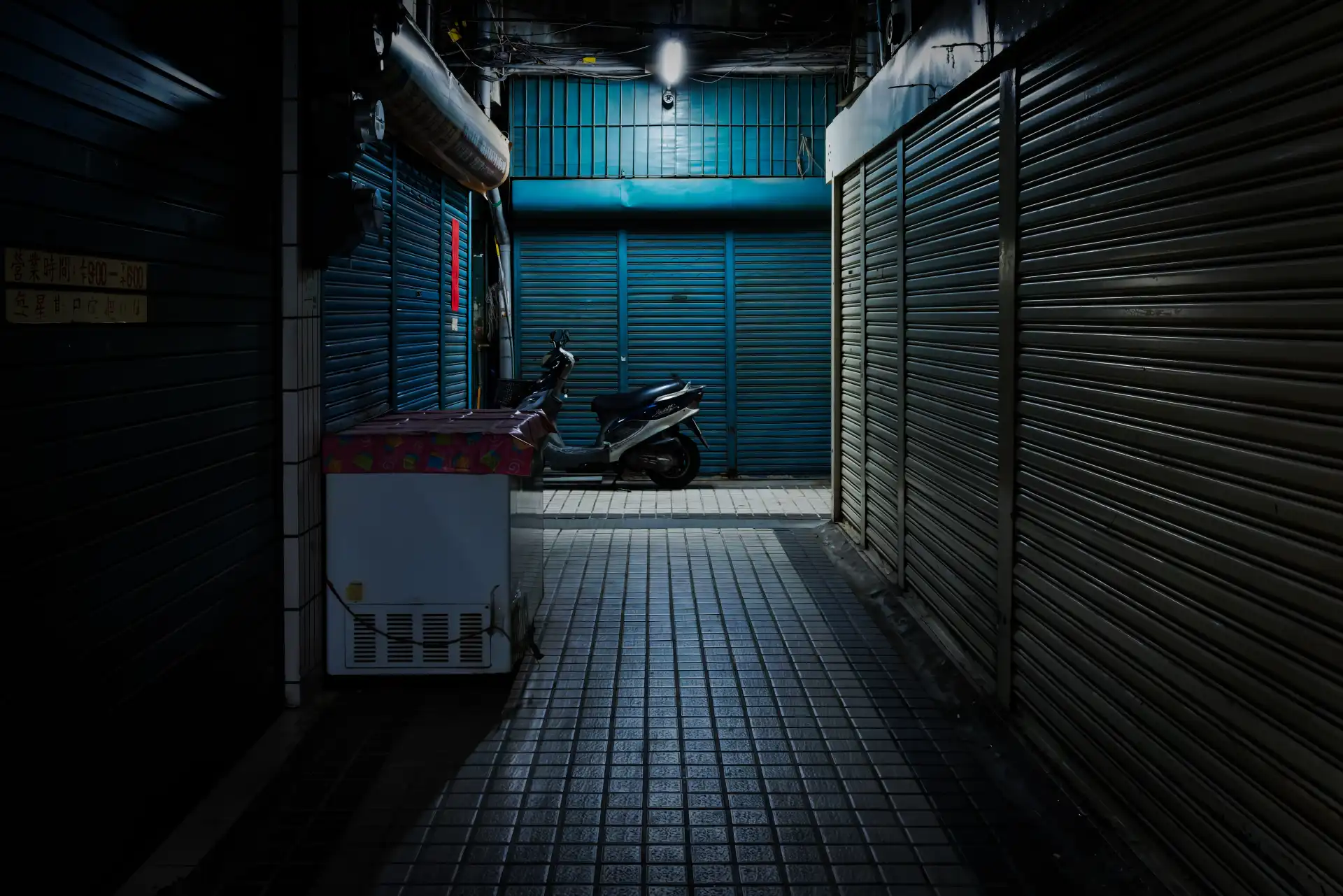
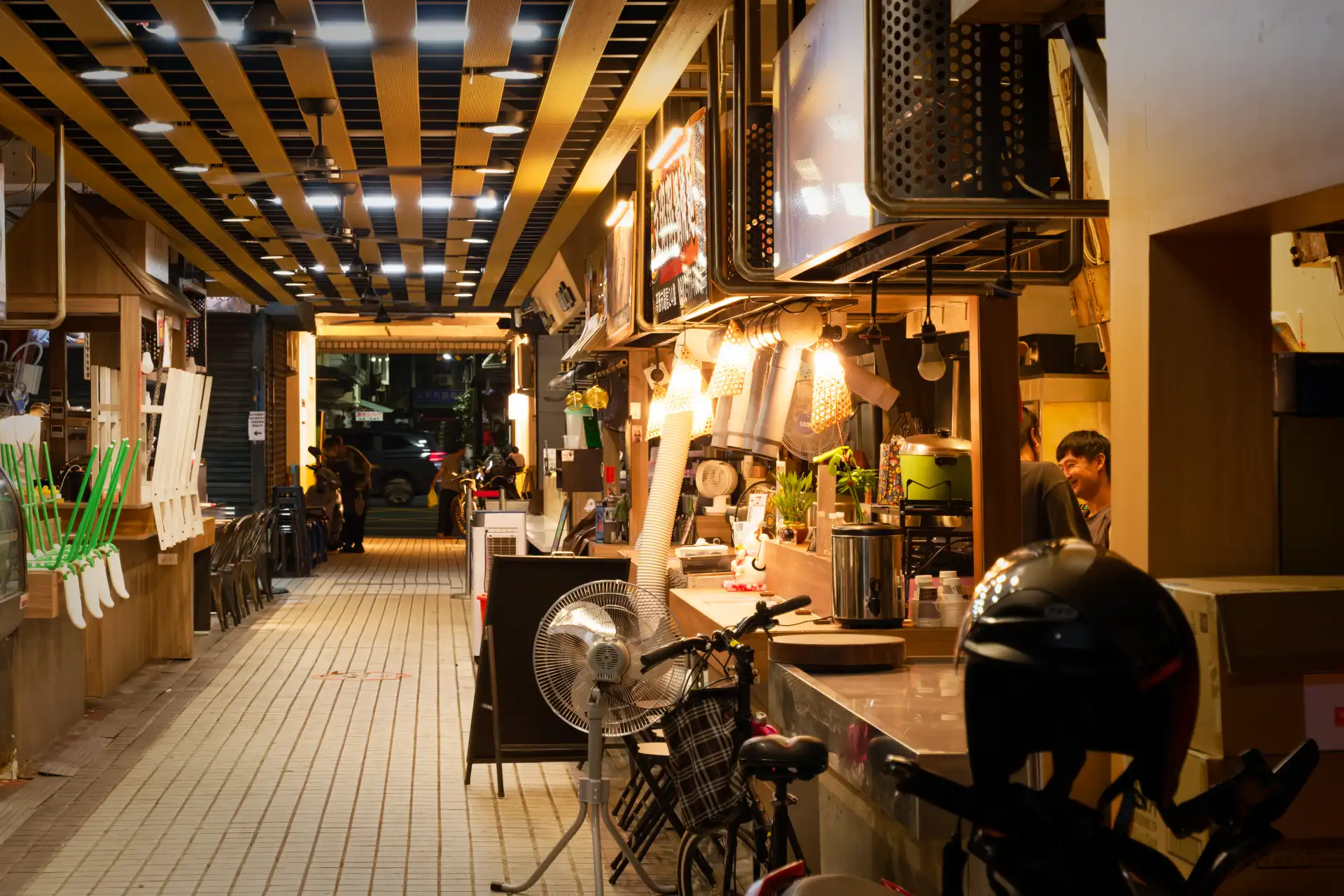
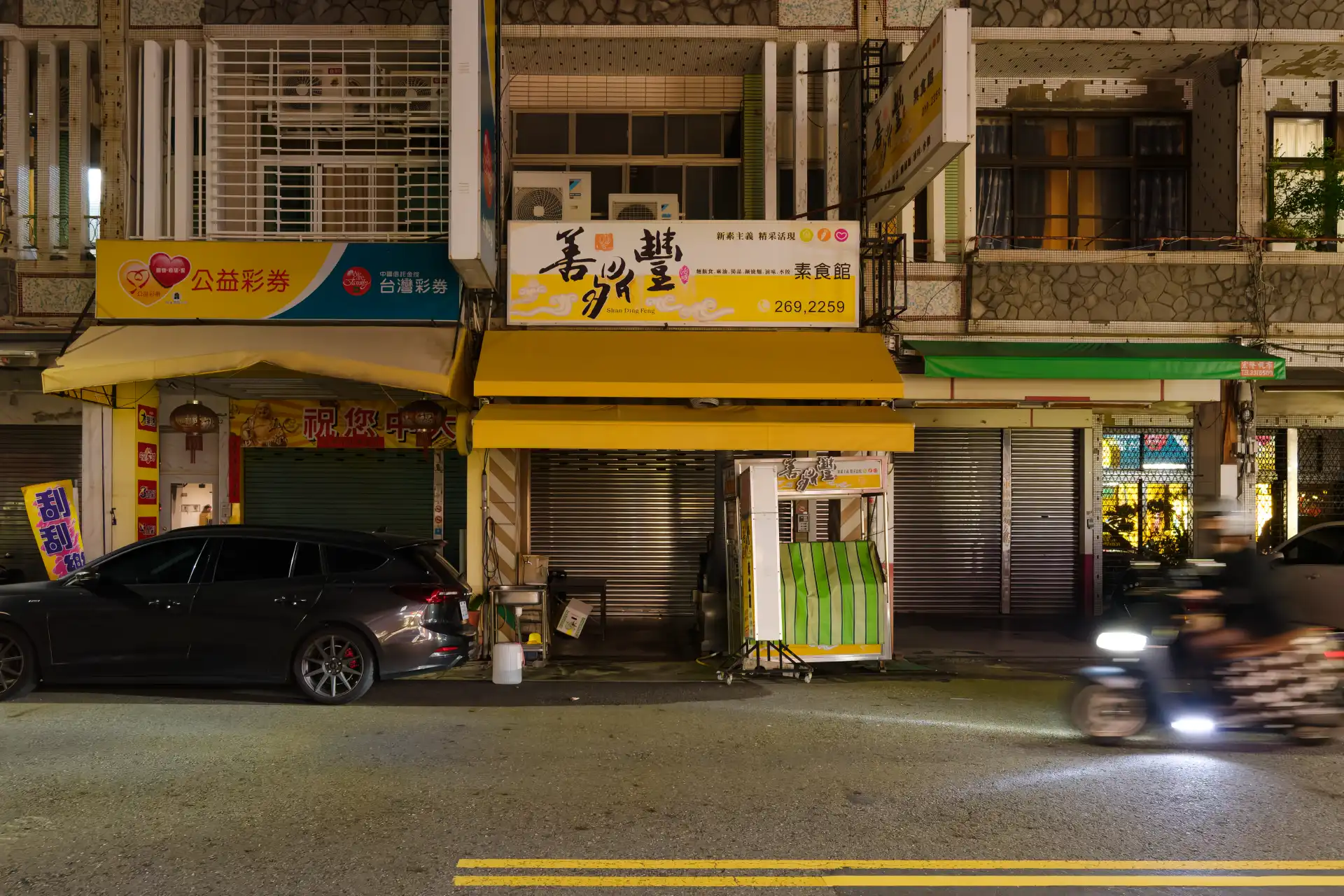
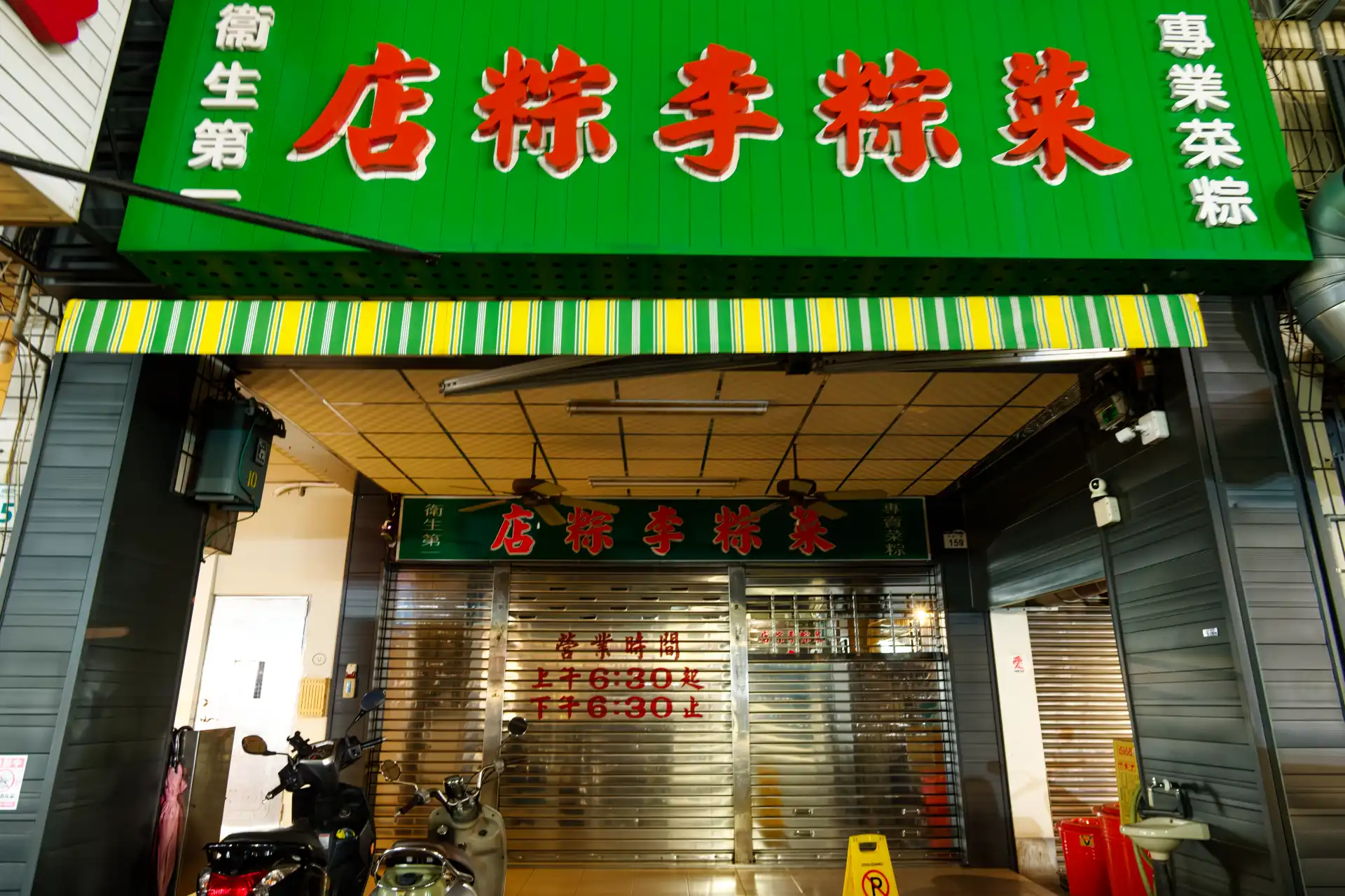
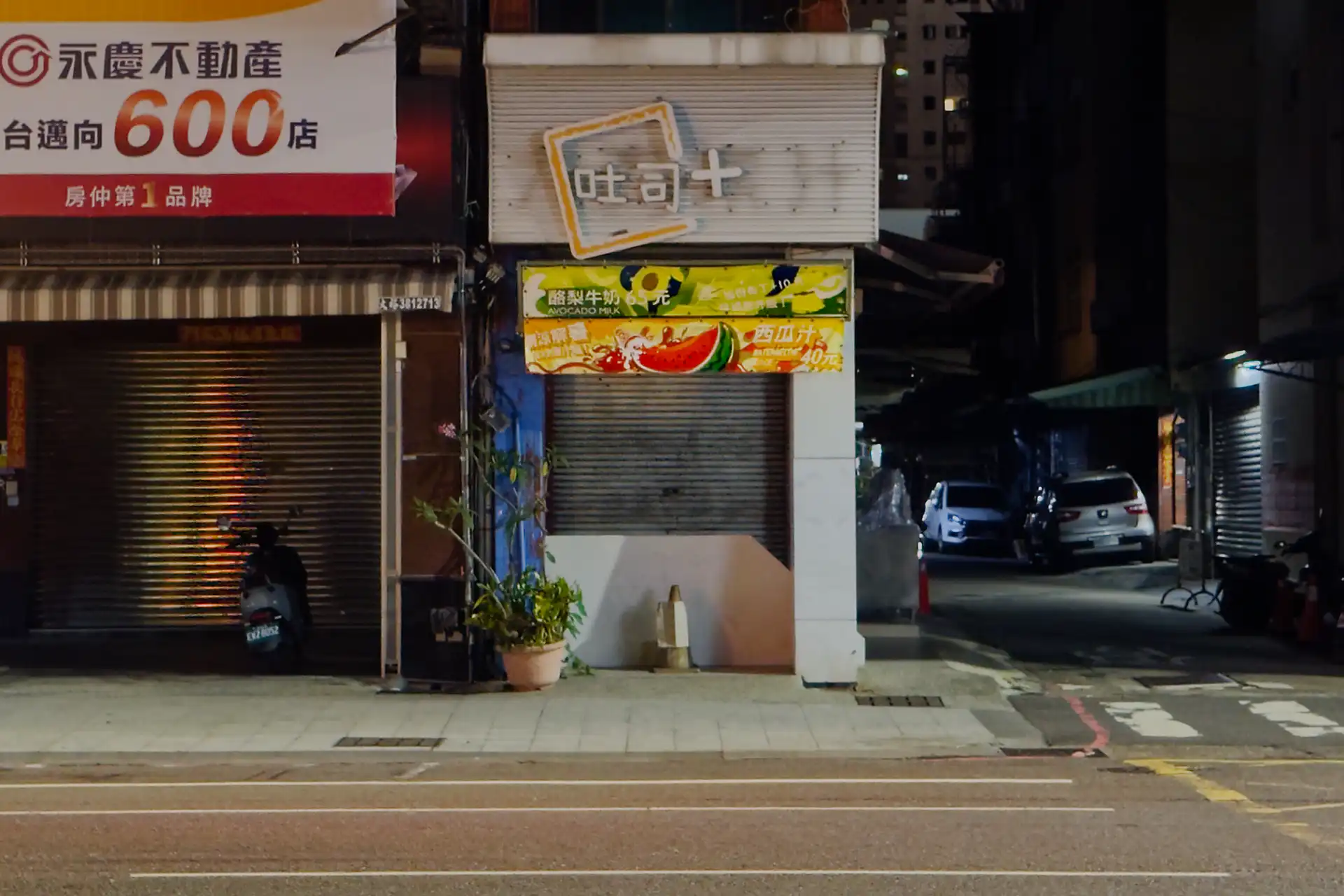
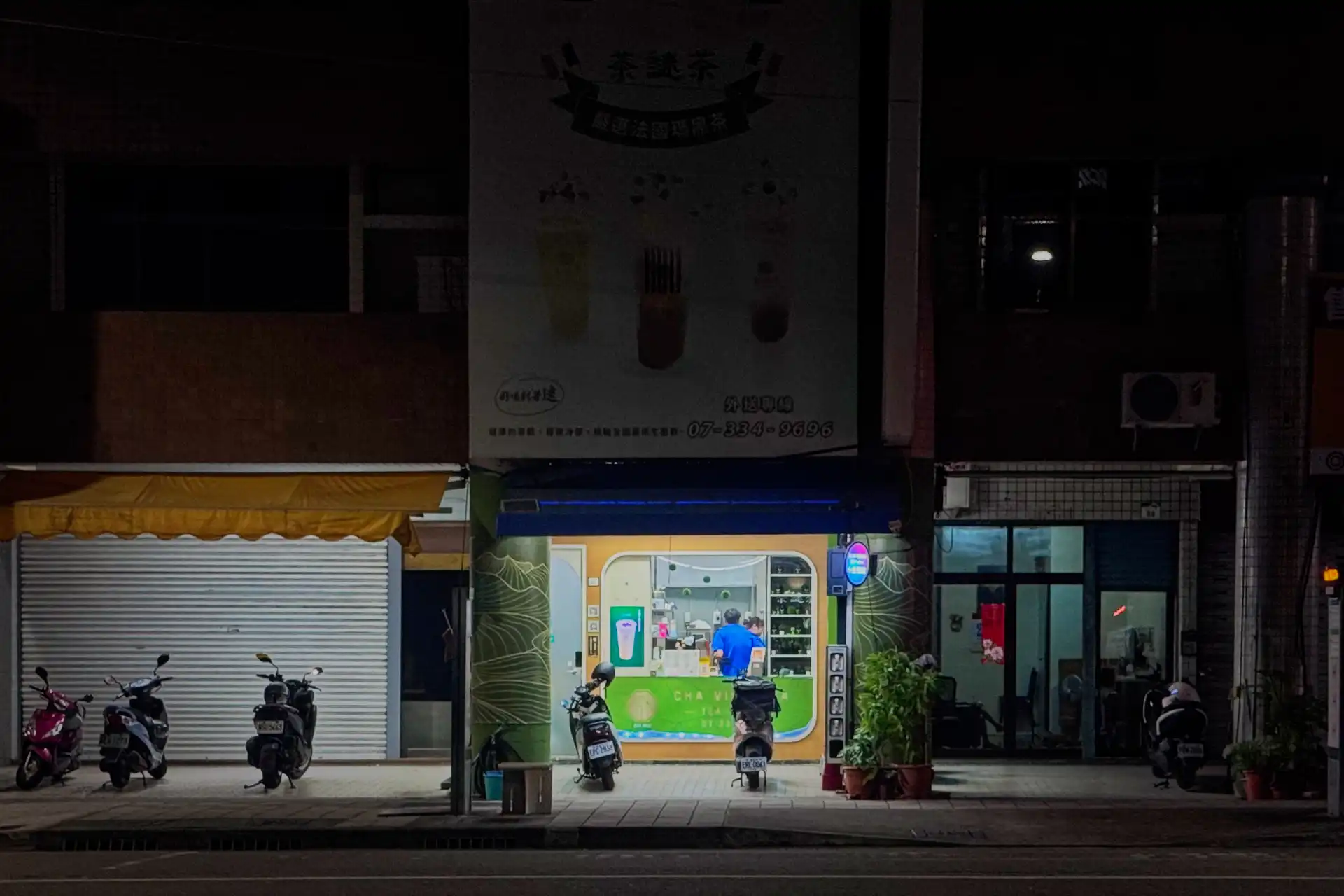
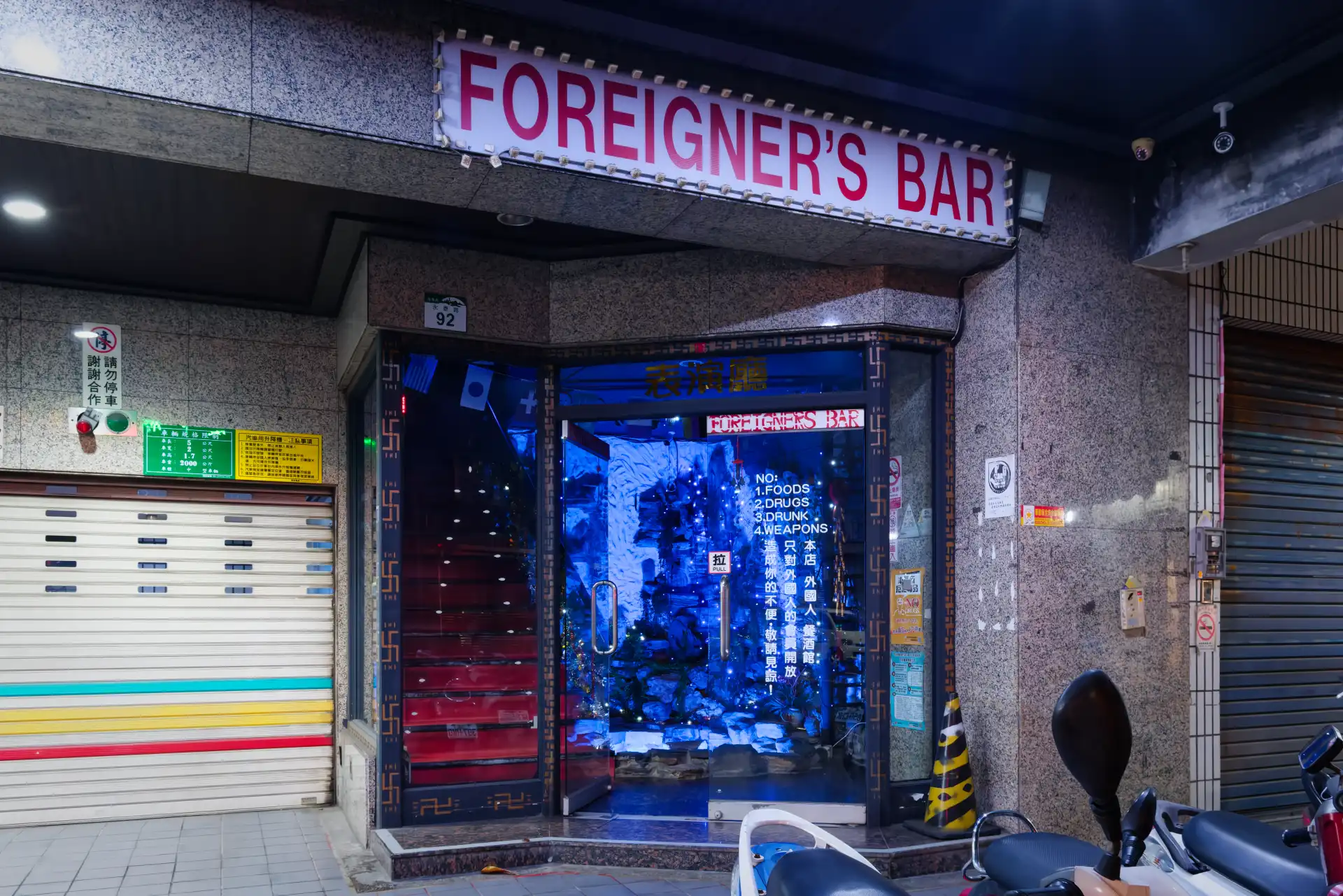
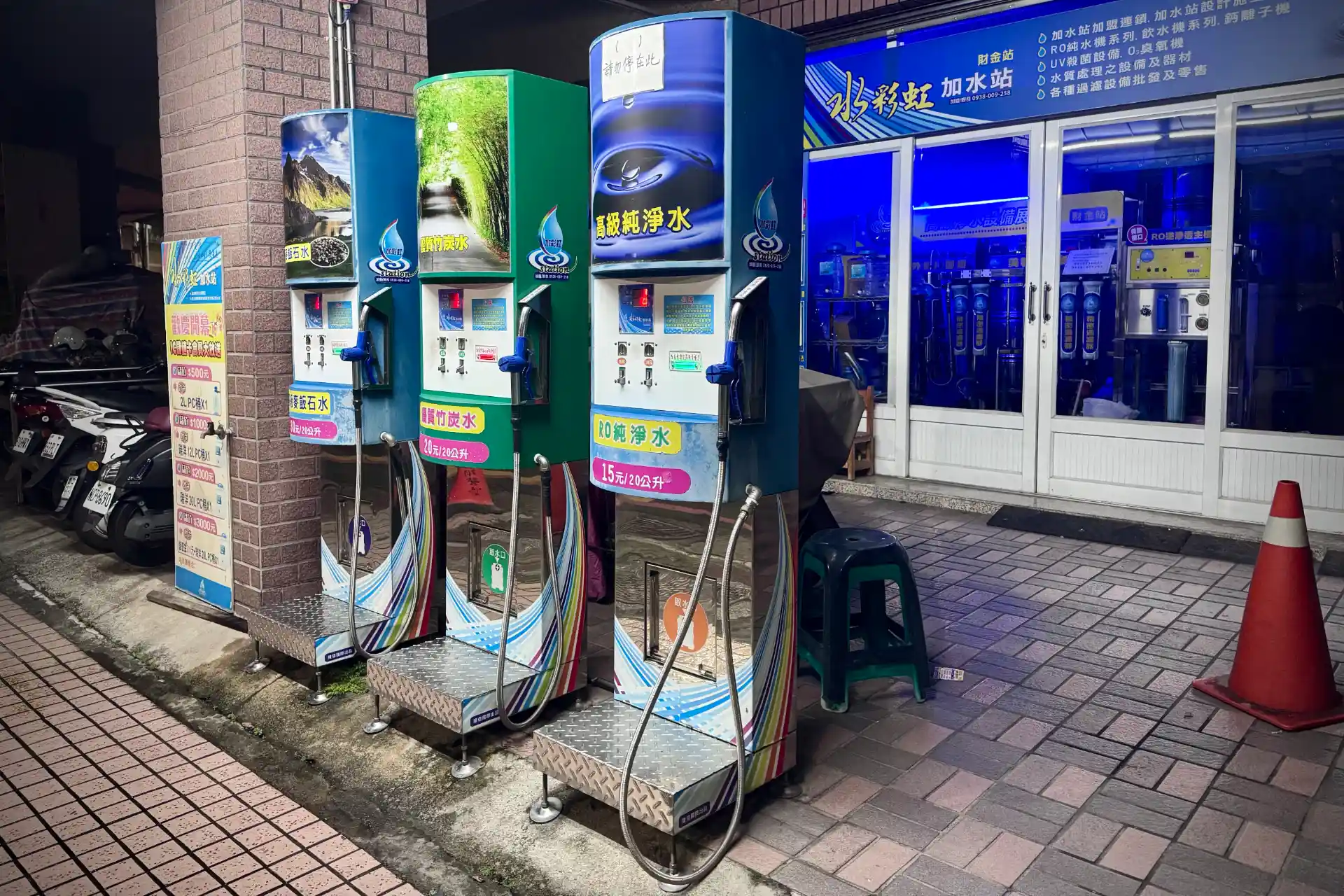
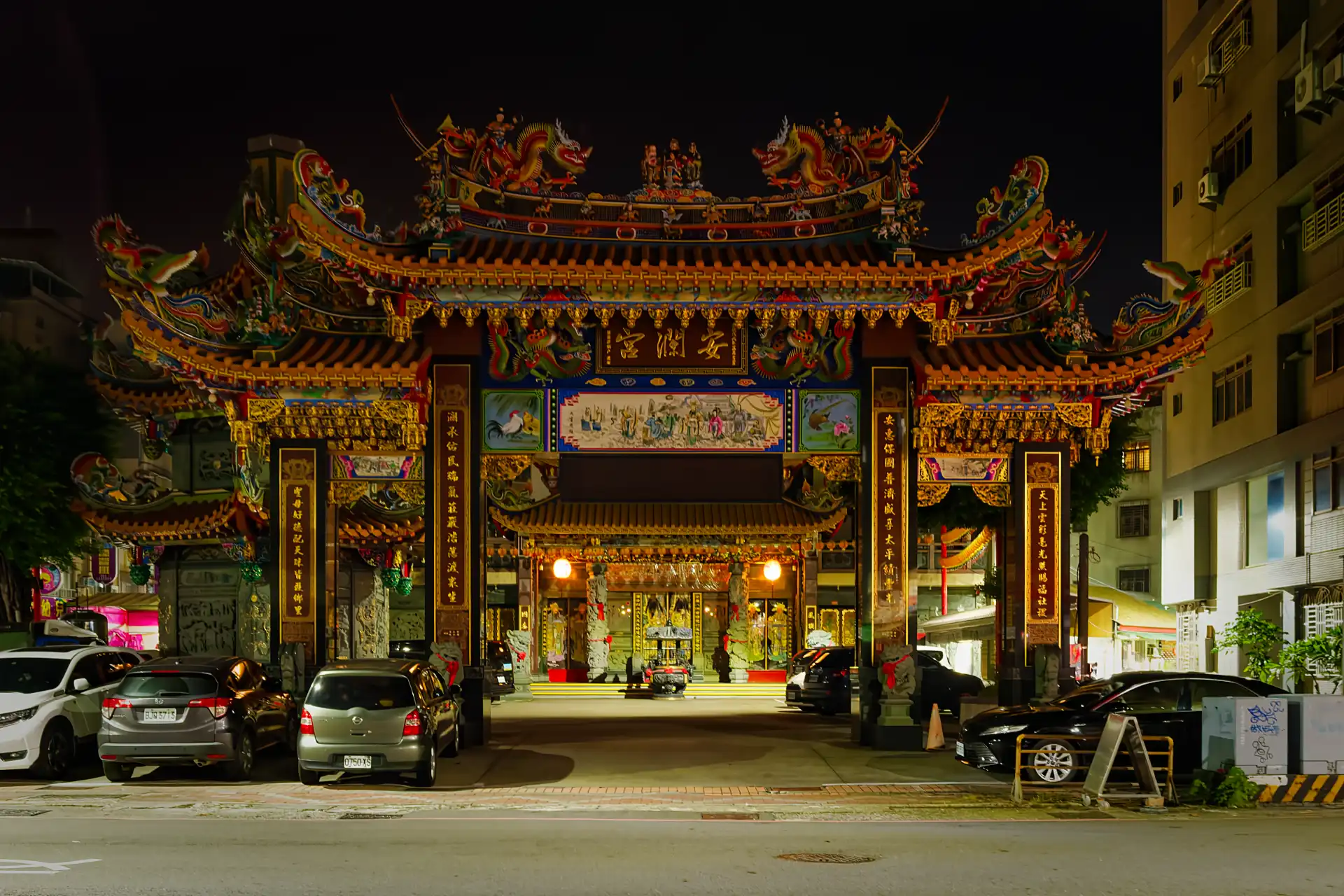
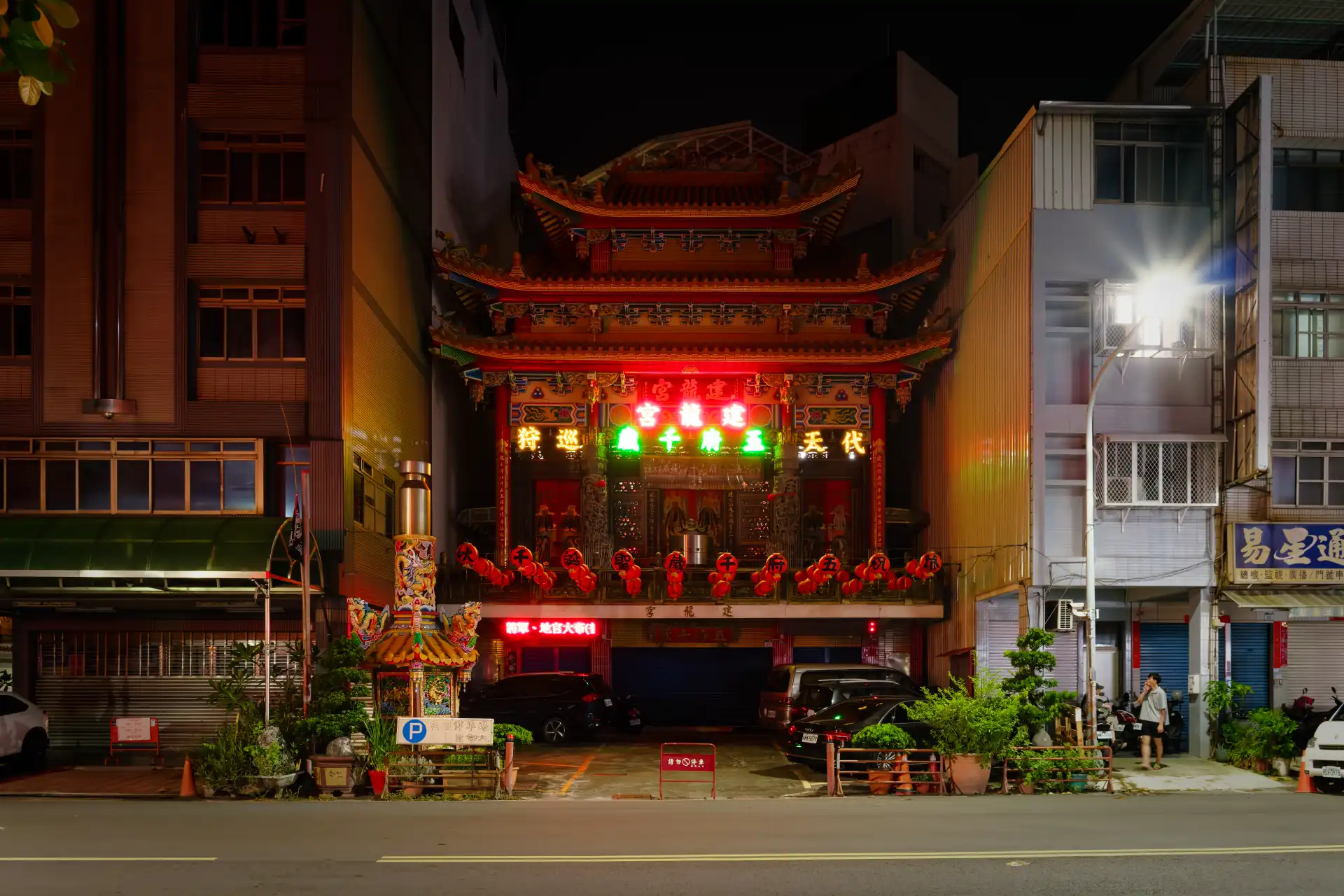
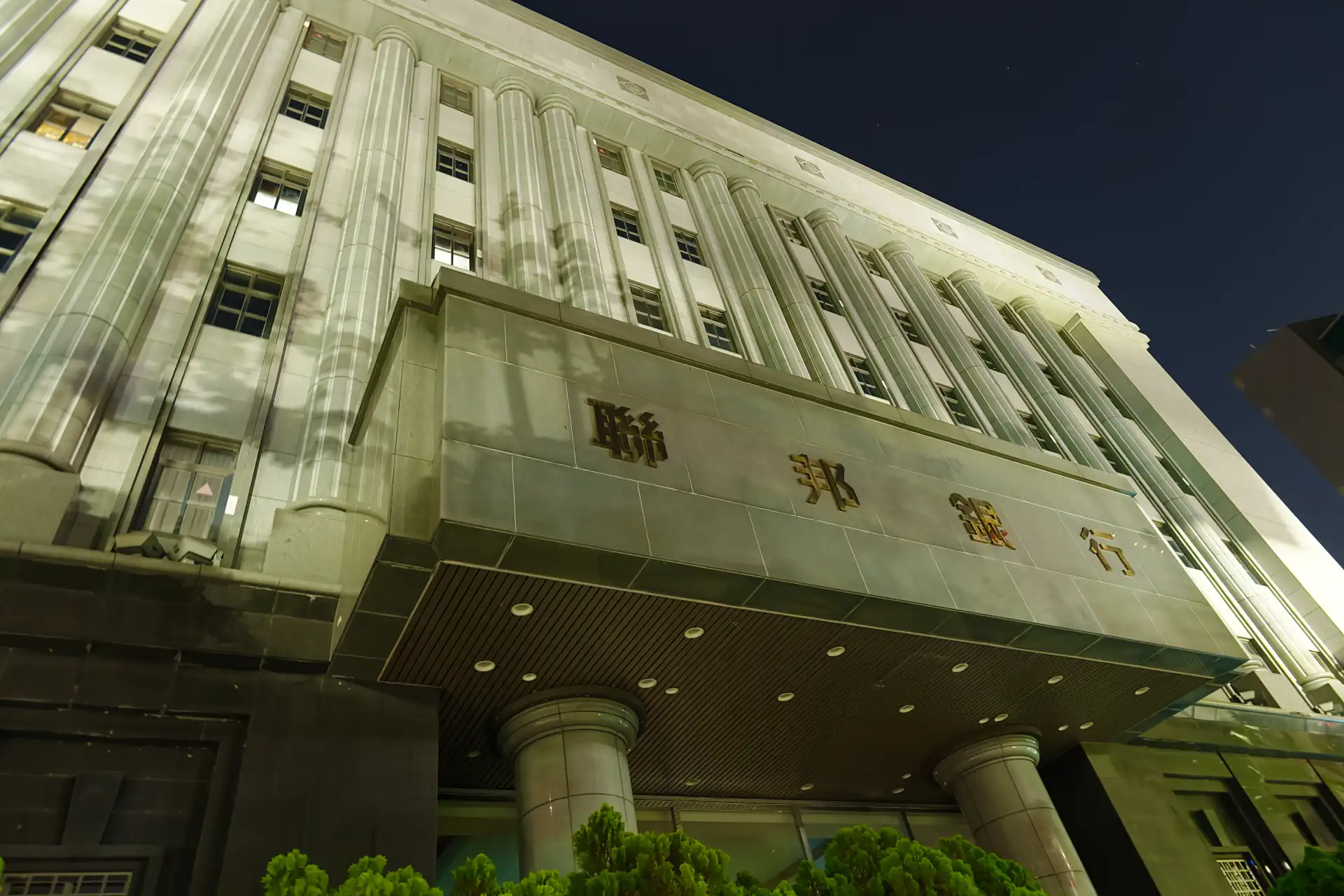
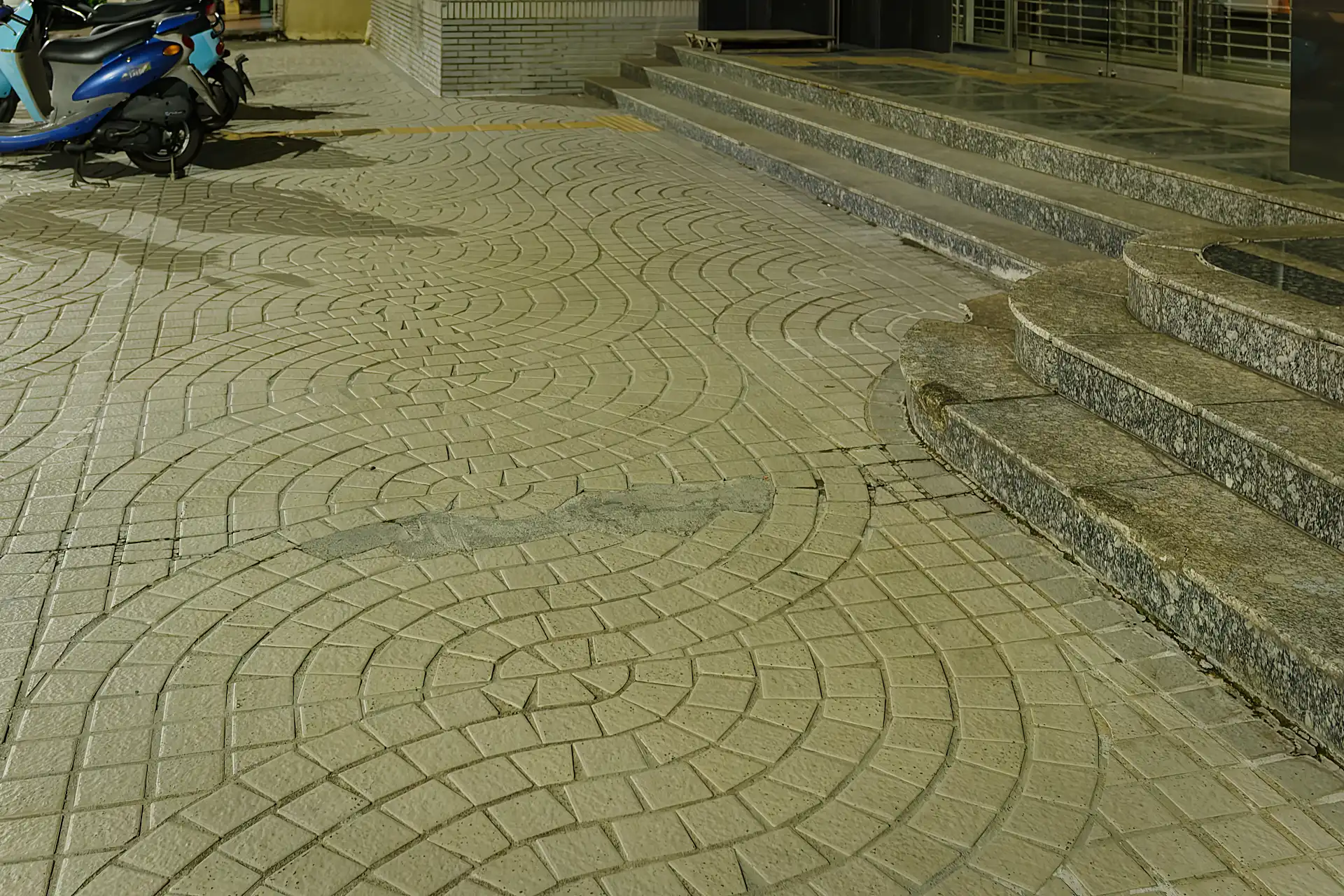
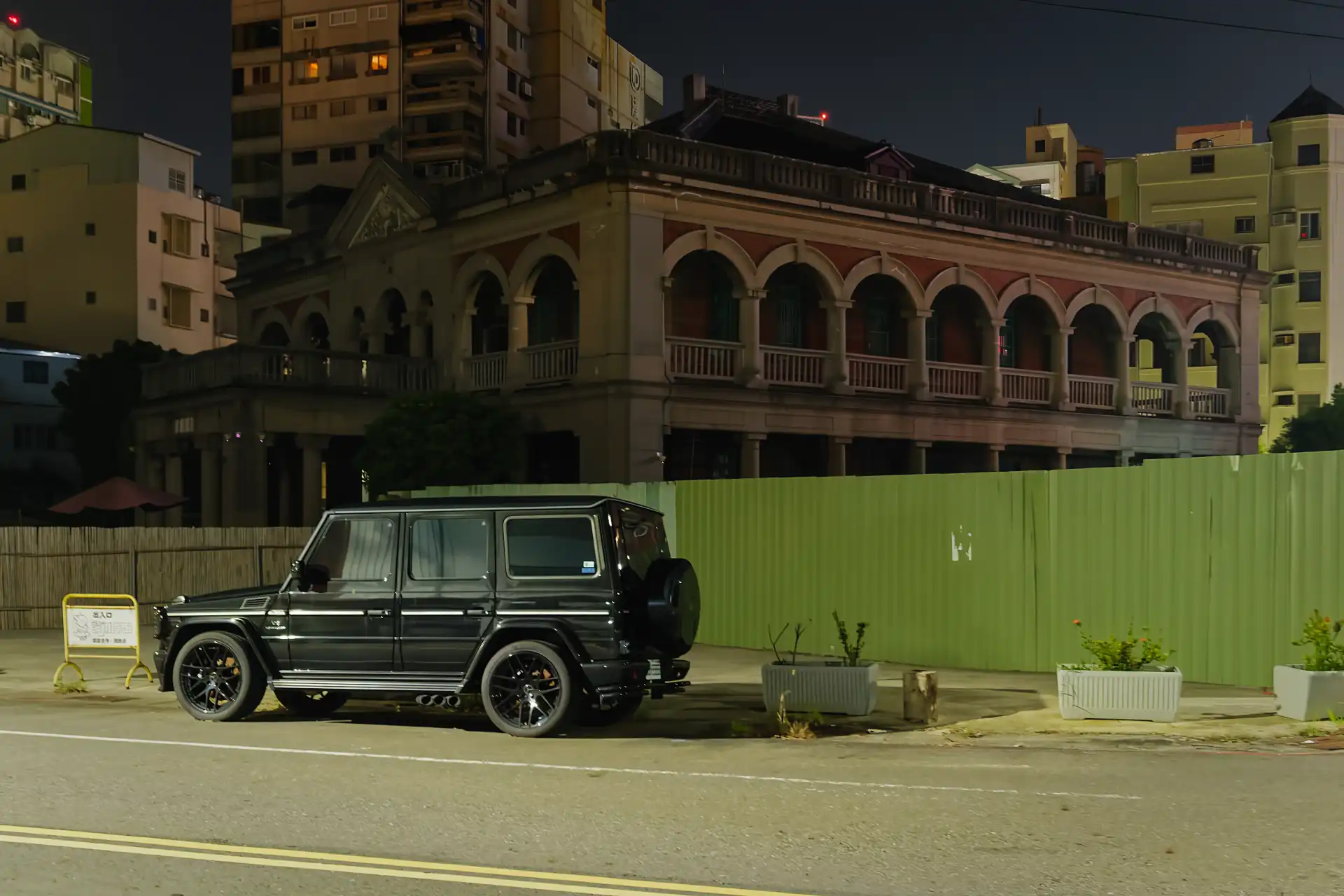
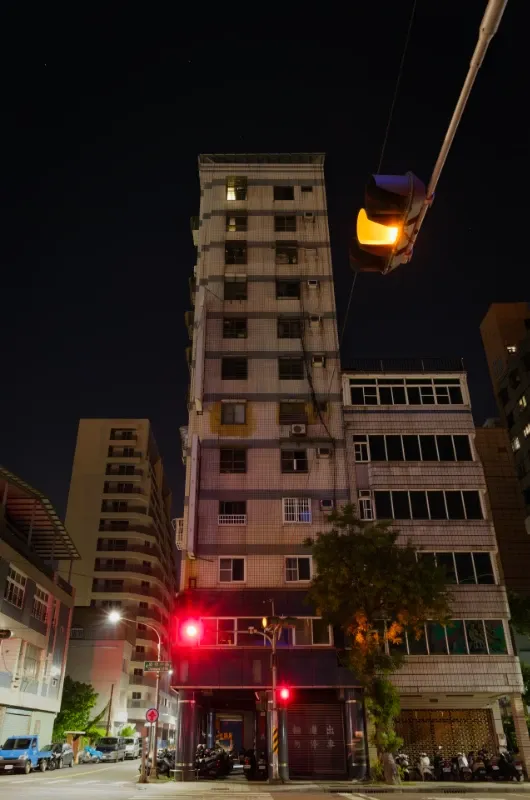
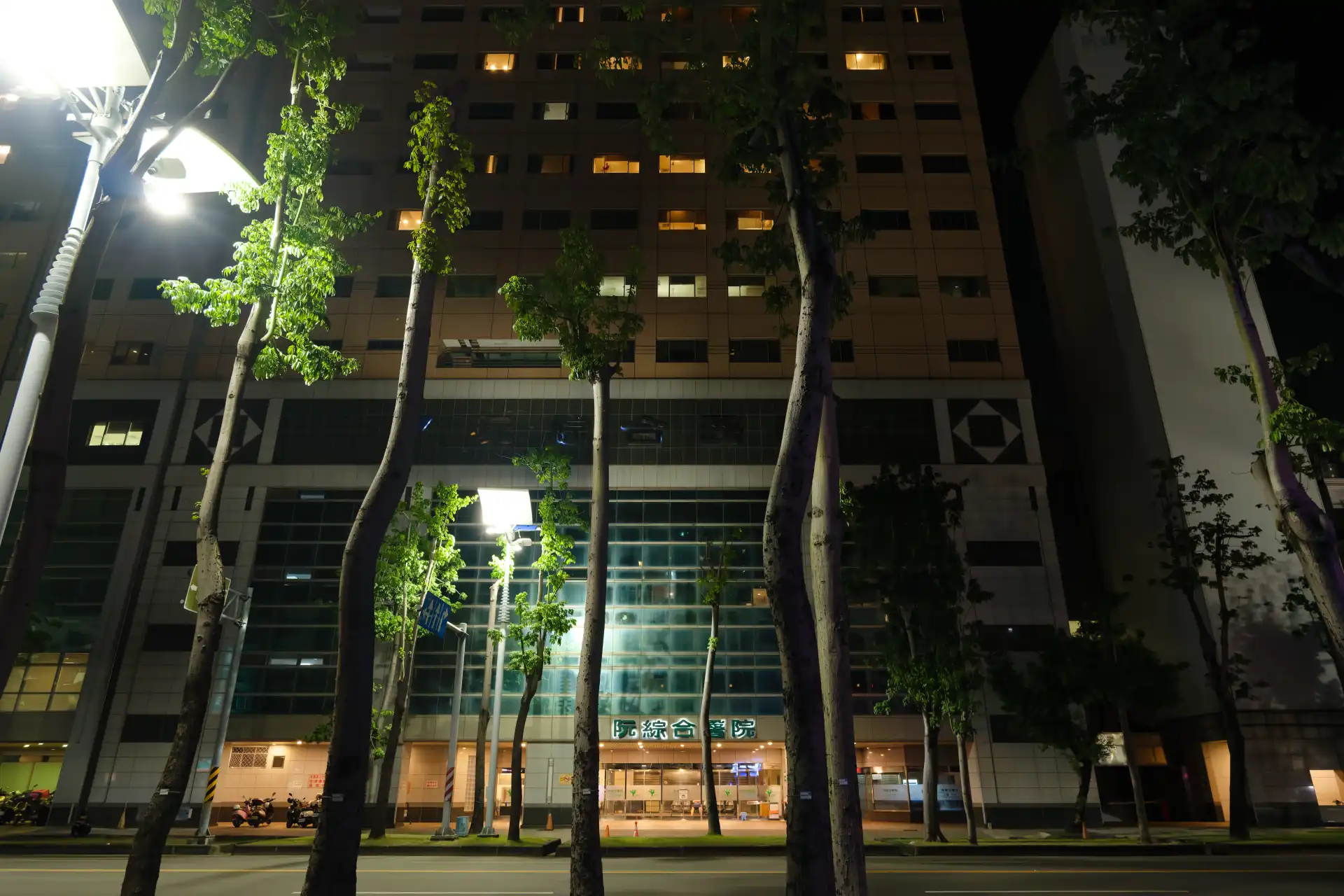
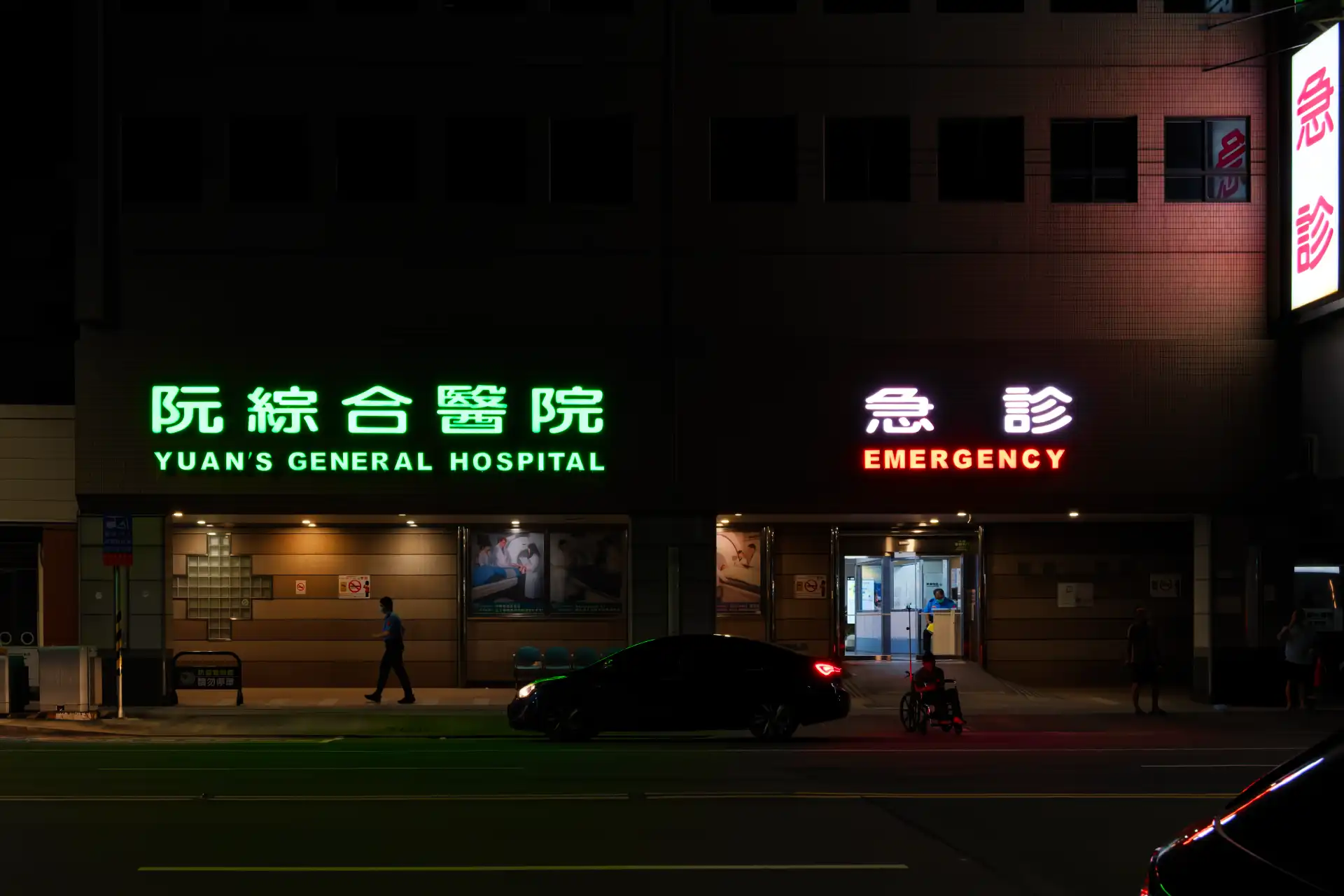
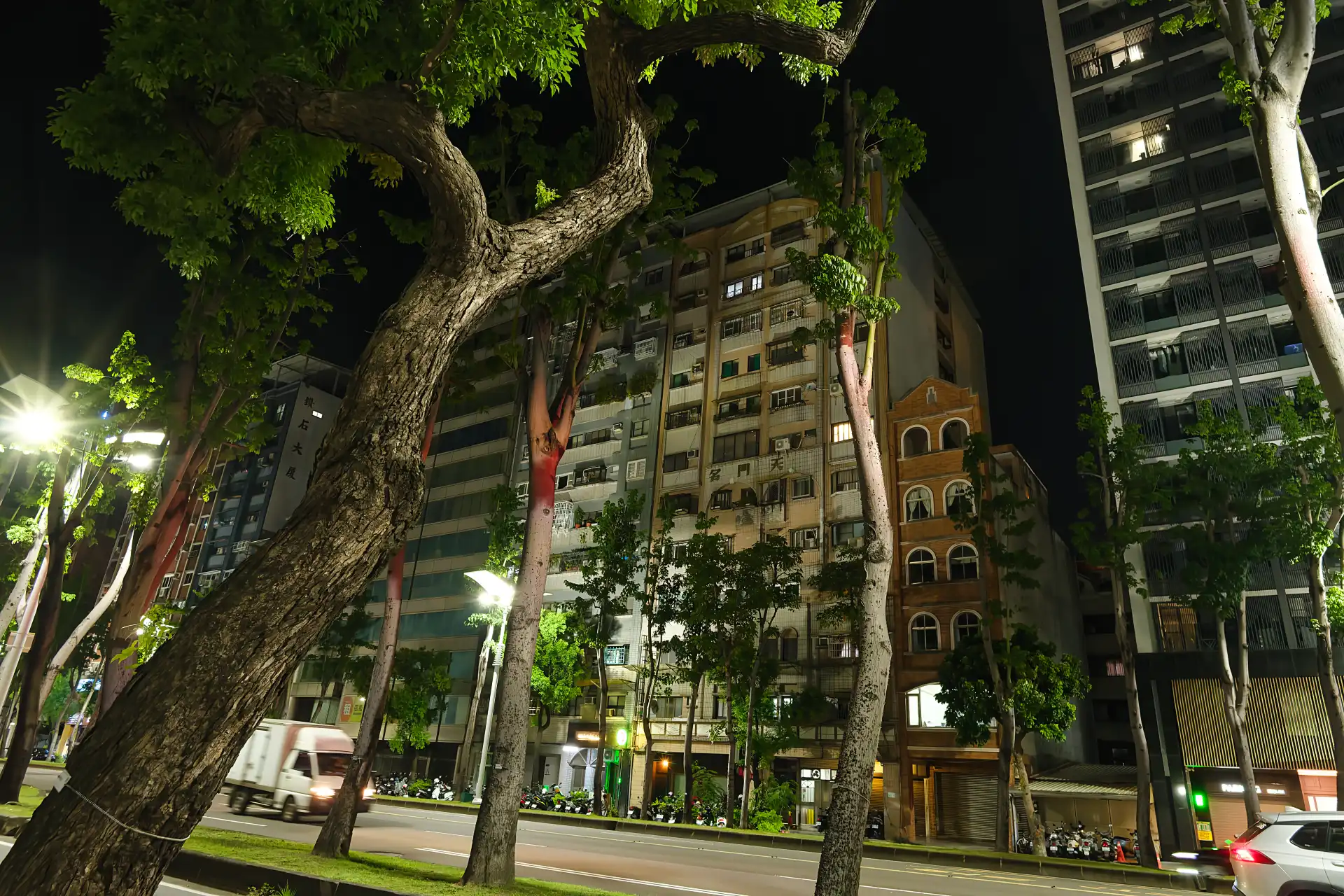
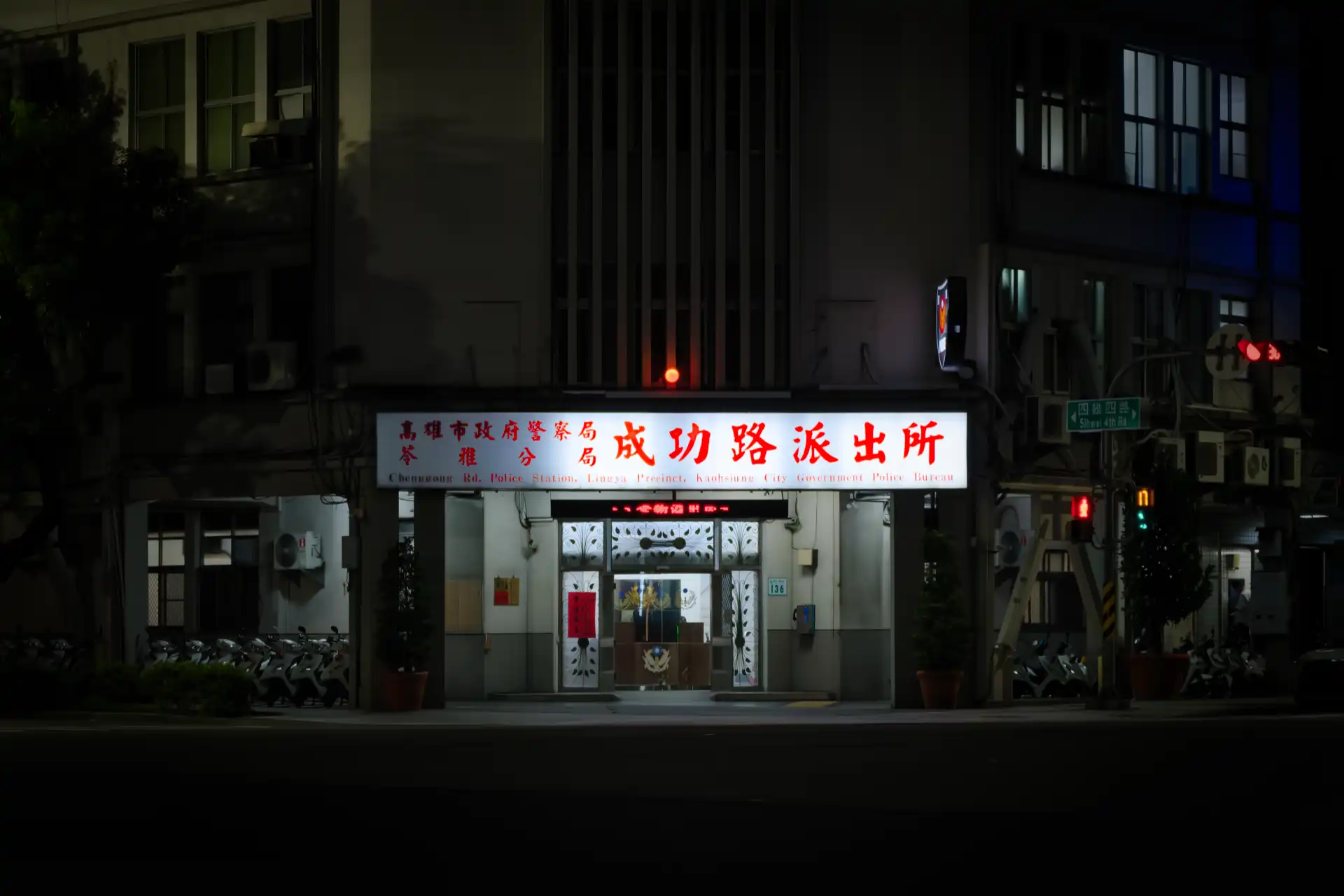
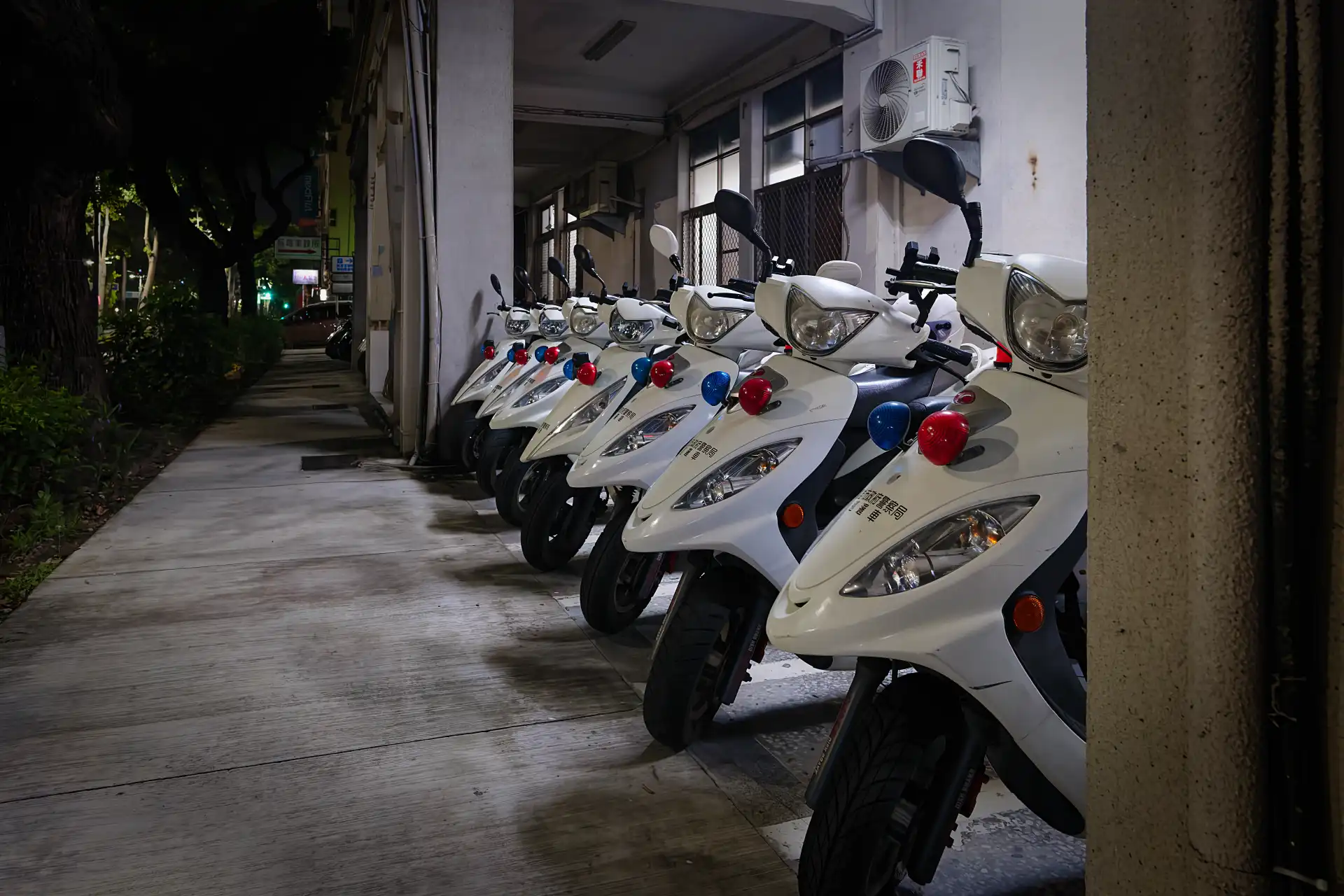
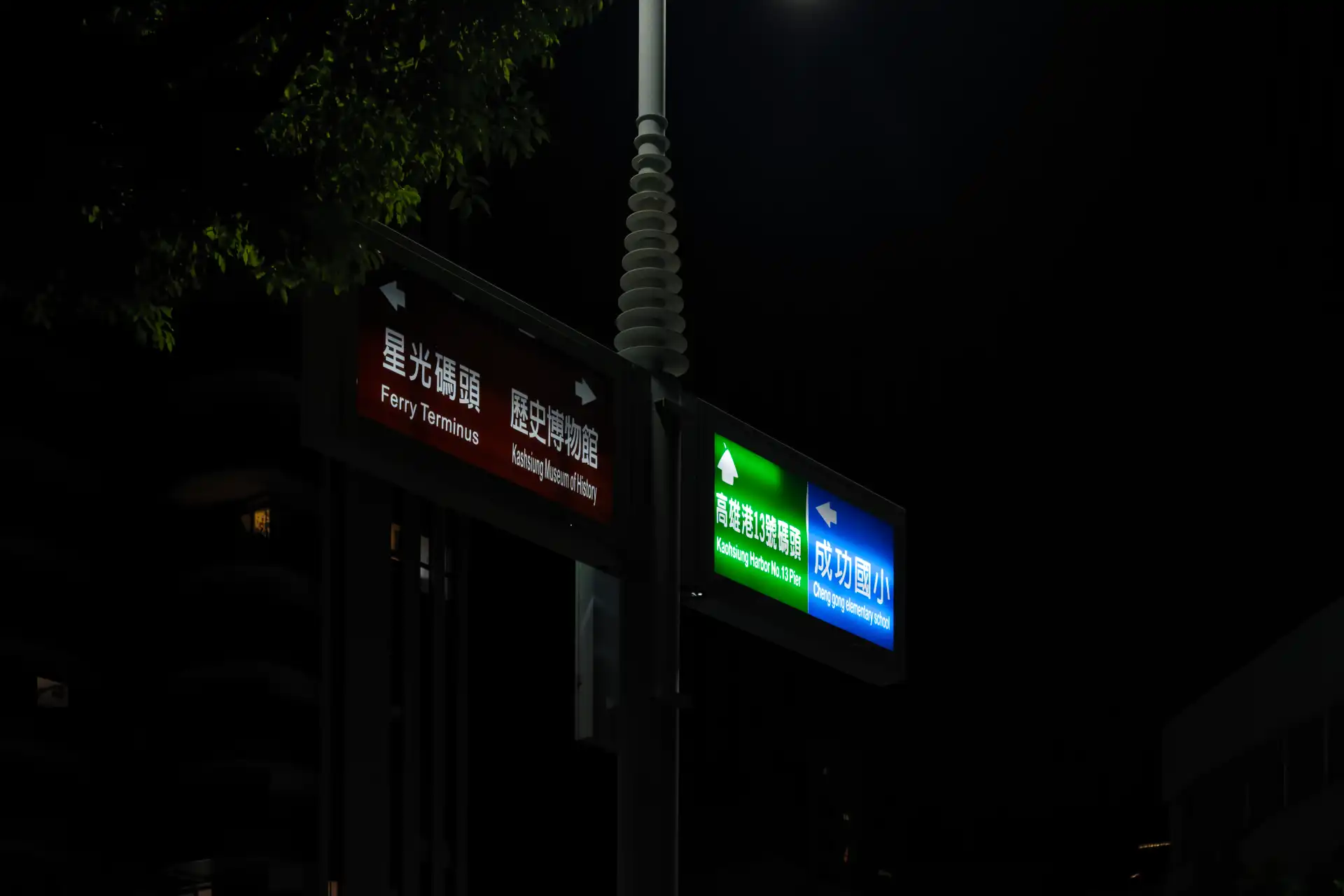
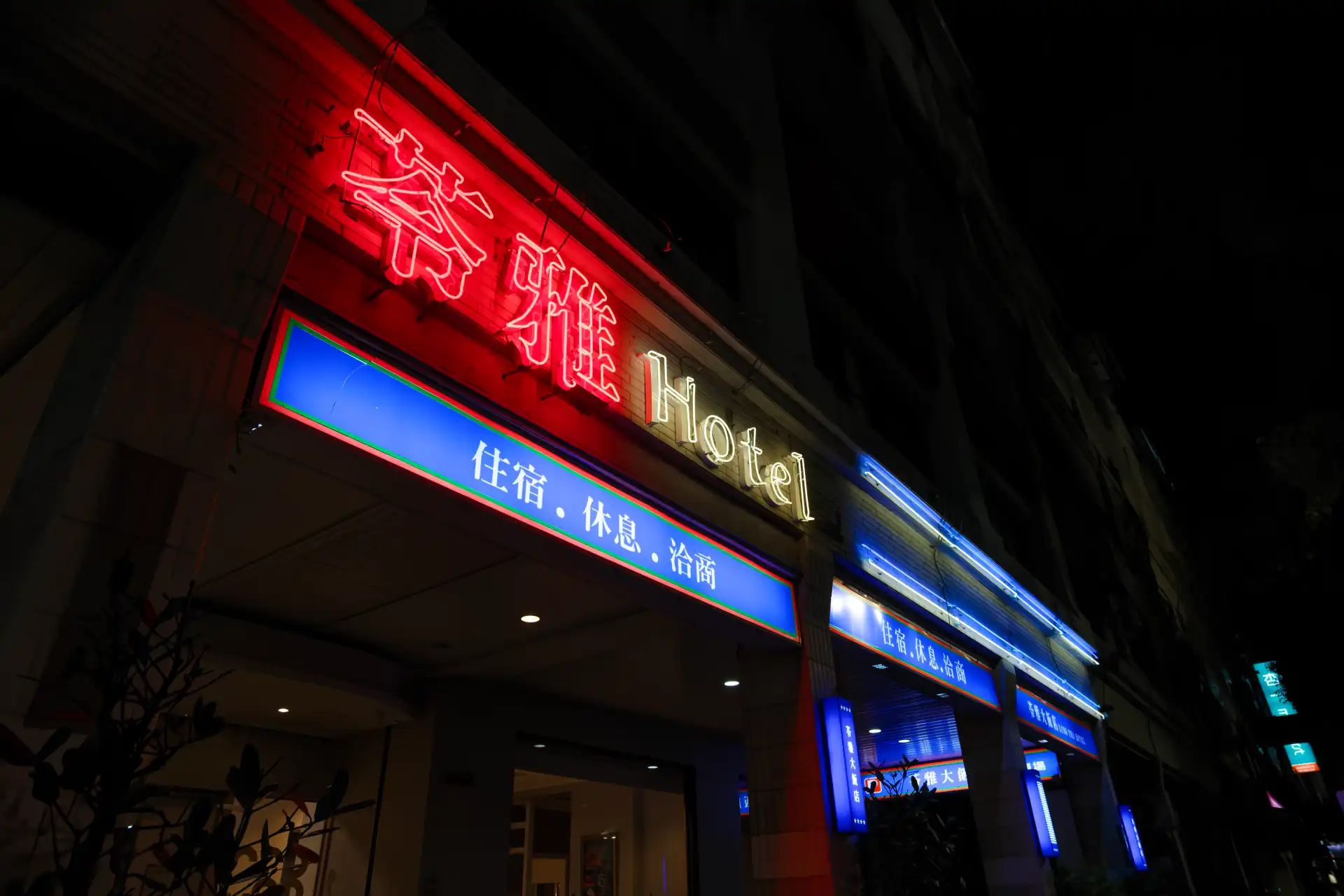
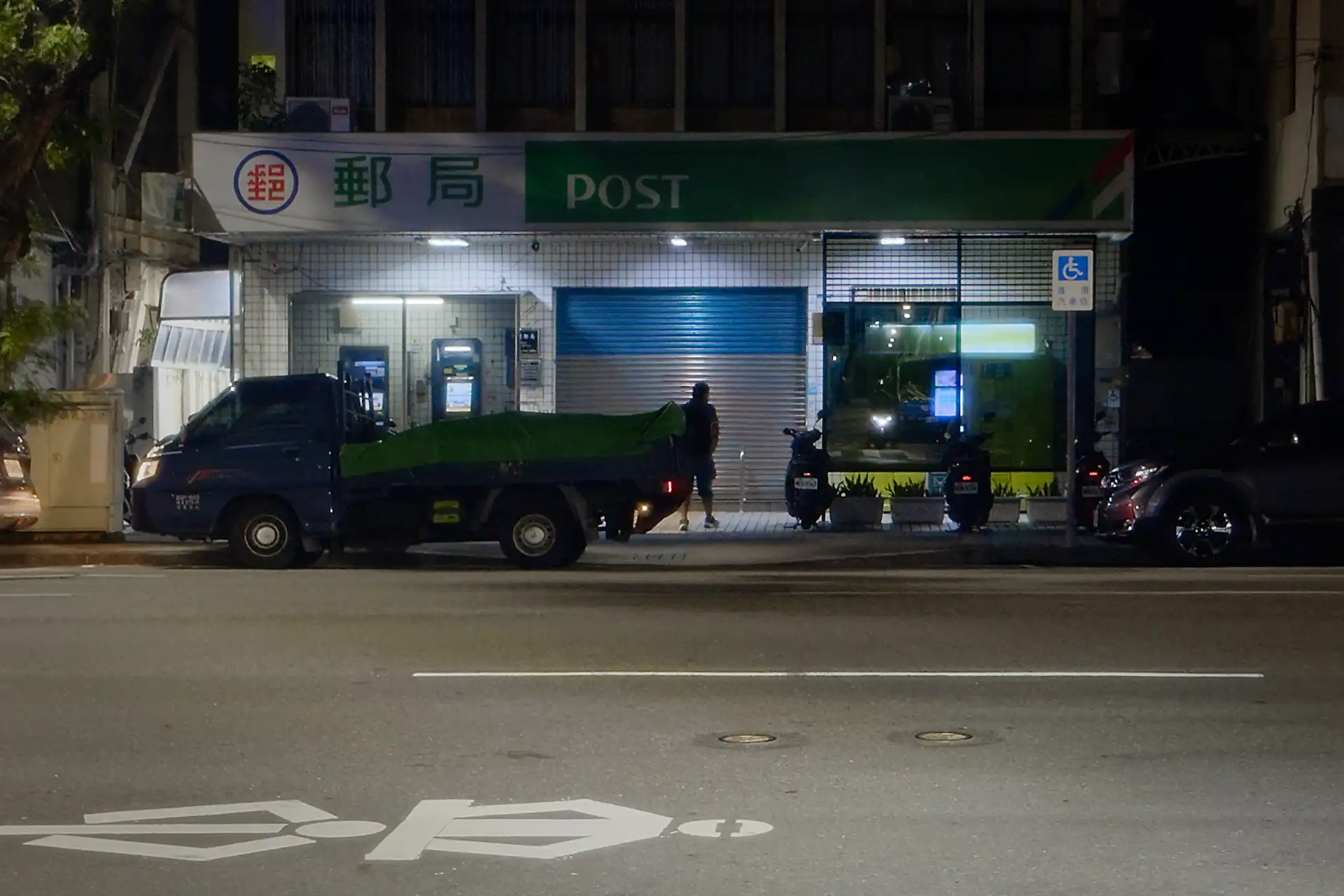
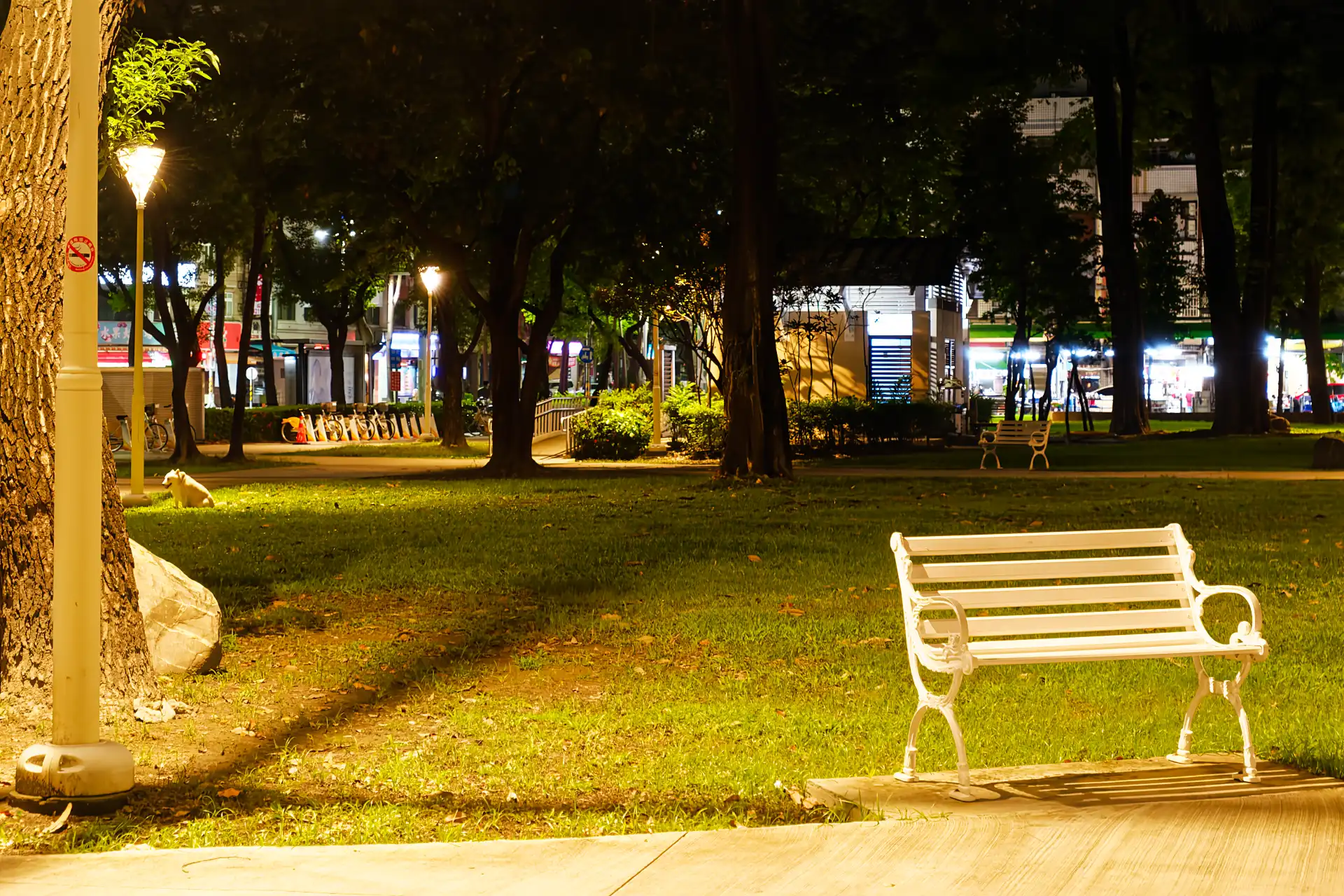
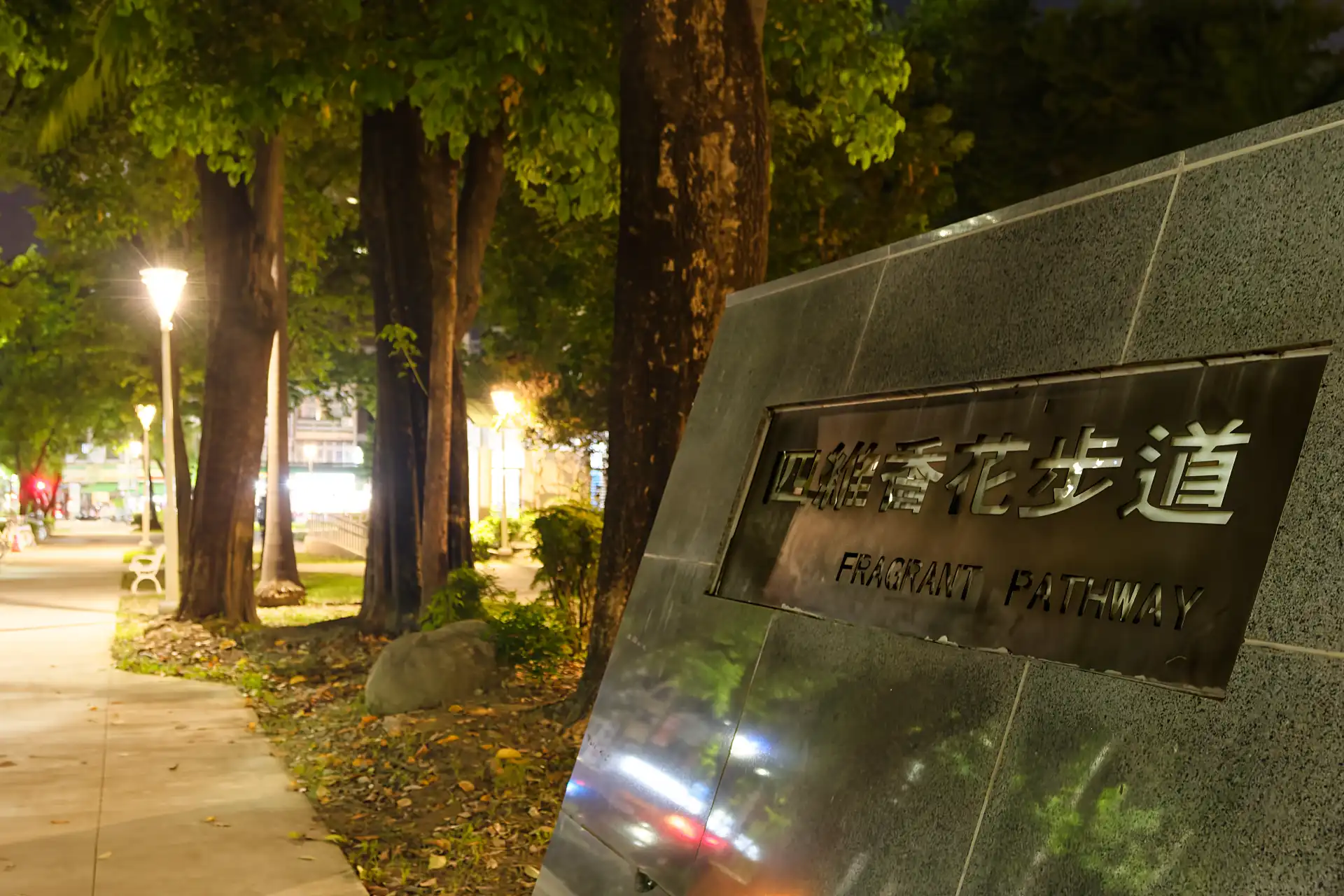
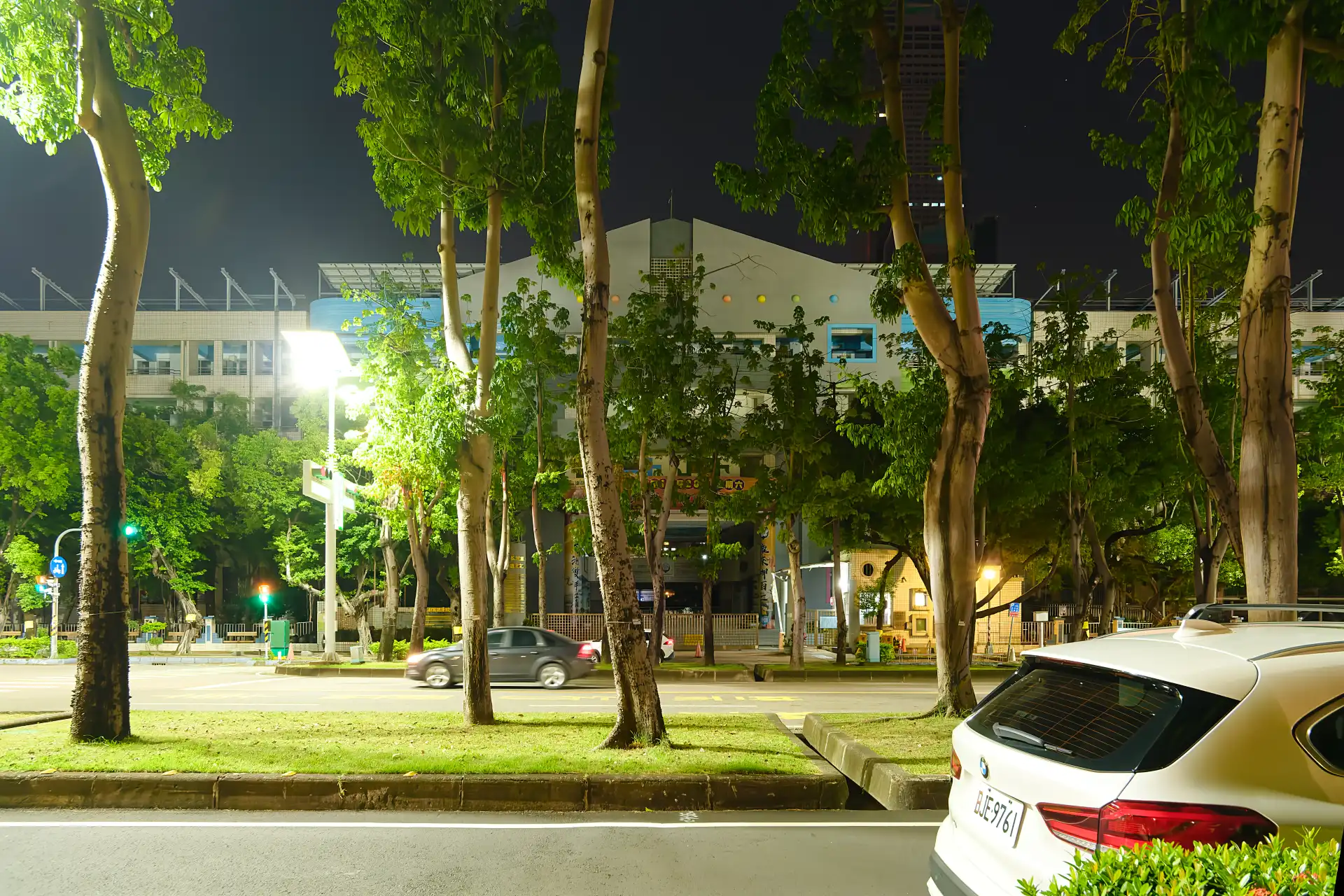
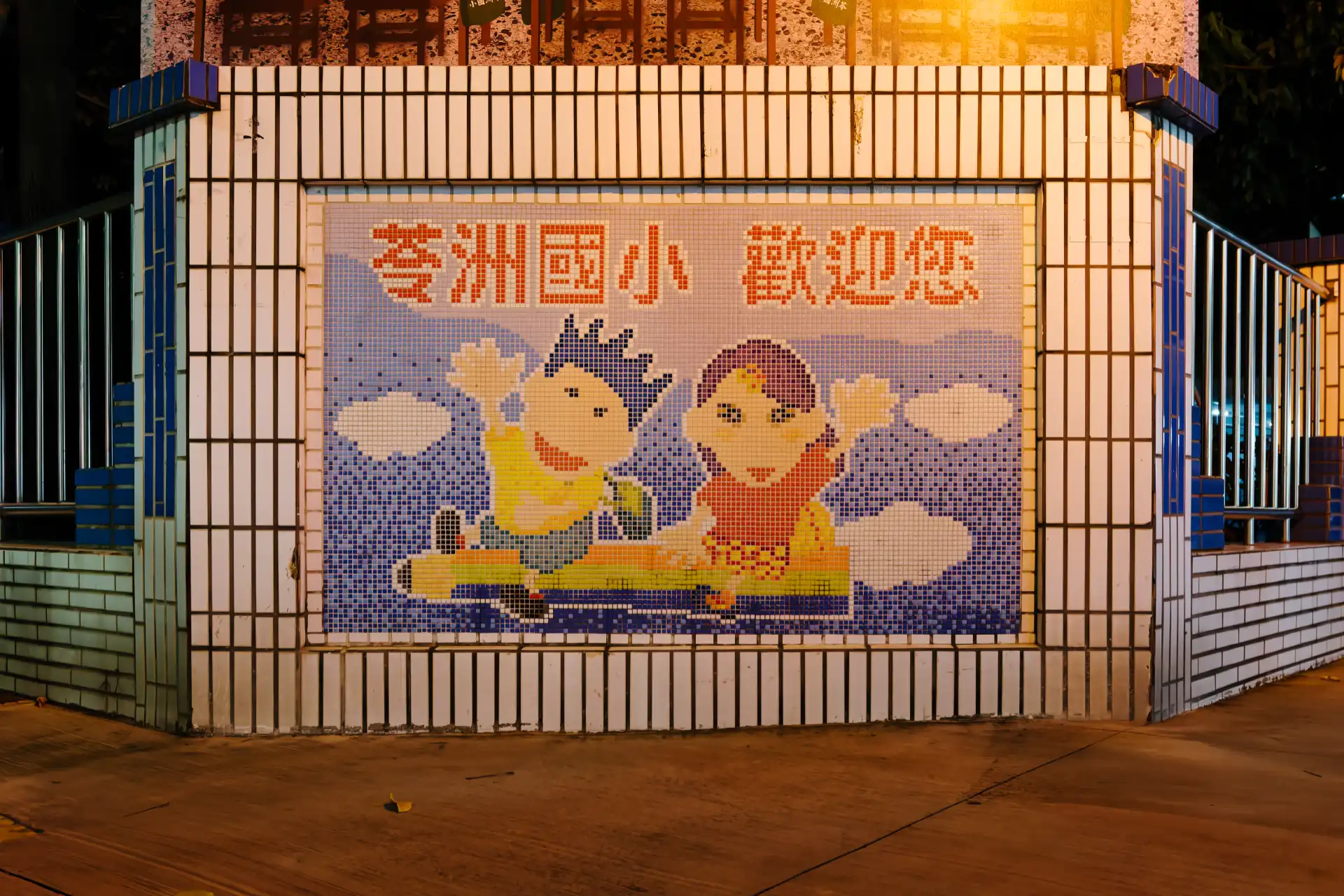
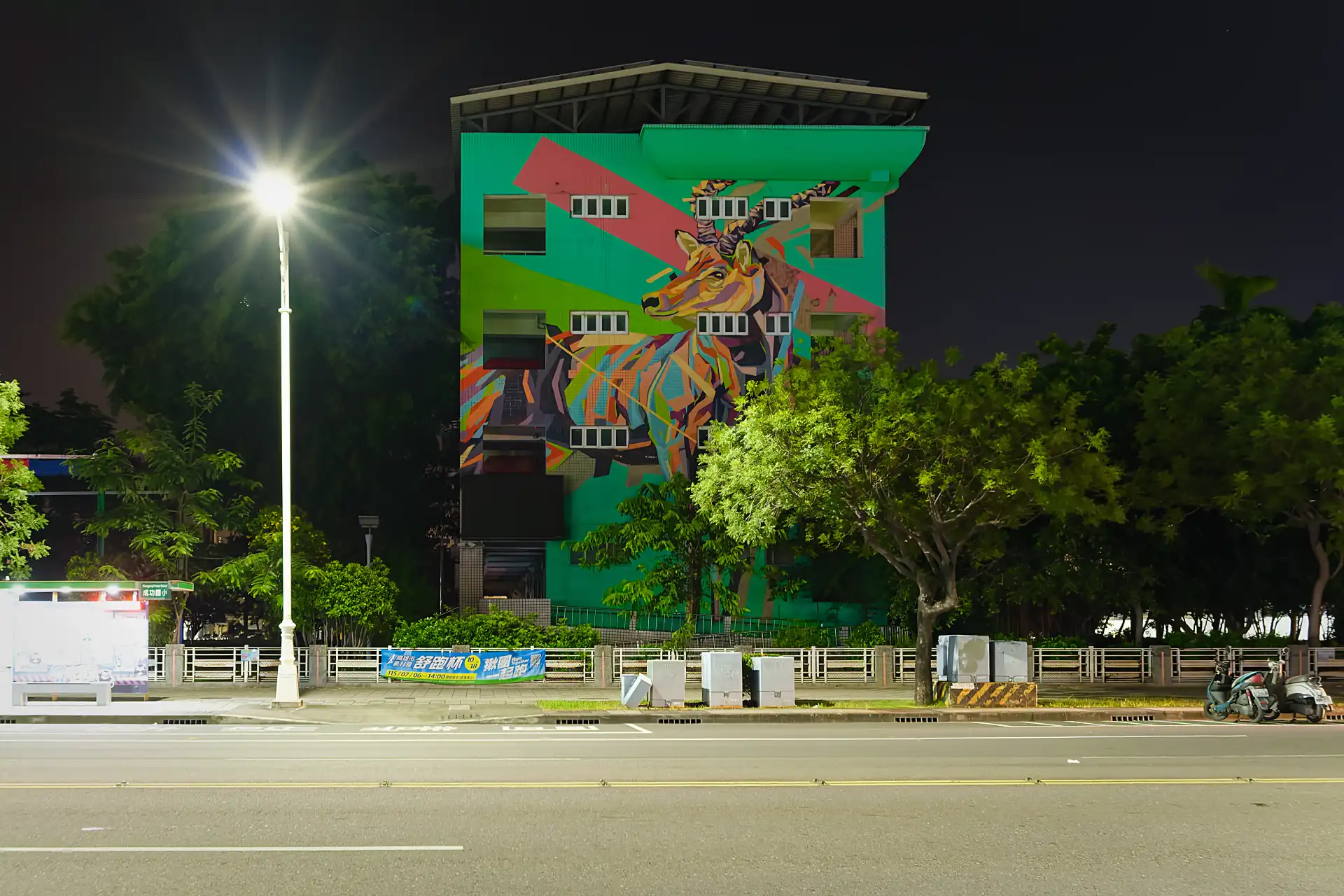
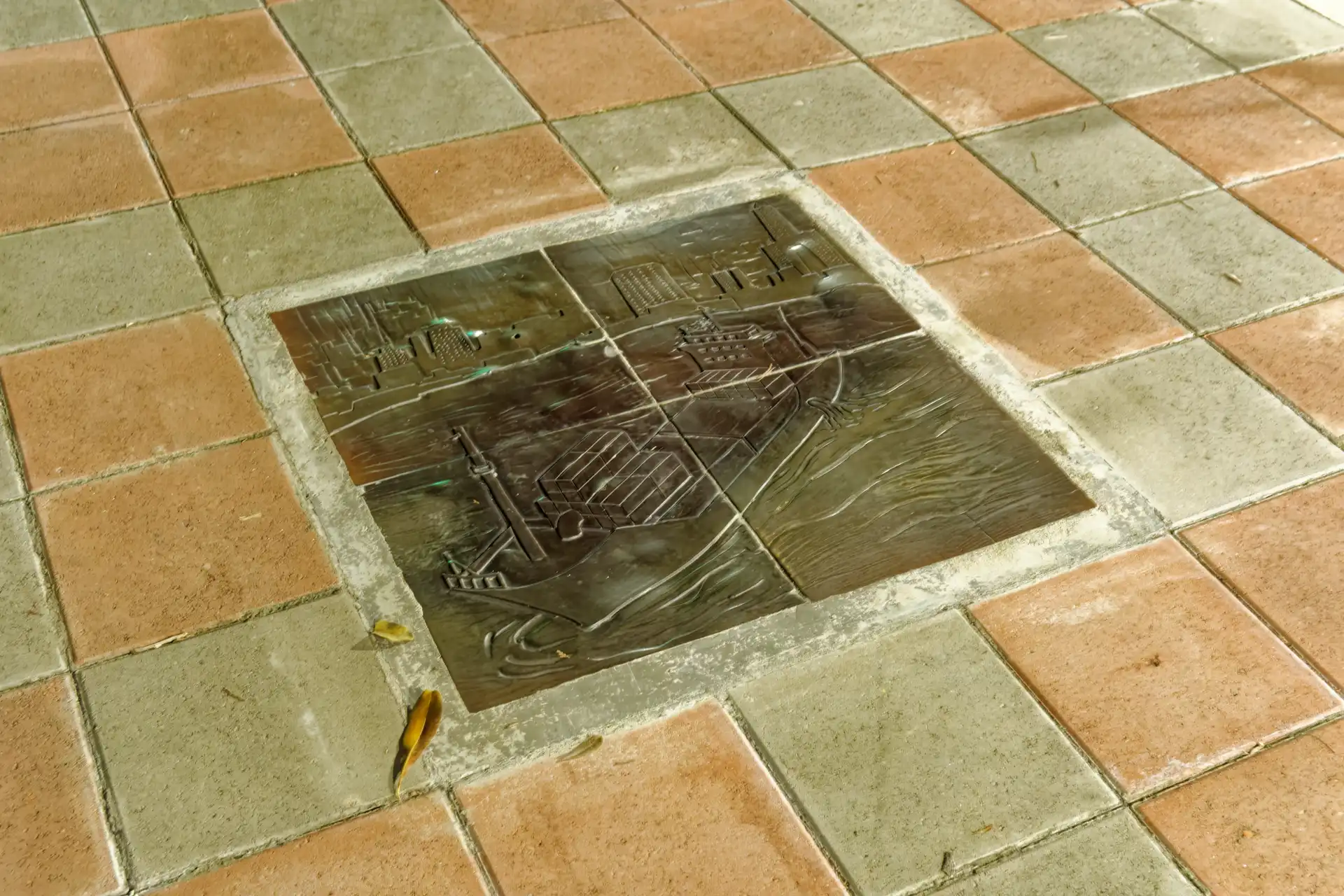
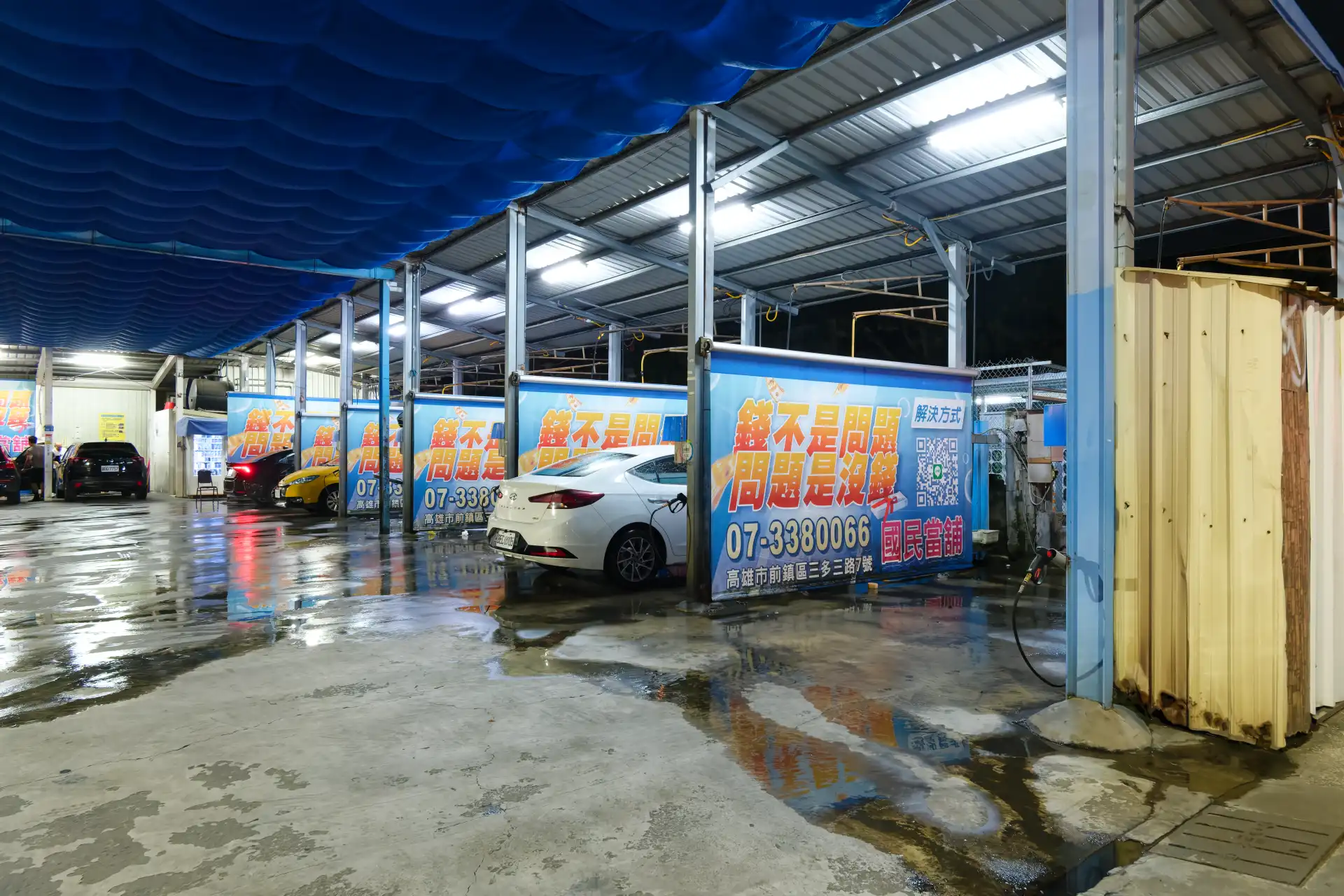
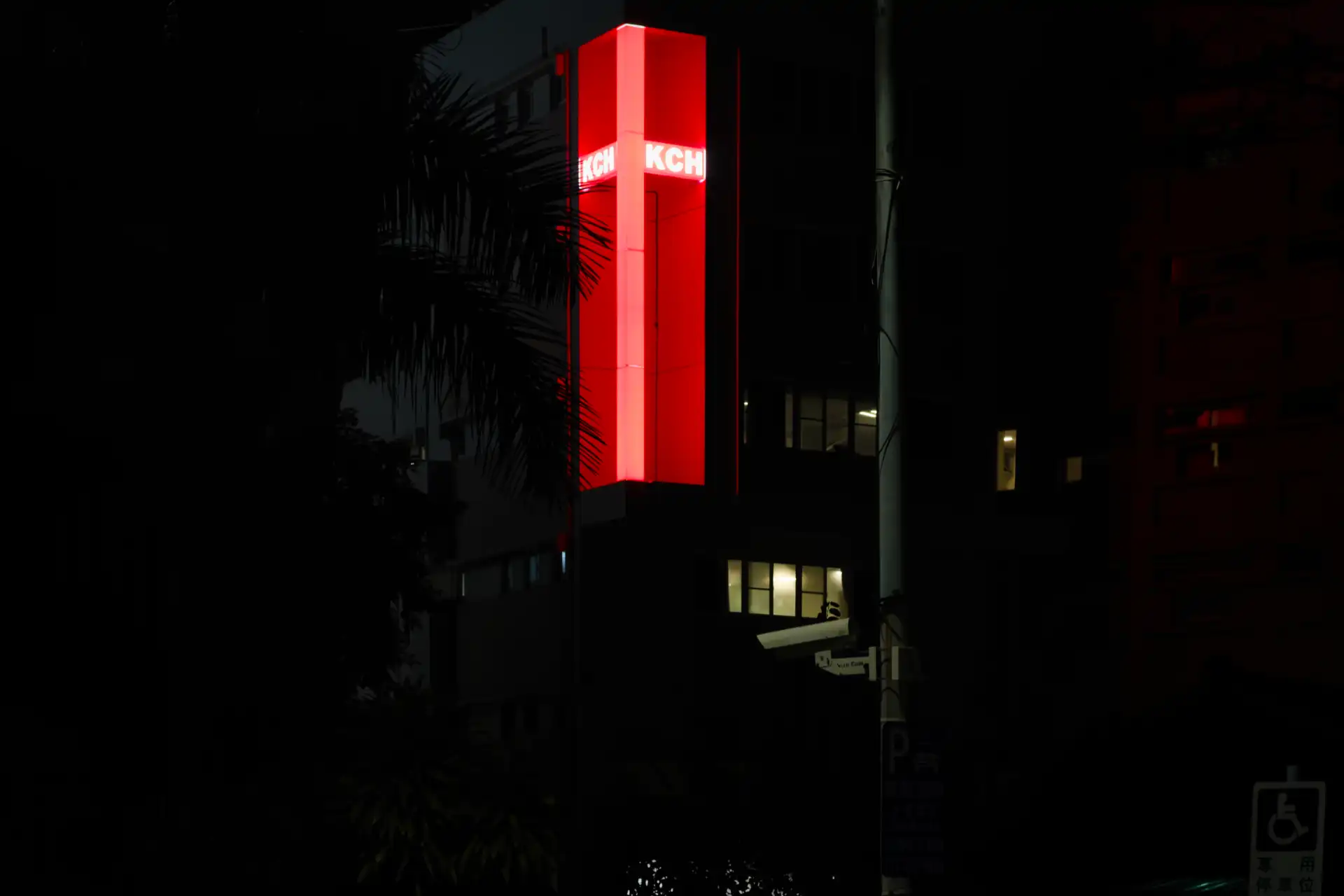
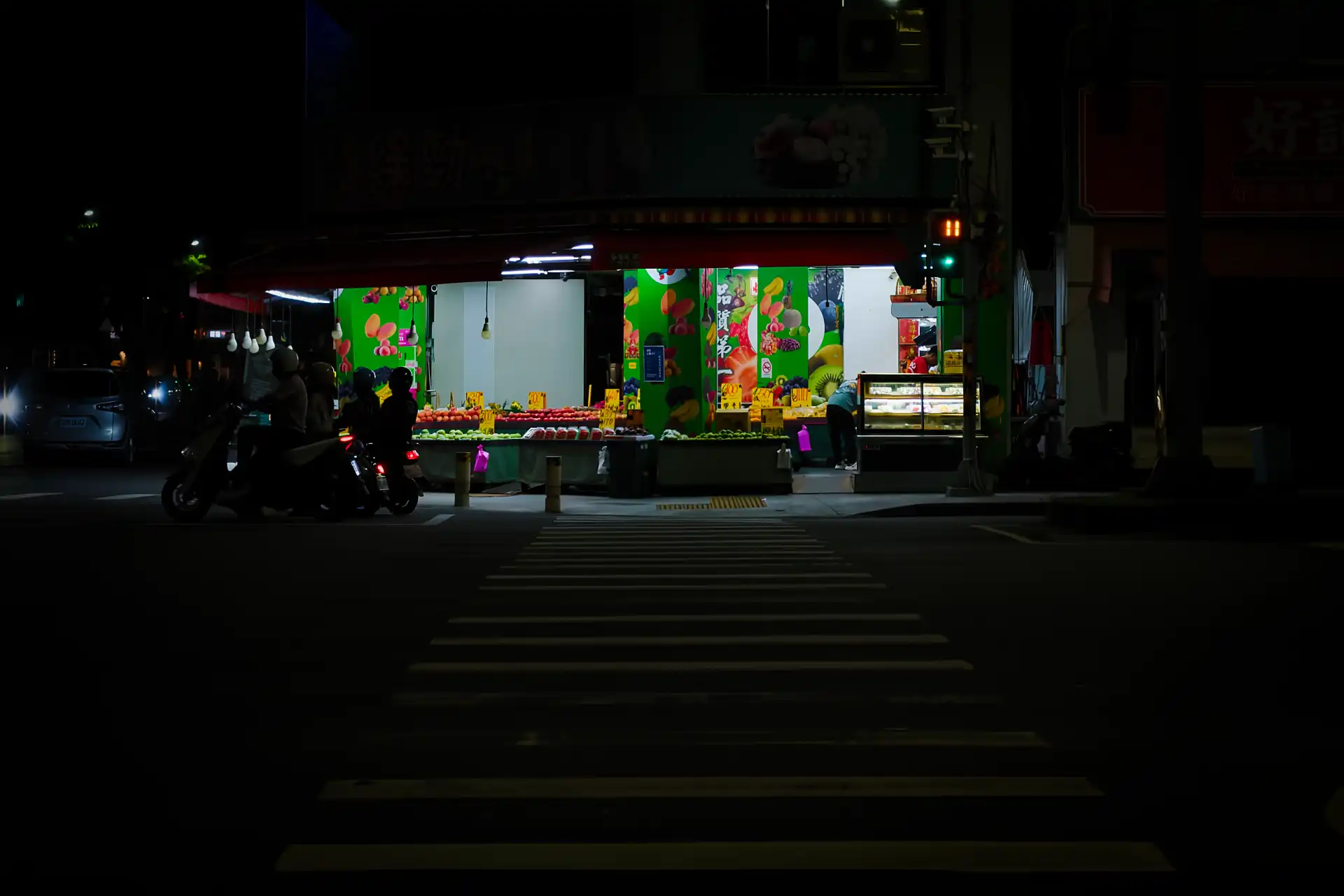
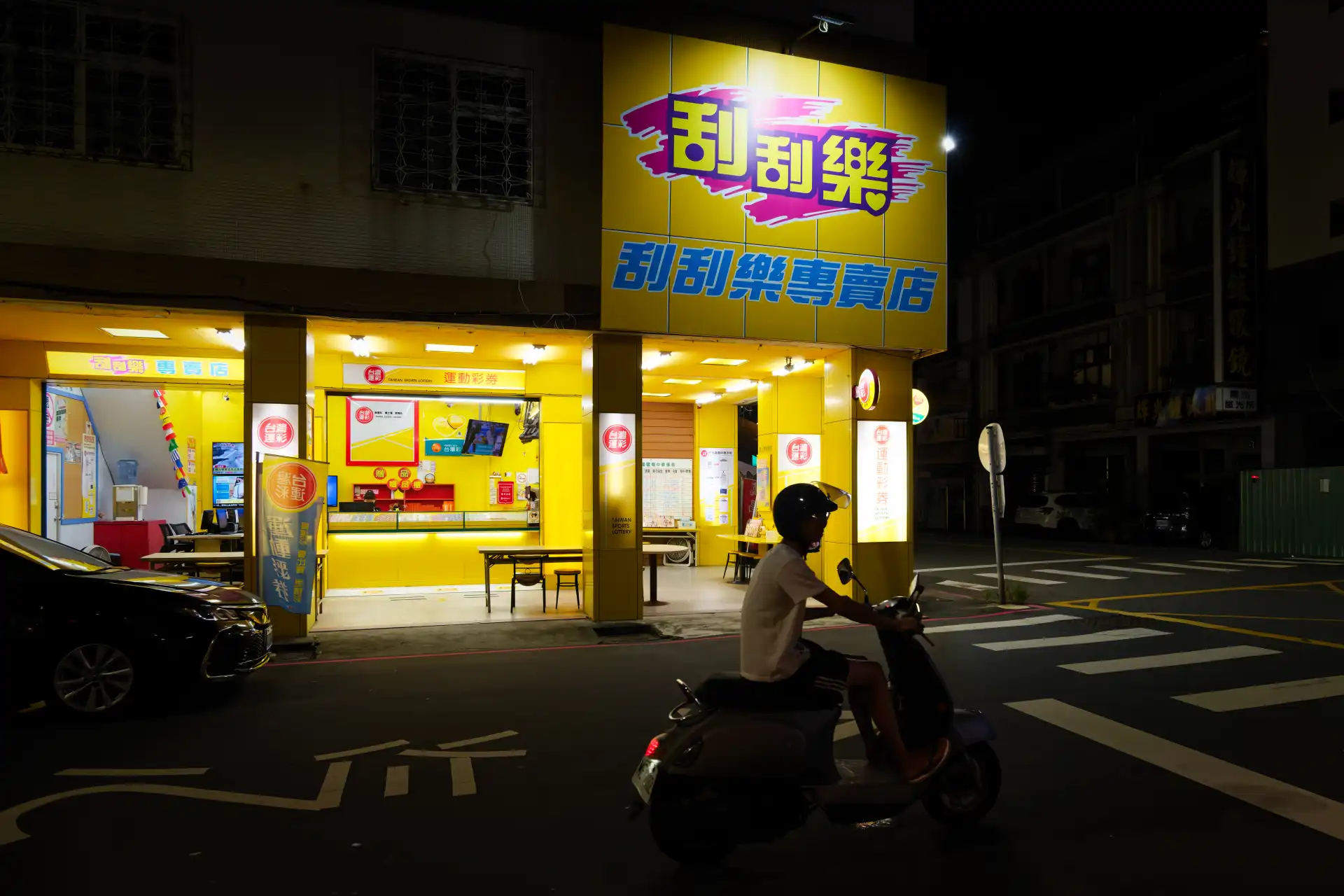
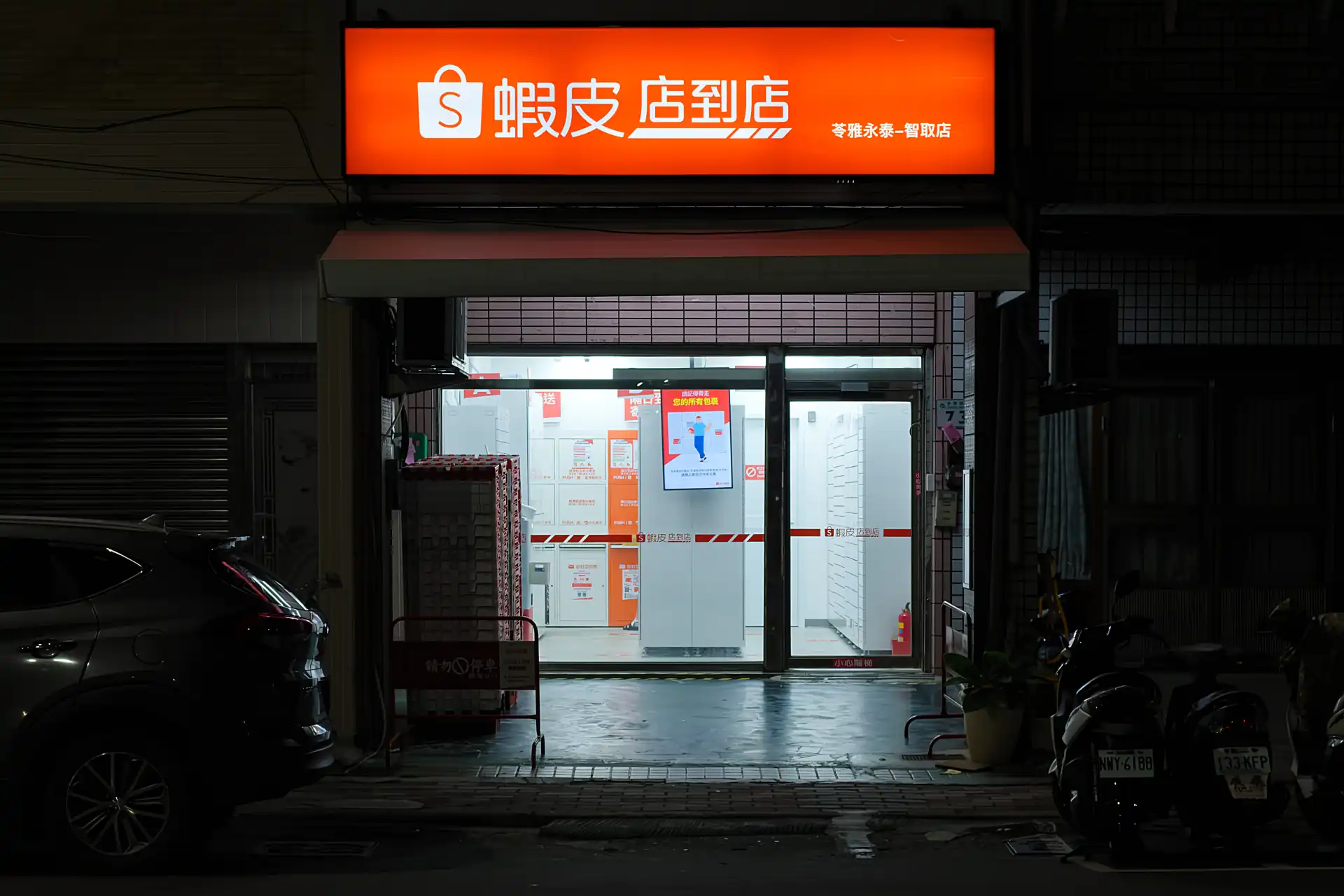
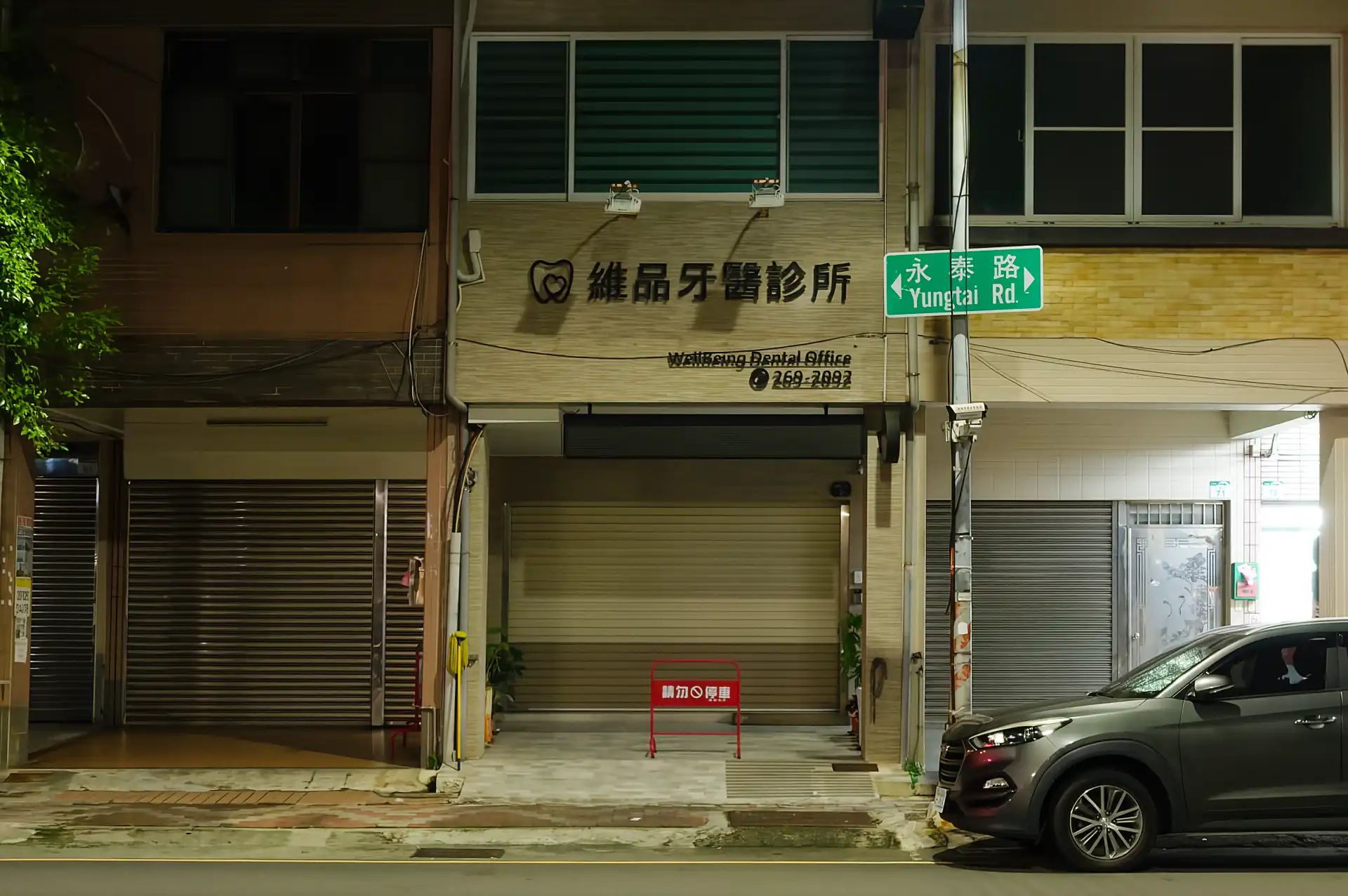
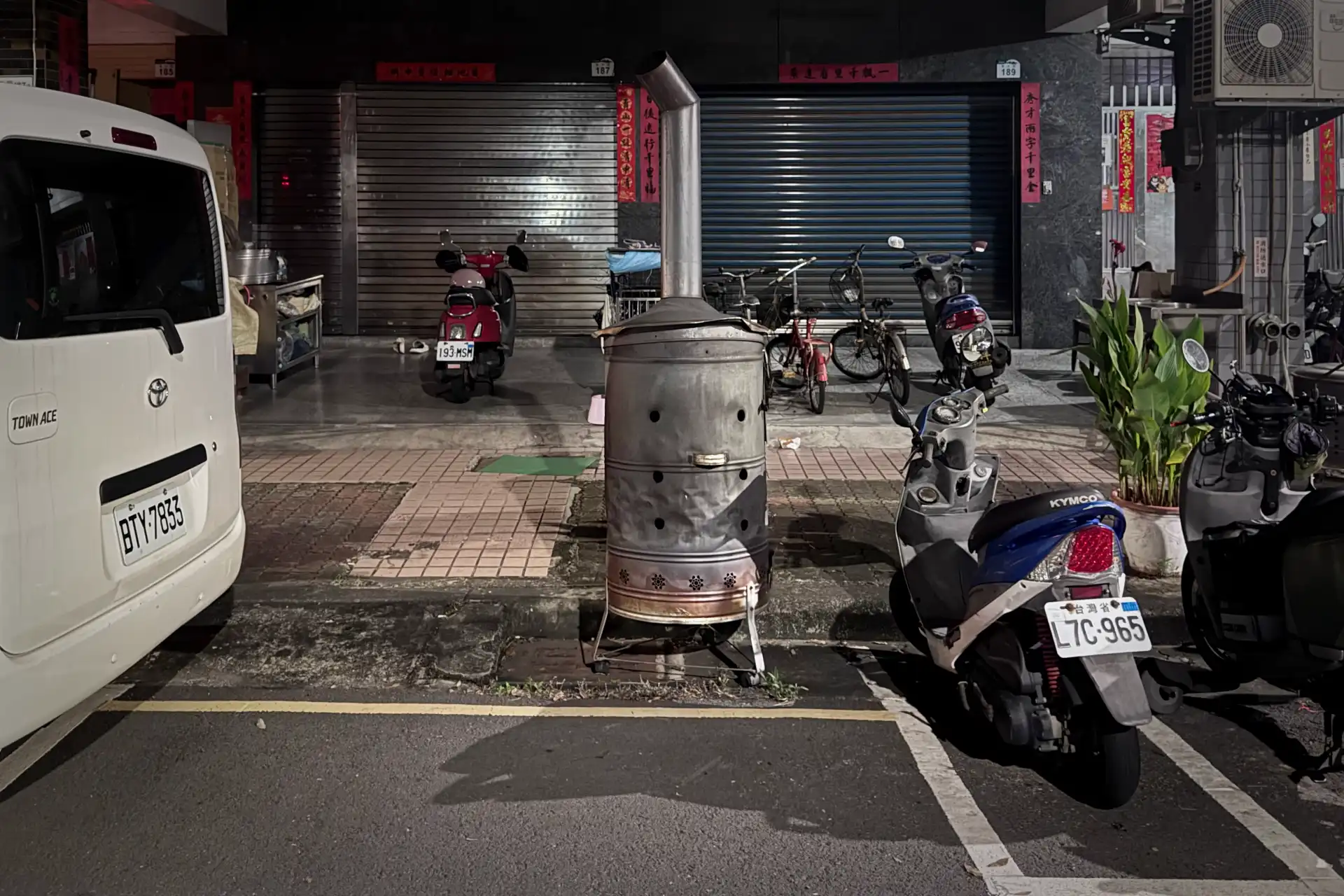
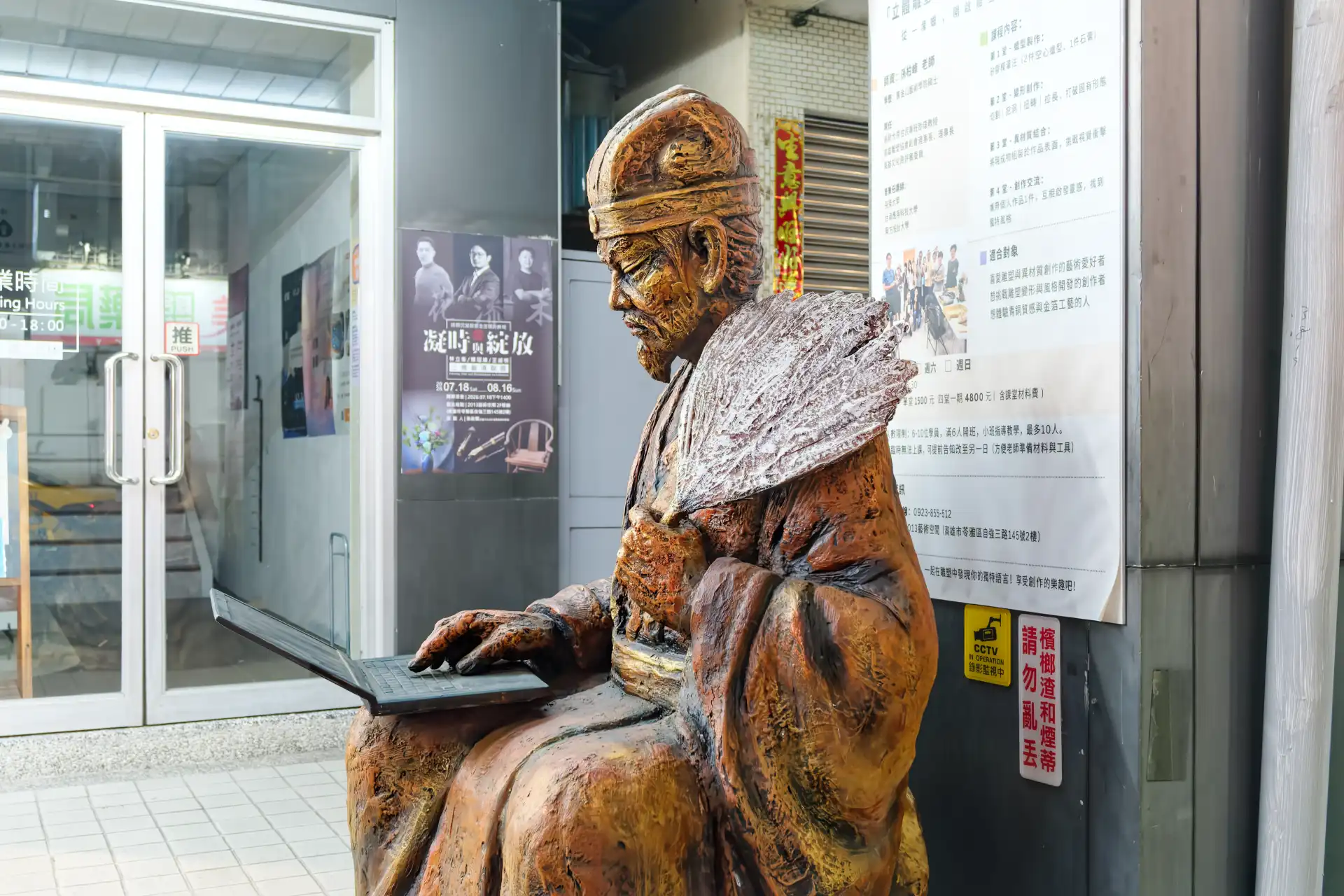
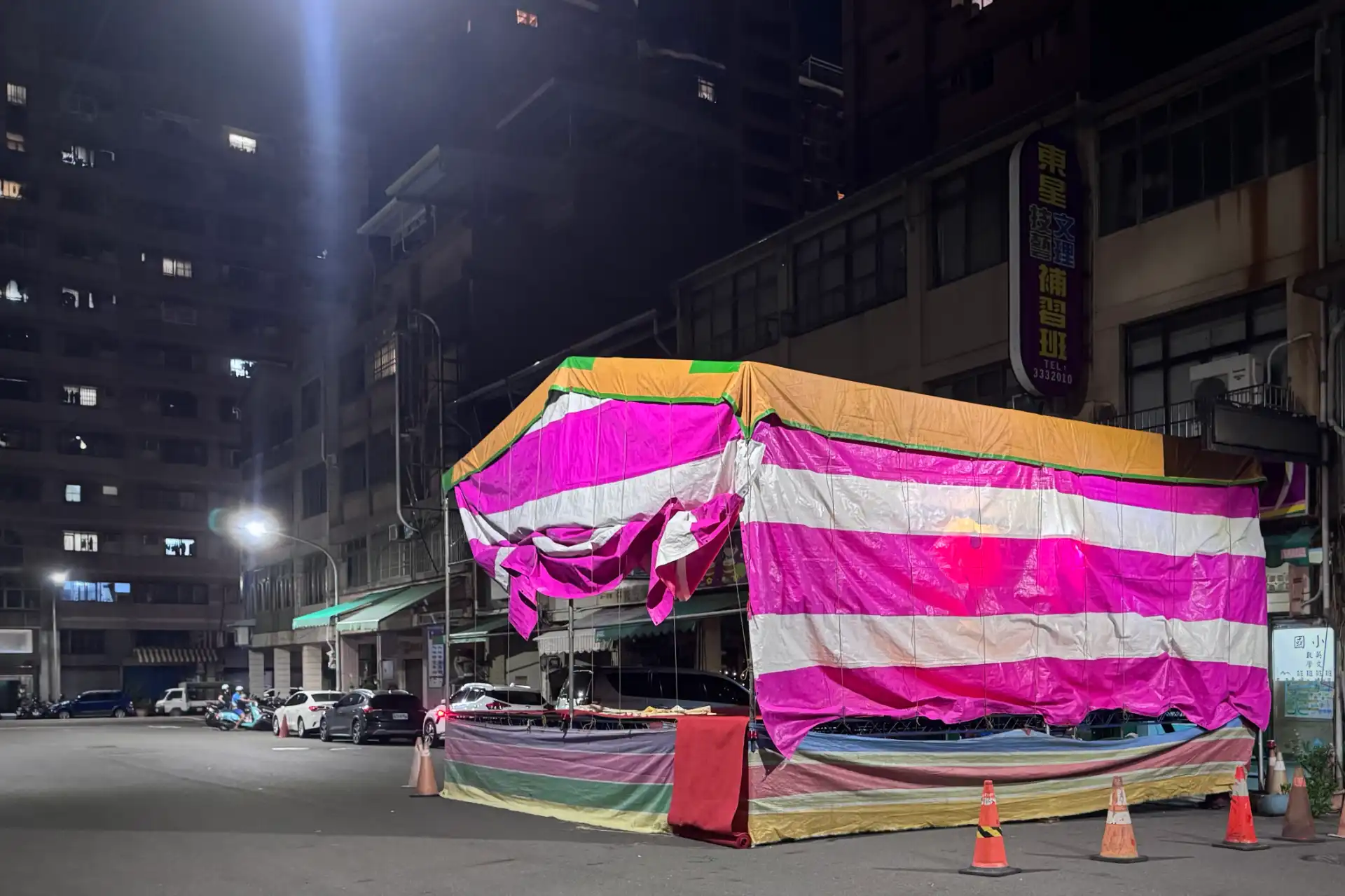
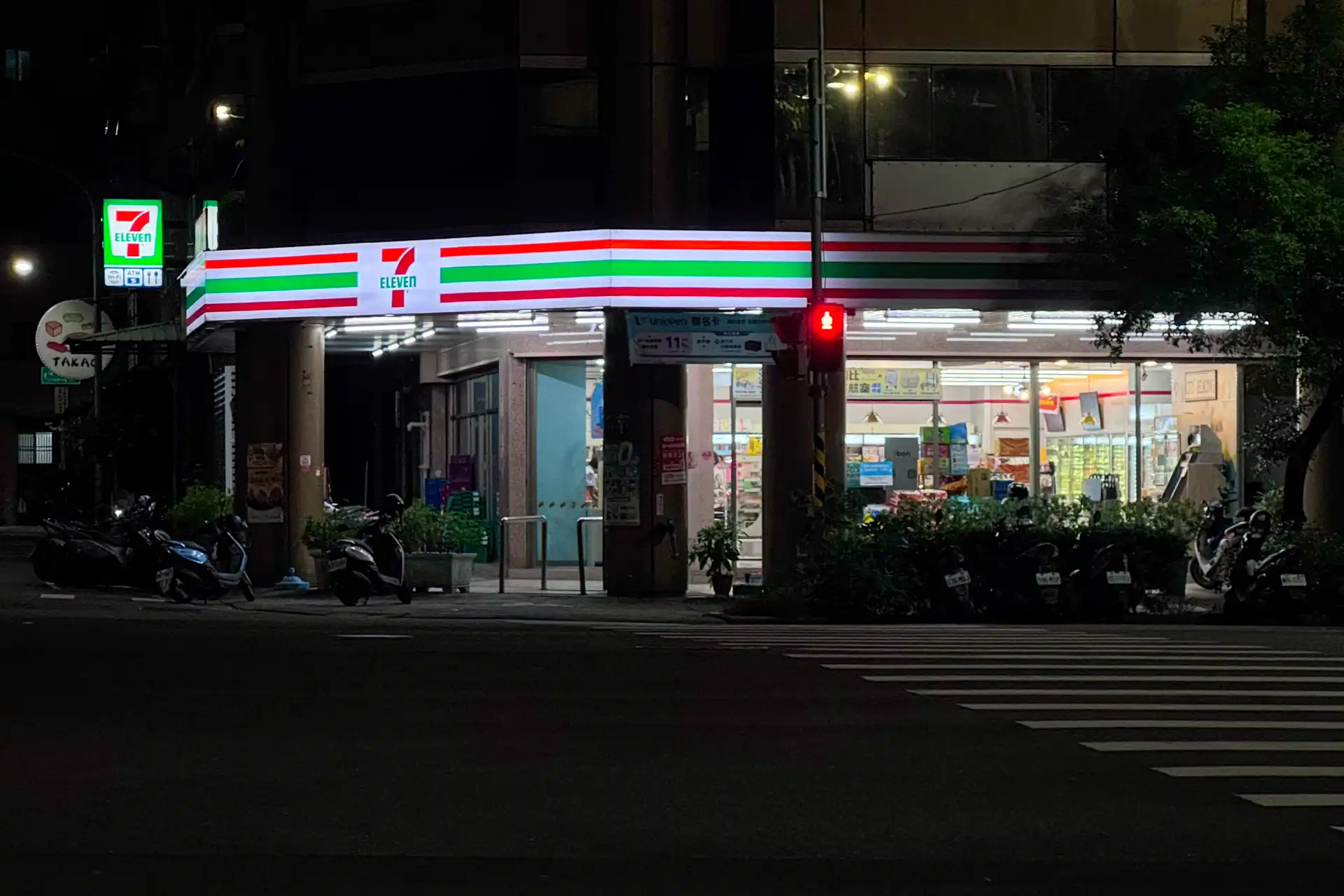
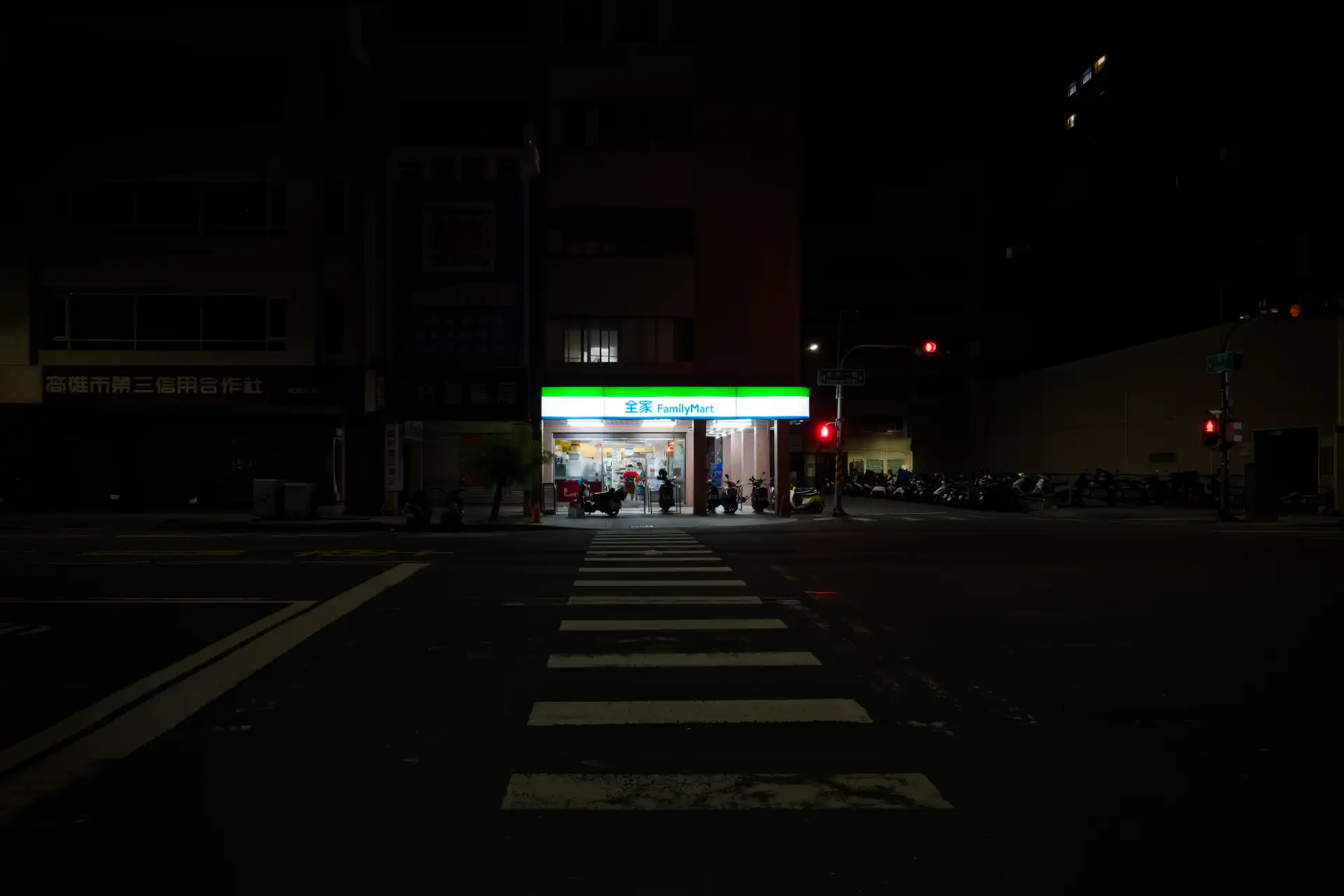
This is the nearest part of my local night market, Ziqiang Night Market (自強夜市). In Kaohsiung, the vast majority of night markets (including this one) are on public roads. As you can see, people drive their scooters right up to the stalls to make their order.Most of the stalls close between 9pm and 10pm. About two-thirds of them were closed by the time I was there.But my favorite one was still open, still selling my favorite night market food: green onion pancakes.Adjacent to the market, I used to sometimes buy shaved ice at this dessert store.But instead of shaved ice, this time I bought a cup of douhua with barley. It’s a refreshing traditional dessert. You can choose from around a dozen toppings, but I usually stick to barley or mung beans. The douhua itself is soft, silky, chilled tofu with the texture of thick custard and the slipperiness of jelly. So cold and so good.Adjacent to Lingya Night Market is this covered wet market, called Lingya First Public Market (苓雅第一公有零售市場). It’s bustling during the day, but near-empty every night.Here’s a view of some of the stalls. The daytime scene is completely different. Noisy and alive, and filled with things that vegetarians like me don’t want to buy.I remember seeing this cat (or one just like it) a few times when I lived nearby. I was happy to see it again.There’s a network of narrow side alleys throughout the market.But at night, the entrance closest to the night market isn’t so dark. Here, some of the eateries were still open.Just along from the night market, this is my favorite restaurant for vegetarian fried dumplings. (Unsurprisingly closed at 10:30pm.)I also like this place, which sells vegetarian rice dumplings. They’re a southern Taiwanese specialty made with glutinous rice and peanuts, wrapped in bamboo leaves. This restaurant was awarded a Michelin Bib Gourmand in 2022. It’s also the restaurant where, awkwardly, I mistook a bowl of rubber bands for a side dish in 2023.Across the street, this was my local juice shop. I used to buy various combinations of apple, dragonfruit, guava, mango, melon, pineapple, and watermelon juice here; usually on the walk home from Chinese class. But the branding has changed since I moved, so I wonder if the manager I knew is no longer there. I always appreciated him remembering my preferences: “small ice, no sugar”.Further down the road, this tea shop is where I’d buy lemon black tea on my way back from the supermarket.Just around the corner, this was my favorite local café. Their coffee’s excellent; the dark wood-paneled, book-filled interior tickles my literary pretensions; and the owners have a beautiful, friendly Shiba Inu. They say he’s the real boss.Seemingly at the opposite end of the sophistication spectrum, this is the local “Foreigner’s Bar”. For a long time I felt this place seemed incredibly sinister: the rules printed on the glass door include “no drugs” and “no weapons”, and the entrance is decorated with Buddhist wanzi symbols (卐). Although common in Taiwan, these are often avoided by foreigners because of their obvious similarity to Nazi swastikas. But one day, I casually mentioned my discomfort to a friend who thought to check reviews on Google Maps. She discovered it’s actually an LGBTQ-friendly, women-owned, Filipino disco bar. My suspicions couldn’t have been more wrong.Nearby, this is a self-service water station. Tap water’s widely considered unsafe to drink in Taiwan, so these are a popular alternative to installing a water filter or buying bottled water. The options range from NT$15 to NT$30 for 20 liters (NZ$0.75 to NZ$1.50). The prices depend on the type of water: alkaline bamboo charcoal, mineral, or reverse-osmosis purified.This is one of four temples near my old apartment. Close to the harbor, it apparently has a long association with gangsters and the drug trade. I’ve walked past it hundreds of times at night and never seen anything suspicious, but then again, if I was a gangster or drug lord I’d probably conduct my activities away from the street.Here’s another local temple.And another.This is a different type of grand building, the Union Bank of Taiwan.Paving tiles on the sidewalk outside.This building is of greater historic importance. It’s the Chen Jhong-He Memorial Hall (陳中和紀念館), a small museum dedicated to its namesake. He was an influential businessman during the late Qing and Japanese colonial periods. This was his private residence when it opened in 1920, and was notable for being the first Western-style house in Kaohsiung. Unfortunately, it closed for renovation before I moved to Taiwan, and is yet to re-open.This apartment building’s not so historic, and perhaps not so robust either. I filmed its roof detaching during Typhoon Krathon in 2024.The largest building in the neighborhood is Yuan’s General Hospital (阮綜合醫院). It’s where I first saw a family doctor (GP), back in 2023. Around the corner, this is the emergency entrance. It’s normal to see ambulances parked on the road outside, with paramedics wheeling patients across the sidewalk.Nearby is this row of high-density apartment buildings. Most have shops, restaurants, or bars on the ground floor.On another street, a less dense arrangement.At night, I love detouring through laneways and alleys. Without any safety concerns, these become intriguing, peaceful places after dark.This was my local police station. Note the red light above the entrance. So far as I’ve noticed, these are present on all police stations in Taiwan. As a light in the darkness, historically they symbolized the police station being open and available to help. (In 2006, I lived in Invercargill City in southern New Zealand, where similar red lights were used to identify brothels. I guess they were also open and available to help…)Along the sidewalk outside the police station, a line-up of police scooters. These feel normal and appropriate to me now, but when I first visited Taiwan in 2018, I remember thinking they looked like toys.Many sidewalks include potted plants, placed there by people from adjacent homes or businesses. I love that these never seem to be damaged or stolen. It’s also normal to see goldfish in large ceramic bowls amongst the plants.These way-finding signs are mounted on Jetsons-style retro-futuristic, space-age modernist poles. I don’t know how useful they are though: the Ferry Terminus and Kaohsiung Museum of History are kilometers away.I always liked this hotel’s neon red sign.Here’s the local post office, which I’d occasionally visit to send gifts overseas. As with many things in Taiwan, I make notes on my phone to remember how to do infrequent tasks in a Chinese-language environment. But bewilderingly, every time I visited the post office, the procedure seemed to change. This became less of an issue over time, as my Chinese ability slowly improved.This local park was renovated one or two years ago. It’s a nice spot. To the left you can see a dog (its owner out of shot), and a line-up of YouBikes.Every time I pass, I’m amused by its English name, Fragrant Pathway, because the building next to the pathway is a public toilet.Across the street, this is one of two local elementary schools. This architecture is standard for elementary schools in Taiwan: a long, four- or five-story building, with open-air corridors and a central core that leads to a running track out the back—used in the evening as a community exercise facility.A mosaic outside the school.I like this mural on the other elementary school. This is the pointy end of a long building that’s otherwise built in the same vernacular style.This school has a series of bronze plaques embedded in the sidewalk outside. This one shows a container ship in Kaohsiung Harbor, recognizable by the inclusion of Taiwan’s second-tallest building, 85 Sky Tower, at the top-right.Next to the school, this self-service car wash is where I’d clean my scooter. Prices would always increase three-fold in the couple of weeks leading up to Lunar New Year, capitalizing on pre-New Year cleaning traditions.On the other side of the school grounds is this stylized cross on the Kaohsiung Christian Hospital.This was my local fruit shop, where I’d buy three packs of pre-cut fruits for NT$100 (NZ$5). (I’d usually get dragonfruit, guava, and melon.)This is a branch of the government-controlled Taiwan Sports Lottery (台灣運彩). I don’t know about the “sports” part, but with friends I’ve bought regular lottery tickets a couple of times, as well as a few instant scratch cards. I once won NT$200 (NZ$10) at Lunar New Year. (The Taiwan Sports Lottery is unrelated to the Taiwan receipt lottery.)This was my local Shopee collection point. Shopee is a Singapore-owned online shopping platform, similar to Amazon. Most things you order can be delivered to these unmanned collection points free-of-charge, then you pay in cash (via a self-service kiosk) when your package arrives.My local dental clinic. I chose this one after seeing a Google review that said it had English-speaking staff (true, and they’re excellent).A common sight on Taiwanese sidewalks, these furnaces are used for burning paper offerings to ancestors and gods. Some are the size of wastepaper baskets, and others can be much larger. The first time I saw a truly big one (about 1 meter in diameter and 2 meters tall), I was outside a government office. I mistook it for a form of document destruction, which I guess, technically, it was.A sculpture on another sidewalk, outside a convenience store.Walking back to my scooter, I came across this marquee. The on-street approach isn’t unusual: marquees are often set up for wedding banquets, funerals, or temple activities, and typically block one or two lanes of traffic. I remember a friend being gently annoyed one had been temporarily installed outside his house for a neighbor’s funeral, preventing access to his usual parking spot.This is the 7-Eleven where I understood my first joke in Chinese.And finally, a FamilyMart. Depending on how I count them or what routes I’d take, there were up to seven convenience stores within seven minutes’ walk of my previous apartment. This one was the closest. Like red lights at a police station, Taiwanese convenience stores are beacons in the dark. They’re places to buy bubble tea or espresso, buy concert or train tickets, do printing and scanning, eat hot meals, pay bills, send and receive parcels, and use the free Wi-Fi. They’re open 24/7/365, including during Lunar New Year and the strongest of typhoons. I started writing this post thinking of the night market as the heart of my former neighborhood—but perhaps it’s actually the convenience stores that fill that role. After all, night markets don’t have AC.