
Speaking of names
The weird and wonderful English names adopted by people in Taiwan…
I chose a Chinese name before coming to Taiwan and it’s served me well. Most of my friends here call me some variation of Zhen-Kang (振康), and I like it.
When I received permanent residency last year, my Chinese name became official. I now have two names on my Taiwan identity card: My original English name (written in English), plus my Chinese name (written in Traditional Chinese).
When making online purchases, signing contracts, or using my name in any official capacity, I can choose which to use.
In contexts where my language skill is likely sufficient, I’ll use my Chinese name. But when I want to signal that I’m a functionally illiterate foreigner, I’ll use my English name instead. This is useful, for example, when visiting the doctor—as administrators or nurses can readily identify me in the waiting room.
A Chinese name is also useful in contexts where there’s only space to write three characters in a ‘name’ field. (Three characters being the most common length of a Chinese name.) Previously, I would write my initials and hope convenience store clerks wouldn’t be too pedantic if I had to show my ID when collecting a package.
But back when I first arrived here, I wasn’t certain my Chinese name was a good one…
Chinese-speaking friends in New Zealand had helped me choose it, and obviously I trusted them—but I was also aware that they weren’t Taiwanese. Would my chosen name have some awkward local association I wasn’t aware of?
(Imagine arriving in the US having named yourself Justin Bieber, Marlon Brando, or Seymour Butts…)
I anxiously checked with my Chinese teachers and other new acquaintances whether my name was sufficiently ‘normal’. Universally, I was told it’s a decent-sounding and indeed normal Chinese name.
And so it is.
Interestingly and endearingly (and I mean this sincerely), Taiwanese people aren’t usually so conscientious when choosing English names for themselves.
This is something I really like. I think this speaks to a sense of permissiveness, and lack of judgmentalness, in Taiwanese culture.
Live and let live—to an extent. Just pick a name and run with it.
(Although, I must note Taiwanese citizens’ English names are effectively nicknames, and are purely unofficial in Taiwan. Until recently, it wasn’t even possible to have a standalone non-Chinese name on a citizen’s identity card—something that was especially galling for indigenous Taiwanese. So, as a foreigner with permanent residency, I am privileged to have an official Chinese name and an official English name in Taiwan.)
Anyway, a consequence of the laissez-faire approach to taking an English name is that often people won’t choose from a book of names—instead, they’ll choose from a dictionary.
In my time in Taiwan, I’ve encountered people with the following names (in this list, I’ve changed their family names to preserve anonymity):
- Burger Leong
- City Wang
- Foxtrot Chen
- Map Liu
- Pants Zhang
- Serious Tsai
It’s perhaps unsurprising that, early in my time here, I once thought an Uber driver’s name was Diamond Pro—until I realized that was actually his performance ranking.
But in Taiwan, seemingly random name choices aren’t limited to everyday people.
Famous people with unconventional English names include:
- Alien Huang (actor, singer)
- Froggy Chiu (politician and YouTuber)
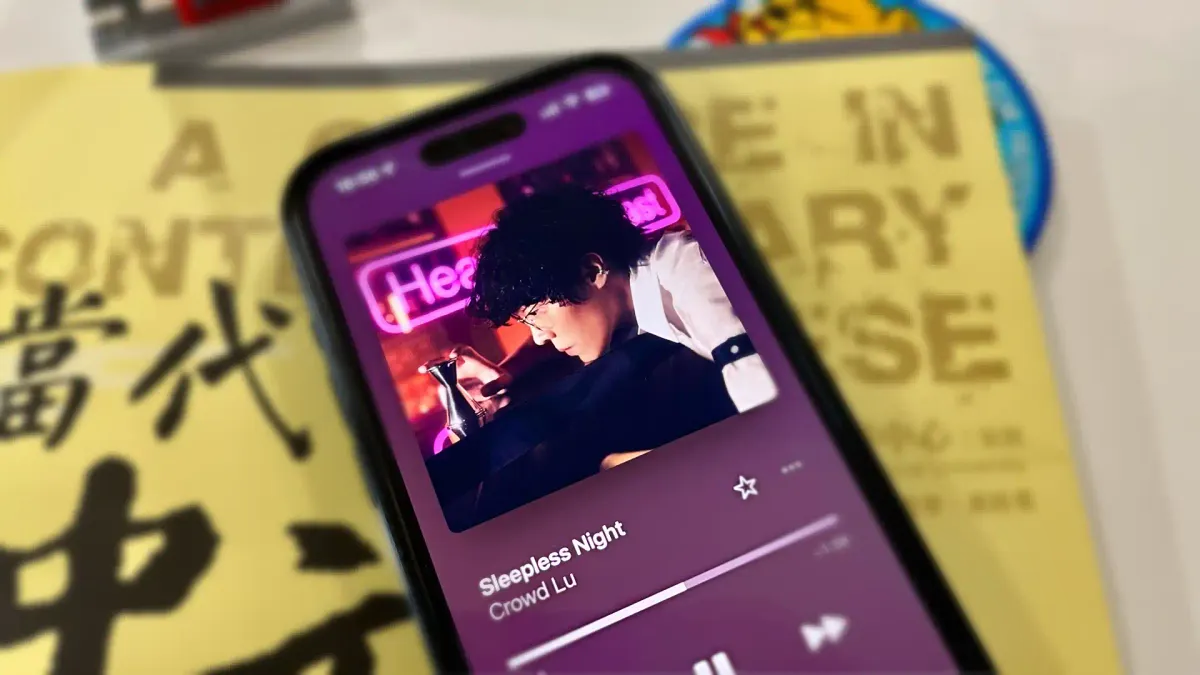
- Crowd Lu (singer–songwriter; I highly recommend his 2025 album, HeartBreakFast)
- Milk Yeh (singer)
- Show Lo (actor, singer)
- Super Wu (co-founder of Gong Cha)
So, while I’m proudly rocking a normal-sounding name here in Taiwan, I can’t guarantee the same for any Taiwanese person you might meet in other countries.
Their name might be Better.