
A beginner’s guide to Taiwanese English
Know your CP from your QQ (or 3Q or 3C)…
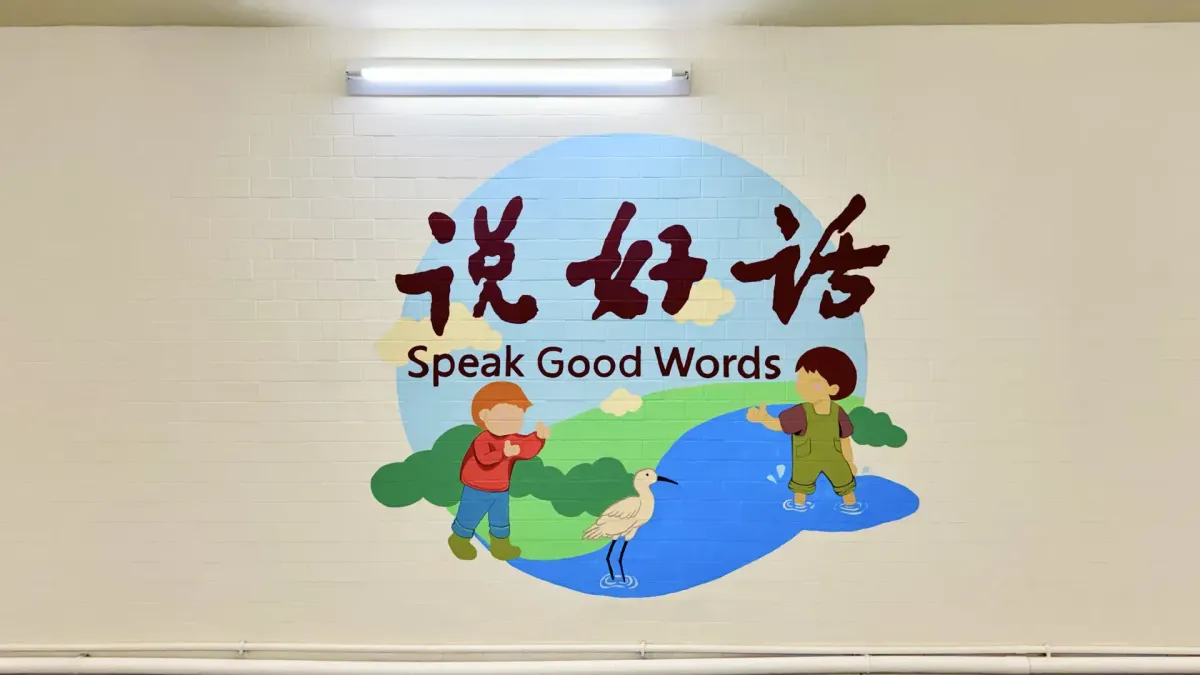
Taiwan’s most widely-used language is Mandarin Chinese, the language of government and industry.
Taiwanese is also widely spoken, especially here in the south.
There’s also Hakka, 16 officially-recognized indigenous languages, two recognized dialects, and of course Taiwan Sign Language.
English isn’t official, but English words are used liberally in everyday life. Just not in ways you might expect…
Here are 25 of the Taiwanese English terms I’ve picked up these past few years, along with my best shot at their definitions:
APP
Literally an app, but pronounced “A-P-P”.
“Have you installed your bank’s APP?”
business hotel
A budget hotel, not for business travelers.
“I’d avoid that business hotel.”
bye-bye
This is spoken in the gentle, high-pitched way someone would say “bye-bye” to a baby. It’s used in any context, from personal to professional. It felt unnatural to me for a very long time.
“See you next time, bye-bye!”
car
Can literally mean a car, but also other types of transport including trucks, vans, and scooters.
“It started raining when I was riding my car.”
cheese
Refers to any cheese, plus cream cheese. So you’ll often see a dessert listed as something like “cheese pie” or “cake with cheese”.
“Try our milk tea with cheese topping!”
cherish
Used almost universally to mean appreciated, liked, or valued.
“I cherish having good tires on my scooter.”
CP
Short for “Cost–Performance” (derived from “cost–performance ratio”), CP is a measure of value for money.
“The food was fine, but it had bad CP.”
elevator building
An apartment building that has one or more elevators, as opposed to a walk-up. “Elevator building” generally also implies a managed entrance with reception or security staff, and on-site building management.
“Do you live in an elevator building?”
french fries
Literally any type of potato fries, regardless of shape, size, or thickness. Includes potato wedges and waffle fries.
“Do you want sweet chili sauce and sour cream with your french fries?”
friendly copy
An illegal (copyright-infringing) download.
“Have you seen ‘Project Hail Mary’? I can get you a friendly copy.”
IG
Instagram (or Instagram username).
“What’s your IG?”
KOL
An influencer. Short for “Key Opinion Leader”.
“My sister’s trying to become a KOL.”
leave
Pass away; die.
“My cat left this week.”
milk tea
A generic term for tea with milk, bubble tea (invented in Taiwan), and similar drinks—even if they don’t contain tea.
“Do you want some milk tea?”
motel
Often, but not always, the equivalent of a sex hotel in Japan. Also popular for people to book as a (sexual or platonic) party venue.
“Last time I stayed at a motel, my suite had a steam room and a mirrored ceiling.”
poly
Polystyrene.
“There was too much poly in the box.”
PU
Polyurethane sheeting.
“I ran out of PU when I was getting ready for the typhoon.”
A chewy, bouncy texture in food (like chewy noodles or the tapioca balls in bubble tea, a.k.a. QQ balls).
“I love their QQ balls!”
see you tomorrow
The everyday name for the Enoki mushroom, commonly offered at hotpot restaurants. The name references how it moves intact through your digestive system…
“Would you like more see you tomorrow?”
set
A combo meal at a restaurant (not just fast-food restaurants, but any restaurant that offers sides with a main dish).
“Do you want it on its own, or do you want a set?”
SNG car
A TV news van. Short for “Satellite News Gathering”.
“Did you see the SNG car outside your building?”
stay
Synonymous with “live”, and therefore used for both long-term residence and short-term stays. It comes from a direct translation of zhù (住), which covers both “stay” and “live”.
“Where do you stay?”
“I stay in Lingya District. I’ve stayed there for three years.”
toast
Thick, soft bread, regardless of whether it’s fresh or toasted. There’s no concept of “toast” specifically as toasted bread.
“The menu only has garlic toast and chocolate toast.”
3C
A catch-all term for tech and electronics products, the three C’s stand for “Computers, Communication, and Consumer electronics”.
“Where’s the nearest 3C store?”
3Q
A playful way to say “thank you”. “Three” in Chinese is pronounced “sān”, so “sān Q” sounds like “thank you”. Kinda.
“I love this gift. 3Q very much!”
3Q for cherishing this blog, even though it’s not available as an APP (and I’m far from a KOL). Having said that, I do have IG. It’s free, so the CP is good. No need for a friendly copy. Bye‑bye!