It was built to protect the dictator if war broke out while he was on vacation.
It comprises a 200-meter-long tunnel that snakes through a hill, connecting all the underground facilities an at-war dictator needs:
Assembly room
Command office
Military goods store
Telecommunications room
Bathrooms
Bedrooms
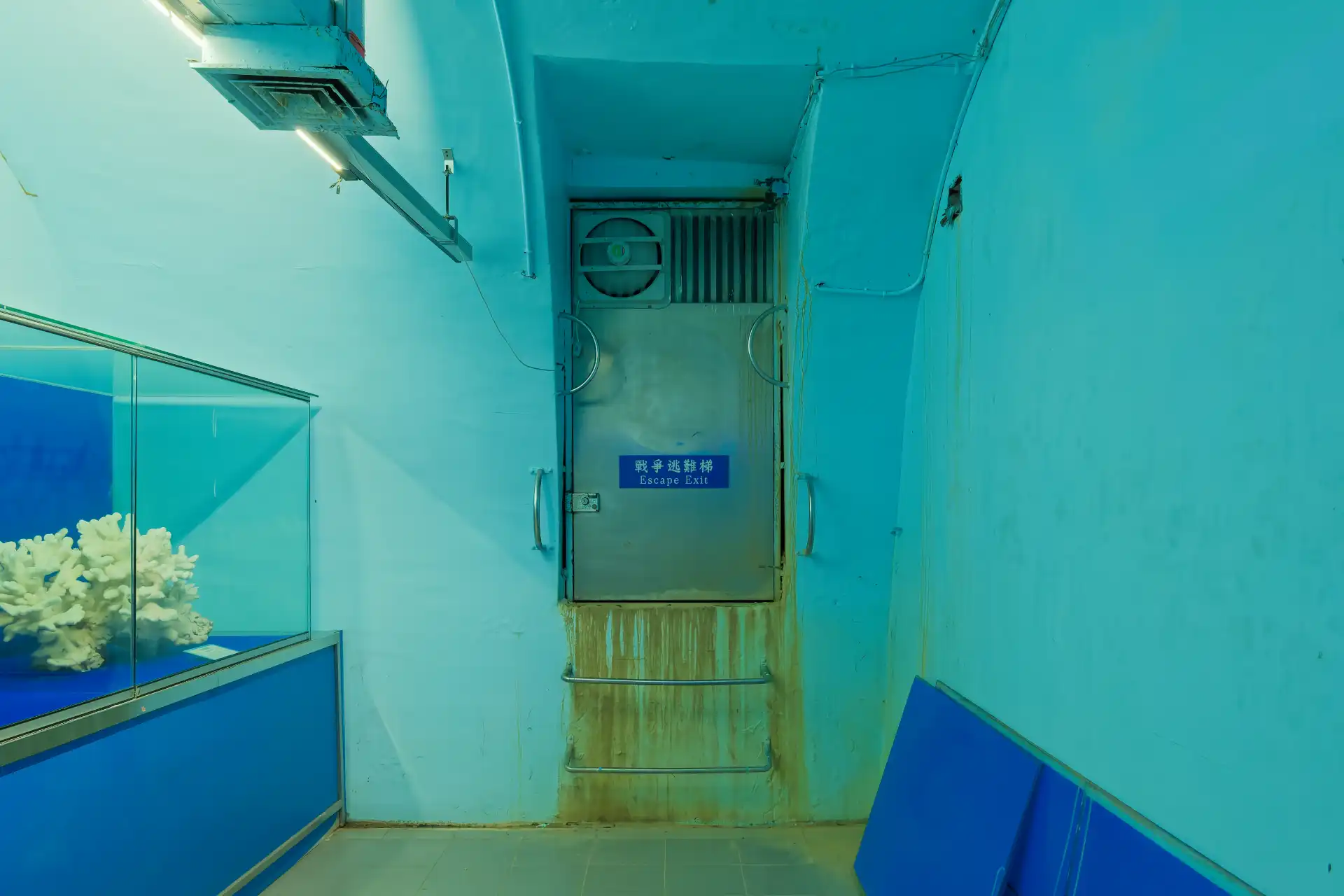
Emergency exit
But after Chiang died in 1975, the bunker was closed. (The next dictator vacationed elsewhere.)
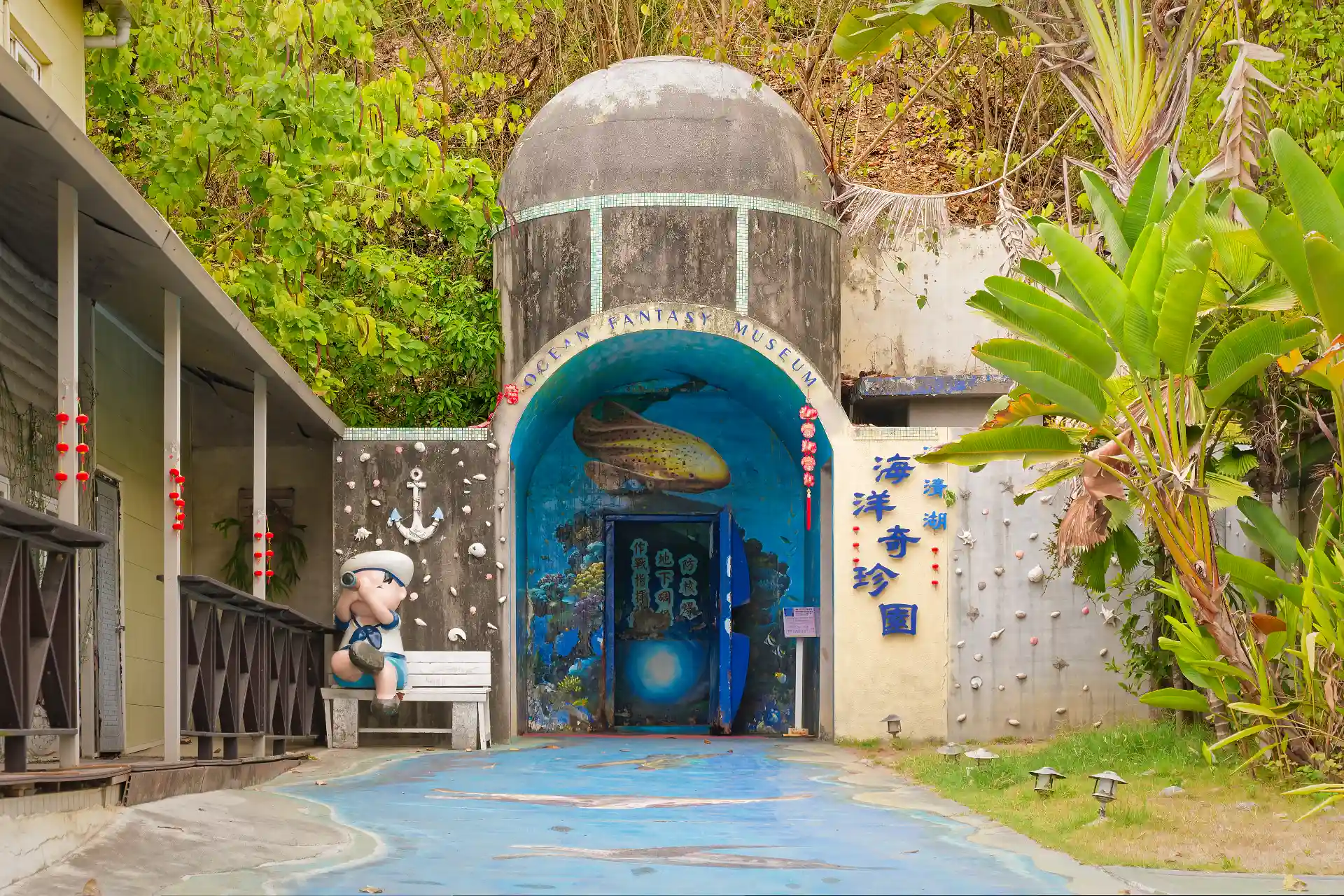
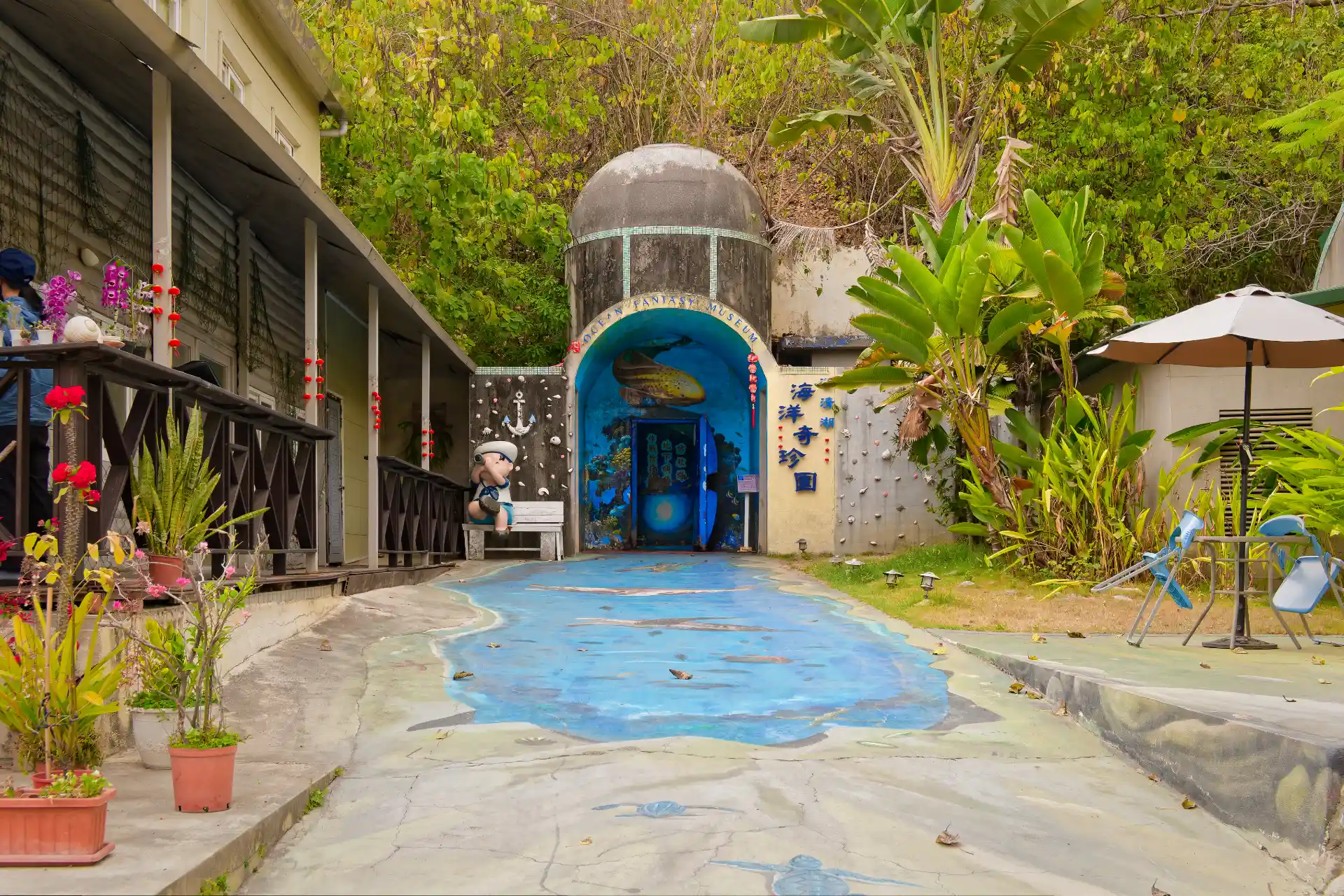
Two decades later, a private business re-opened the bunker as a public aquarium called Ocean Fantasy Museum (澄清湖海洋奇珍園). After 30 years in operation, it’ll soon be closing for a desperately-needed renovation. So I came along to see it while I can.
This was my first time exploring a nuclear bunker, and my first time seeing an aquarium in Taiwan…
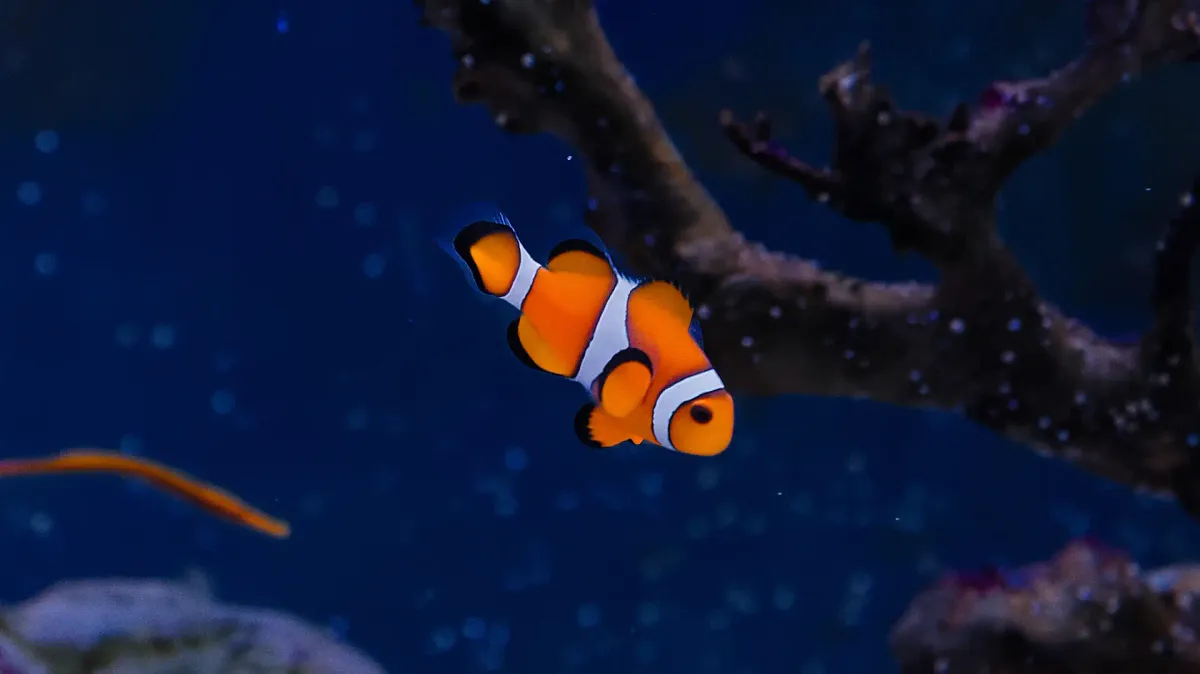
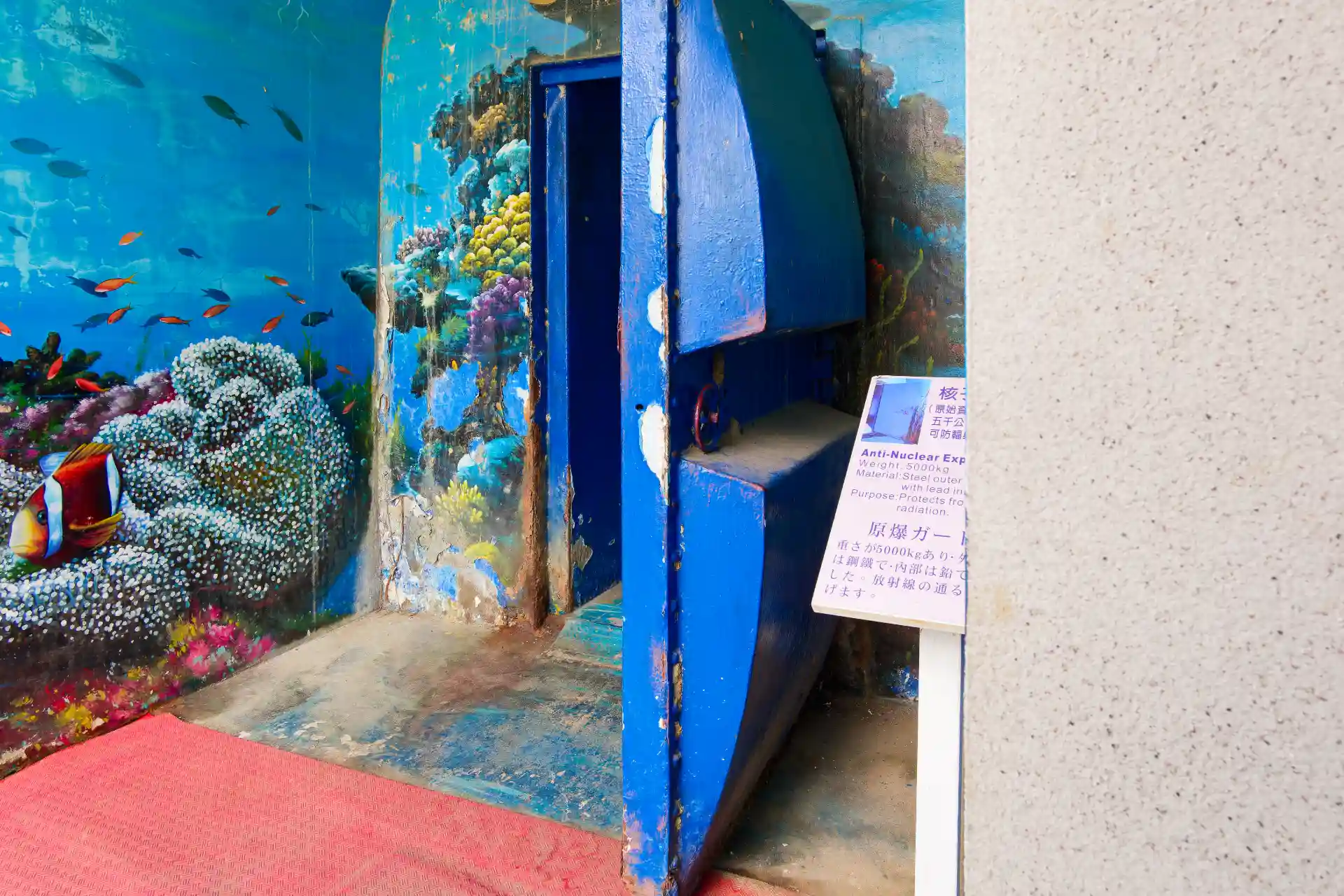
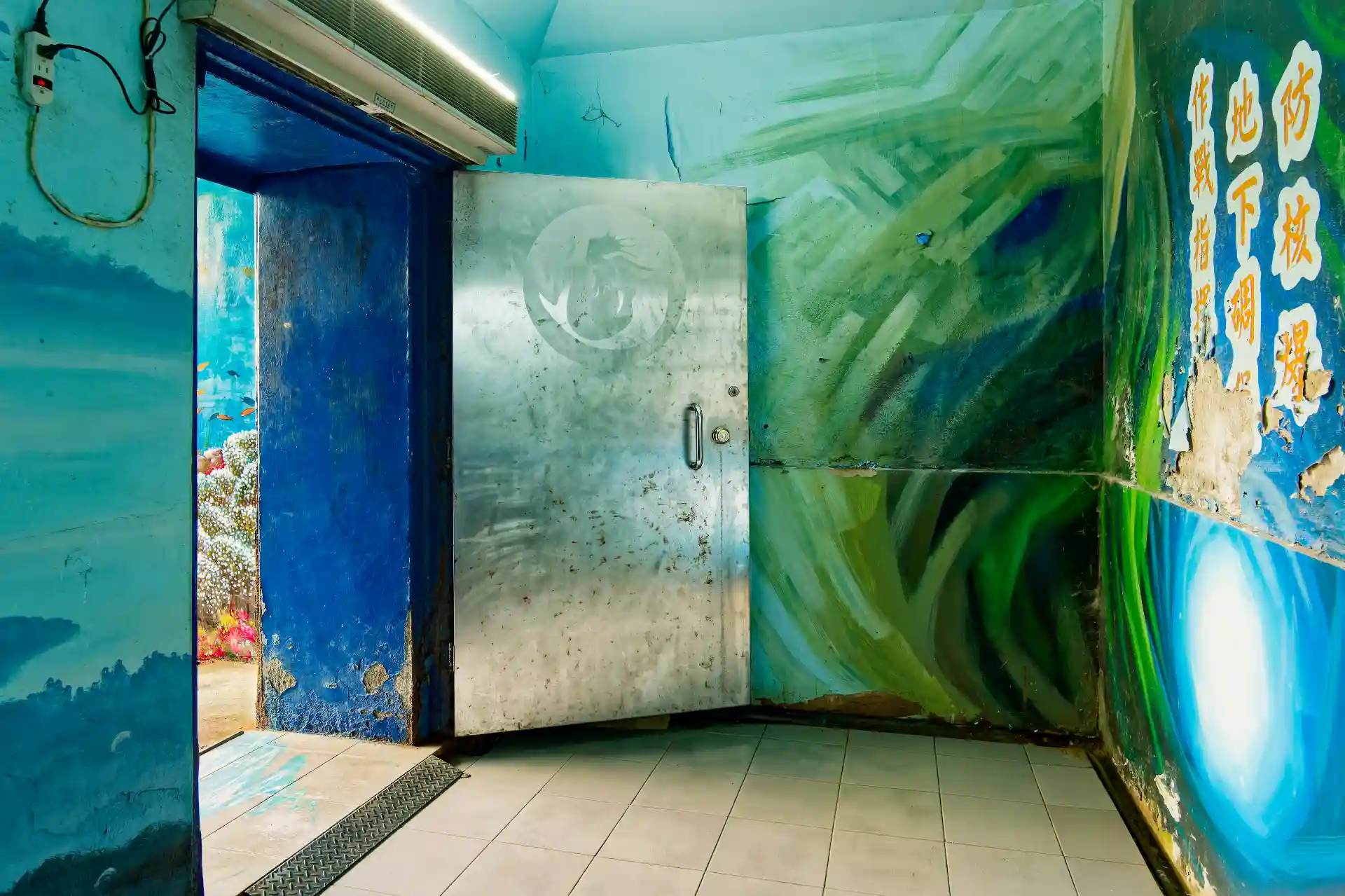
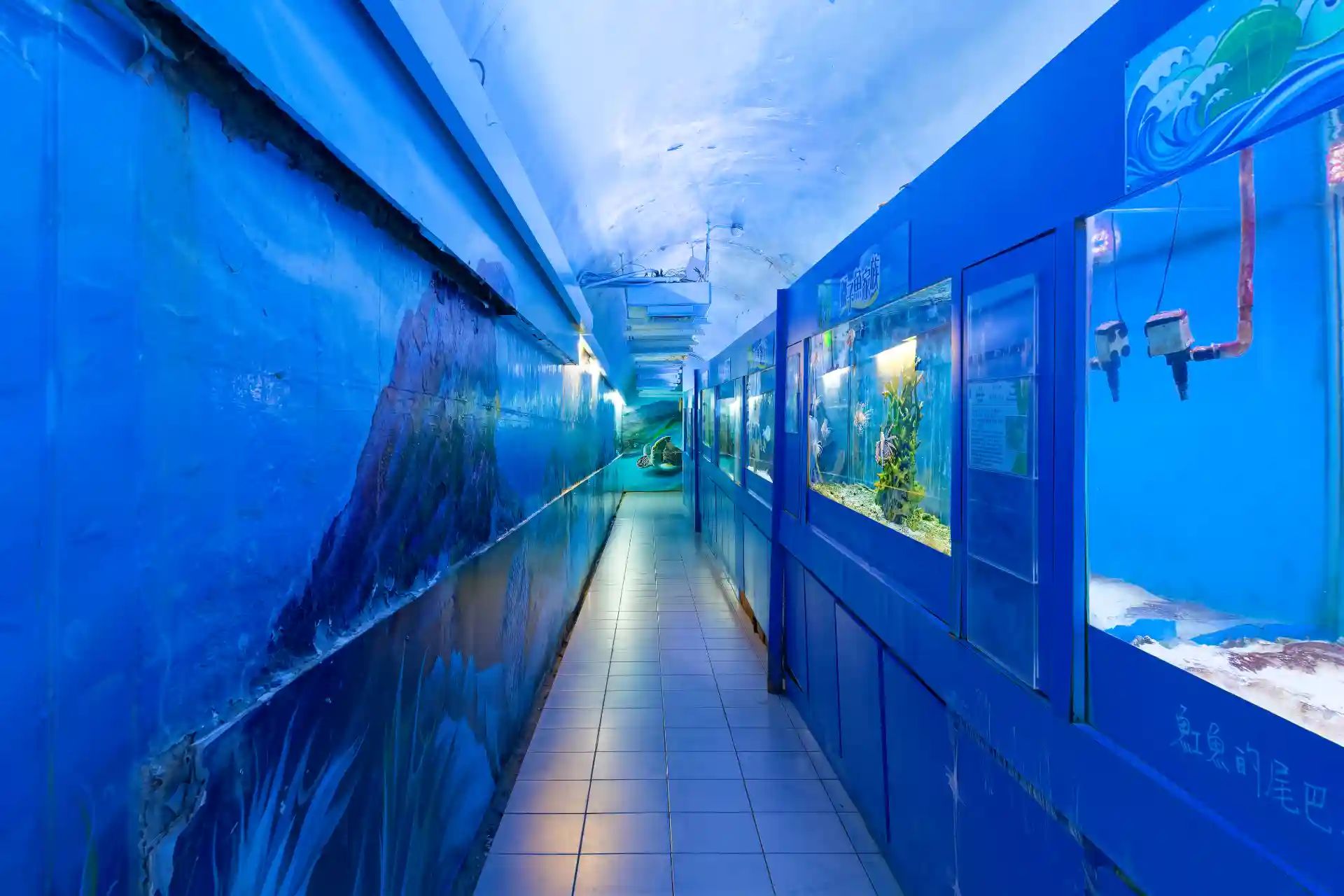
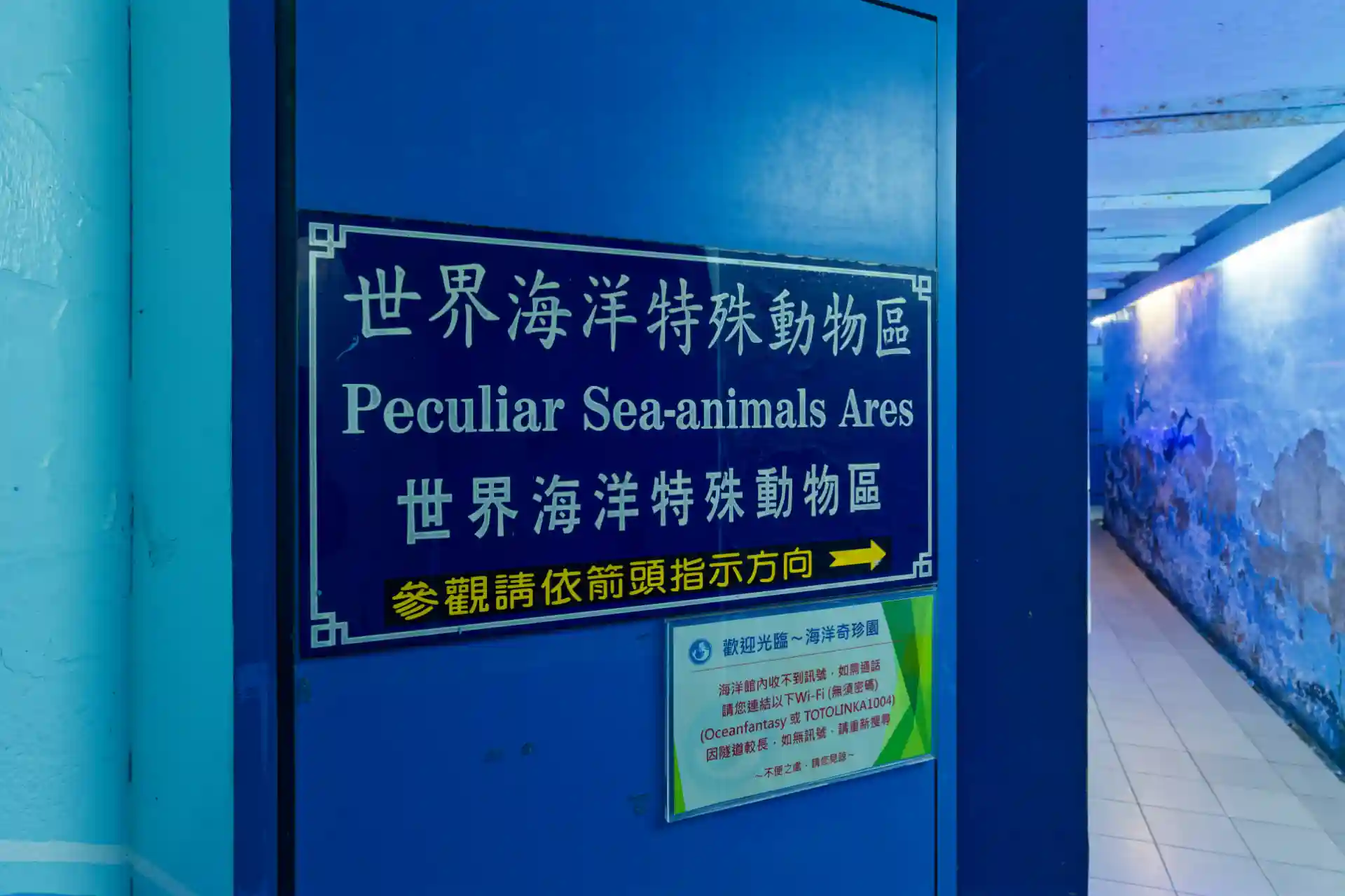
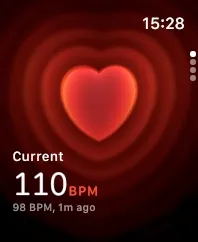
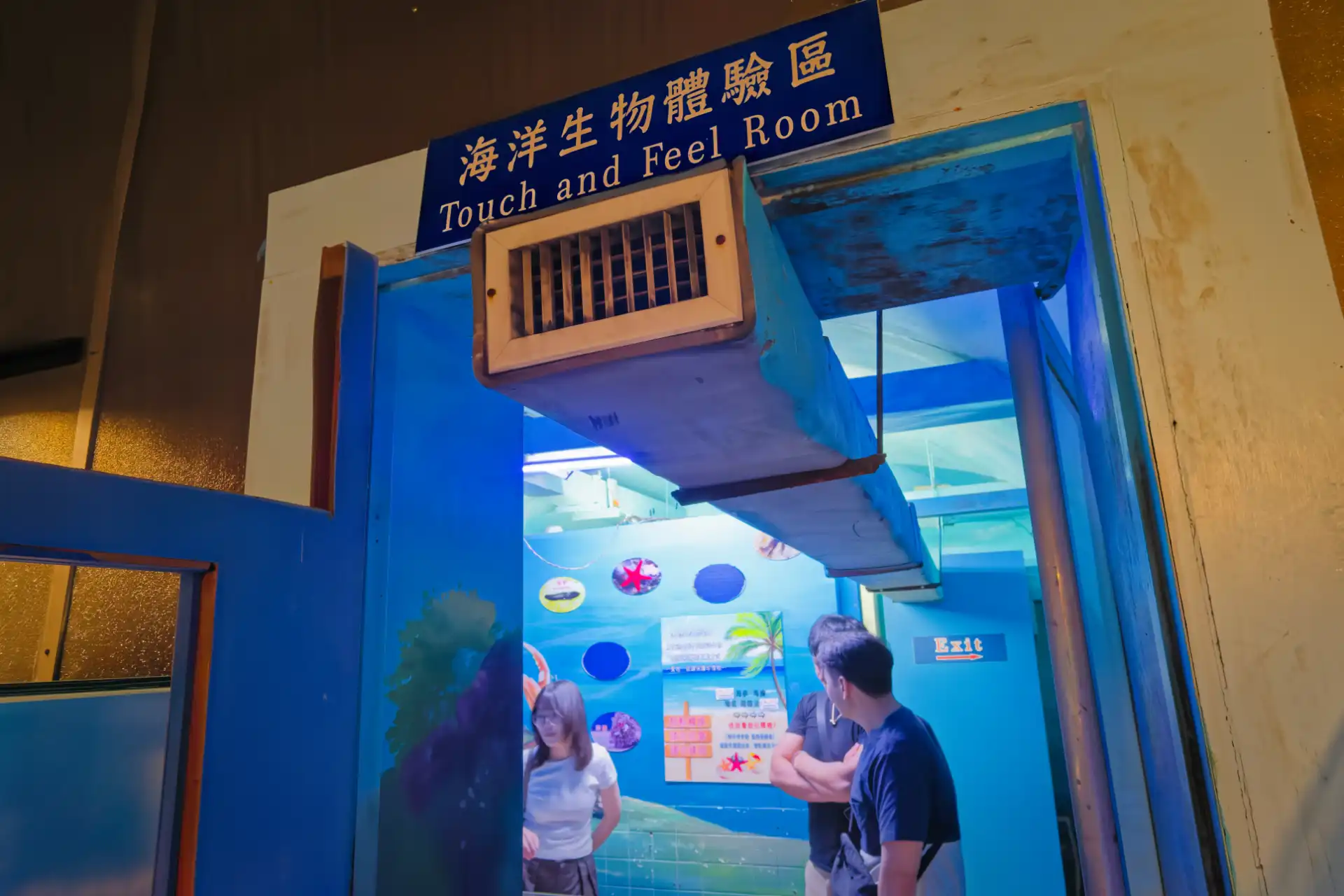
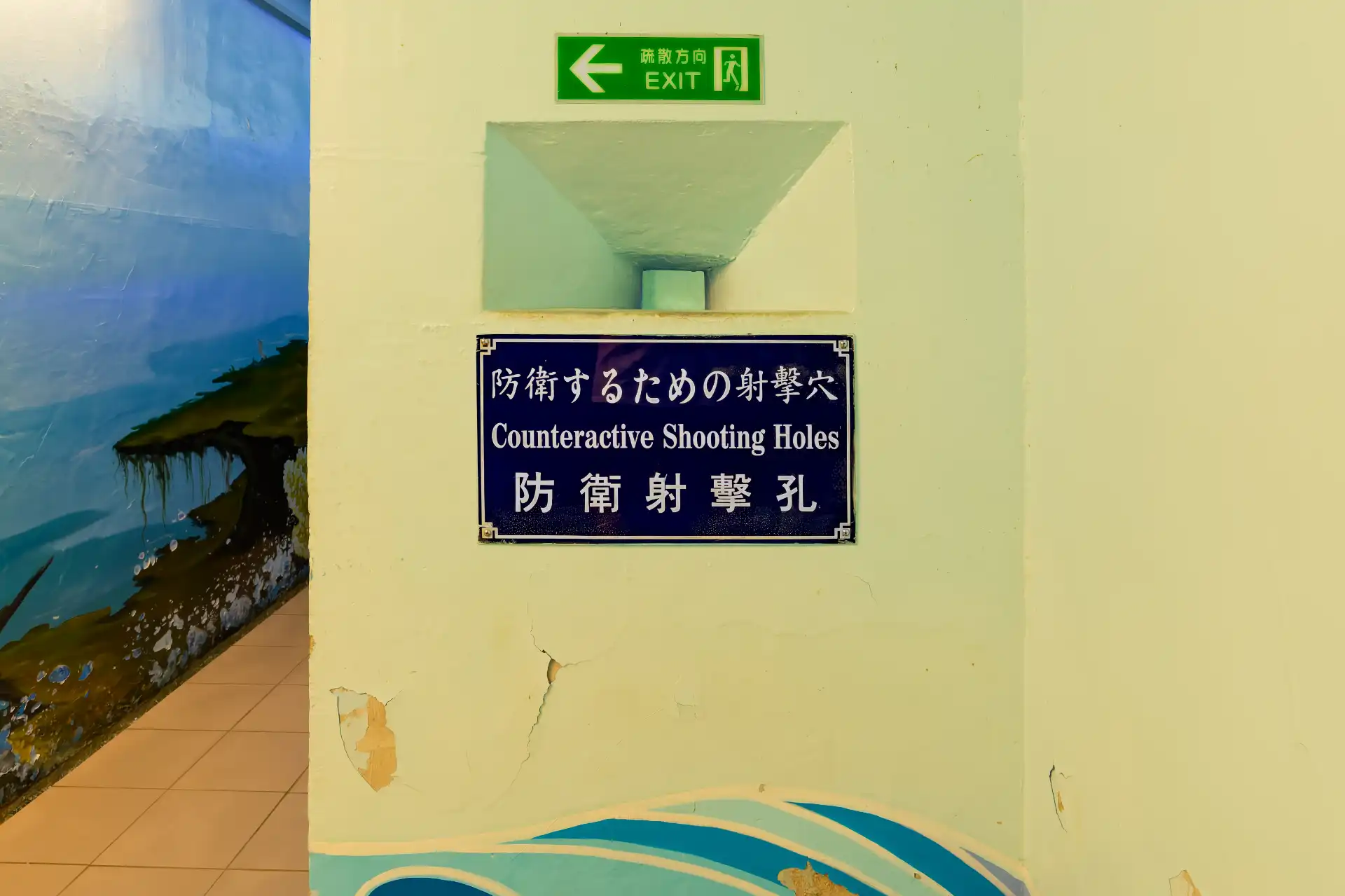
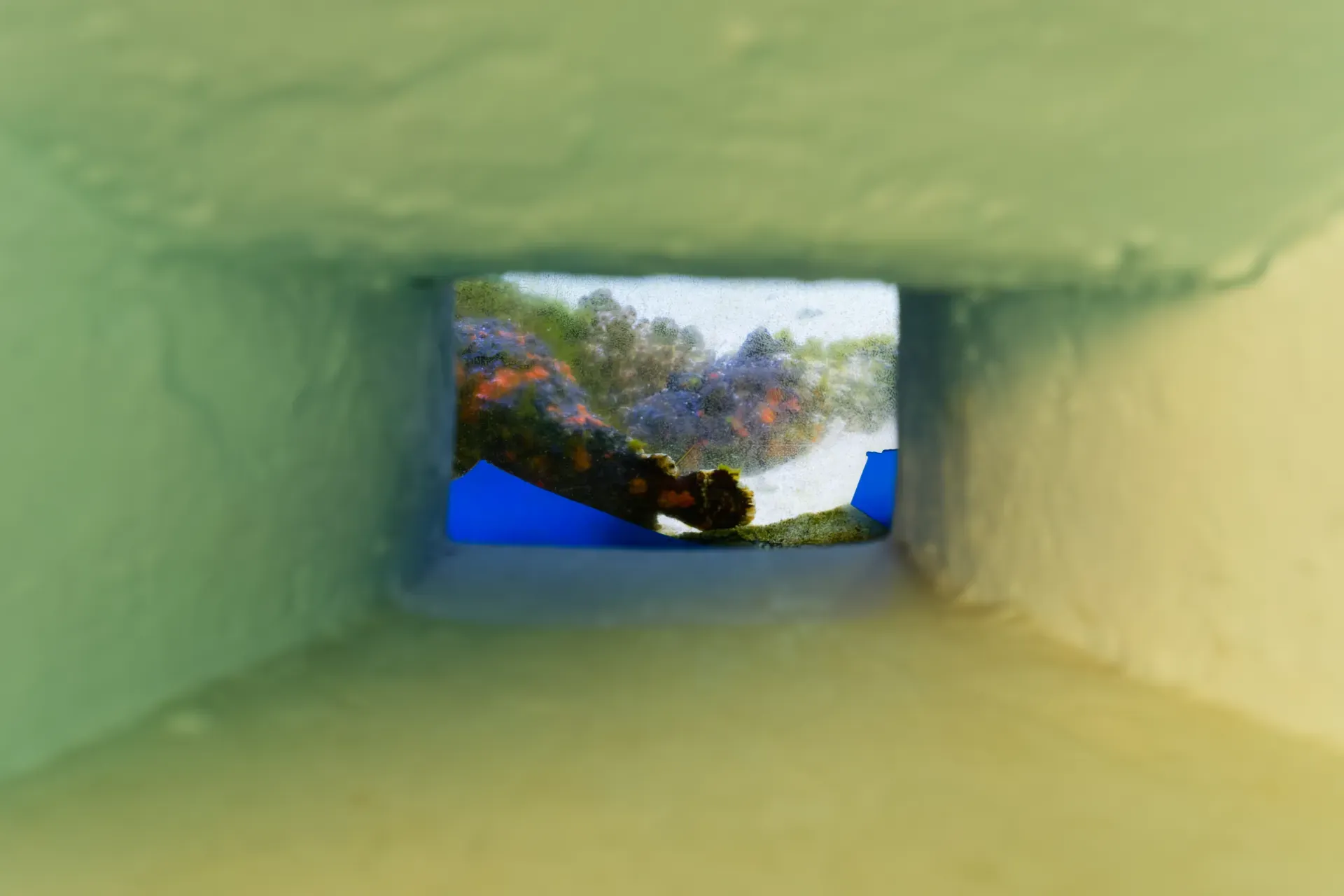
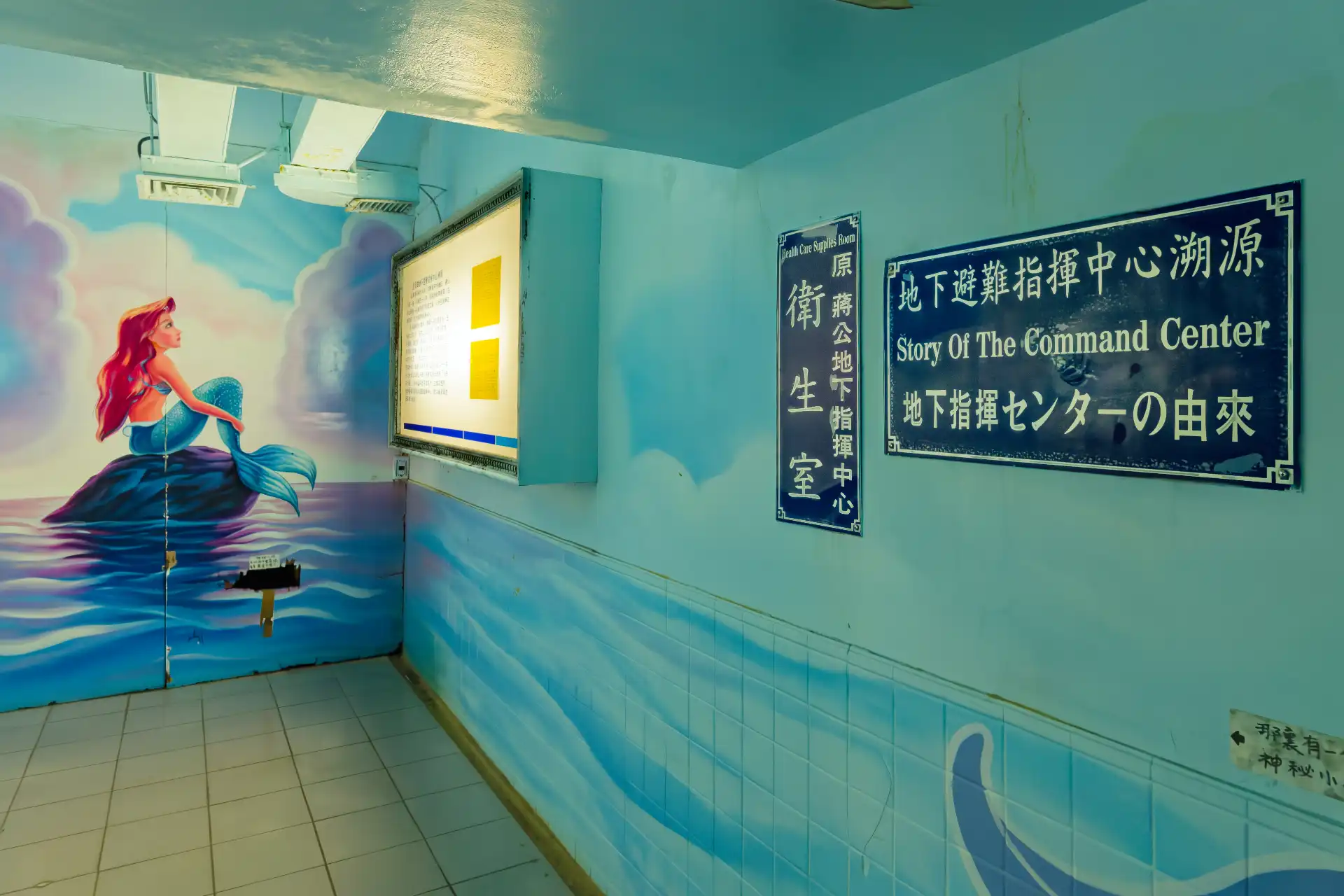
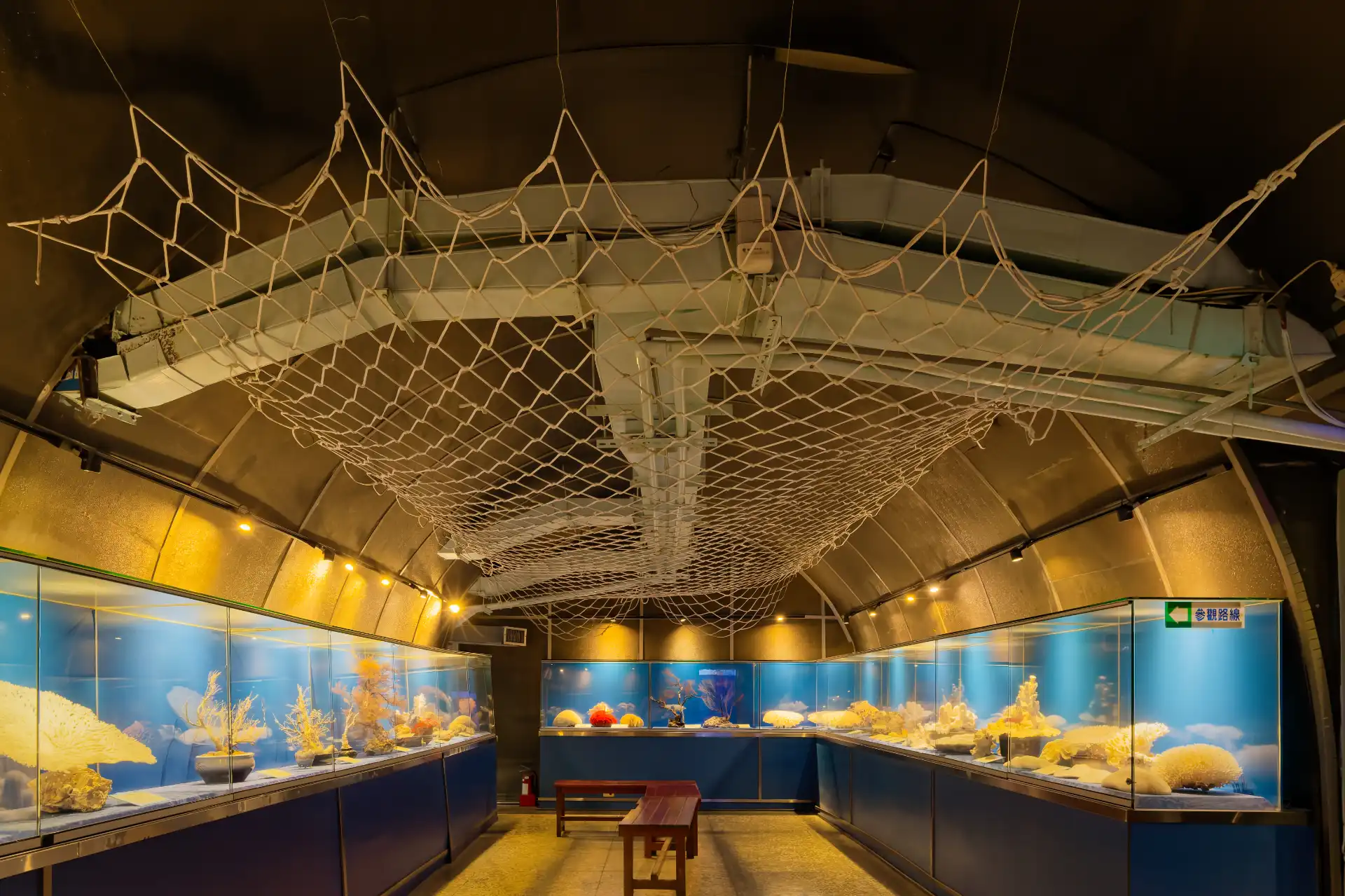
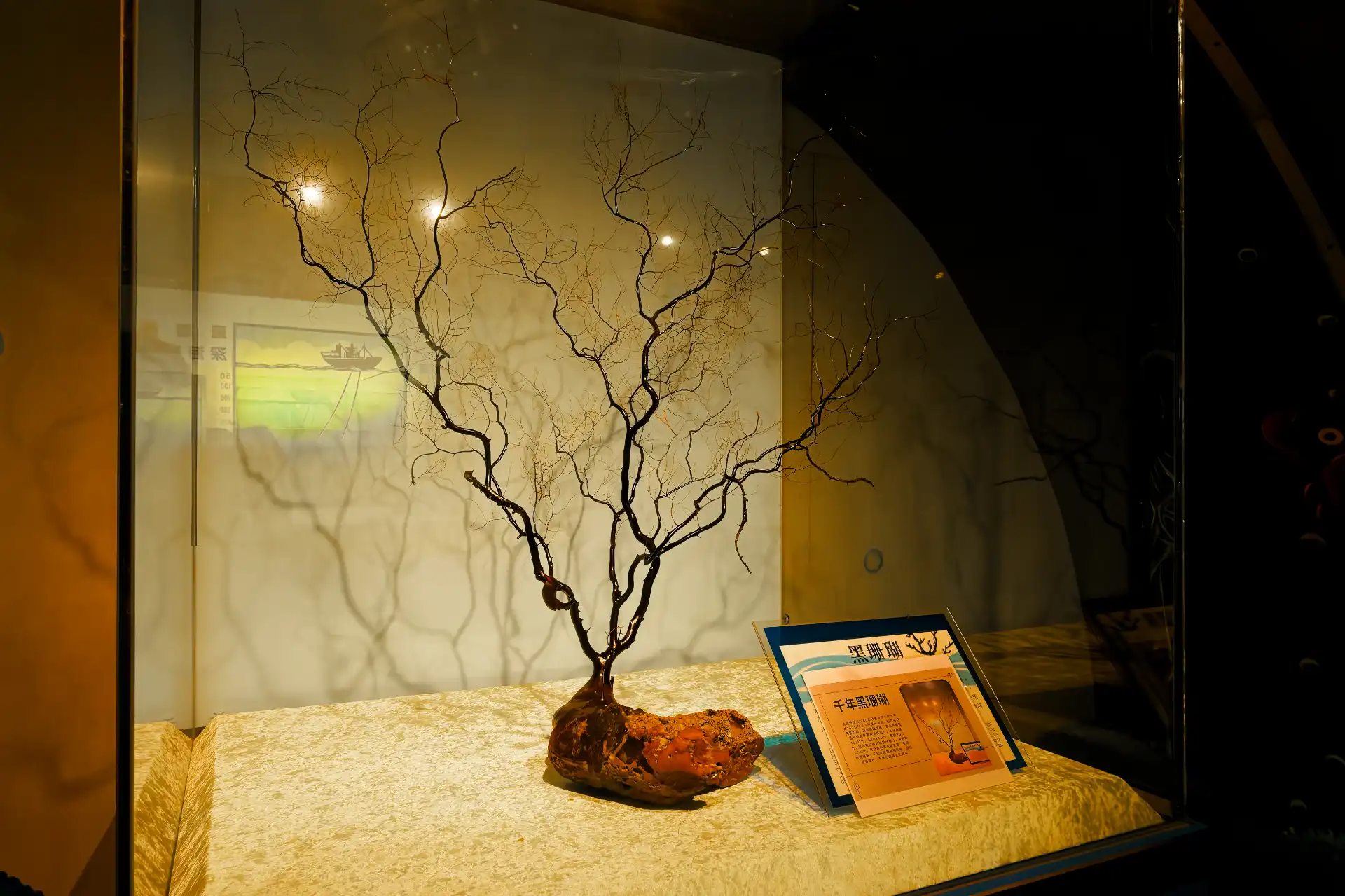
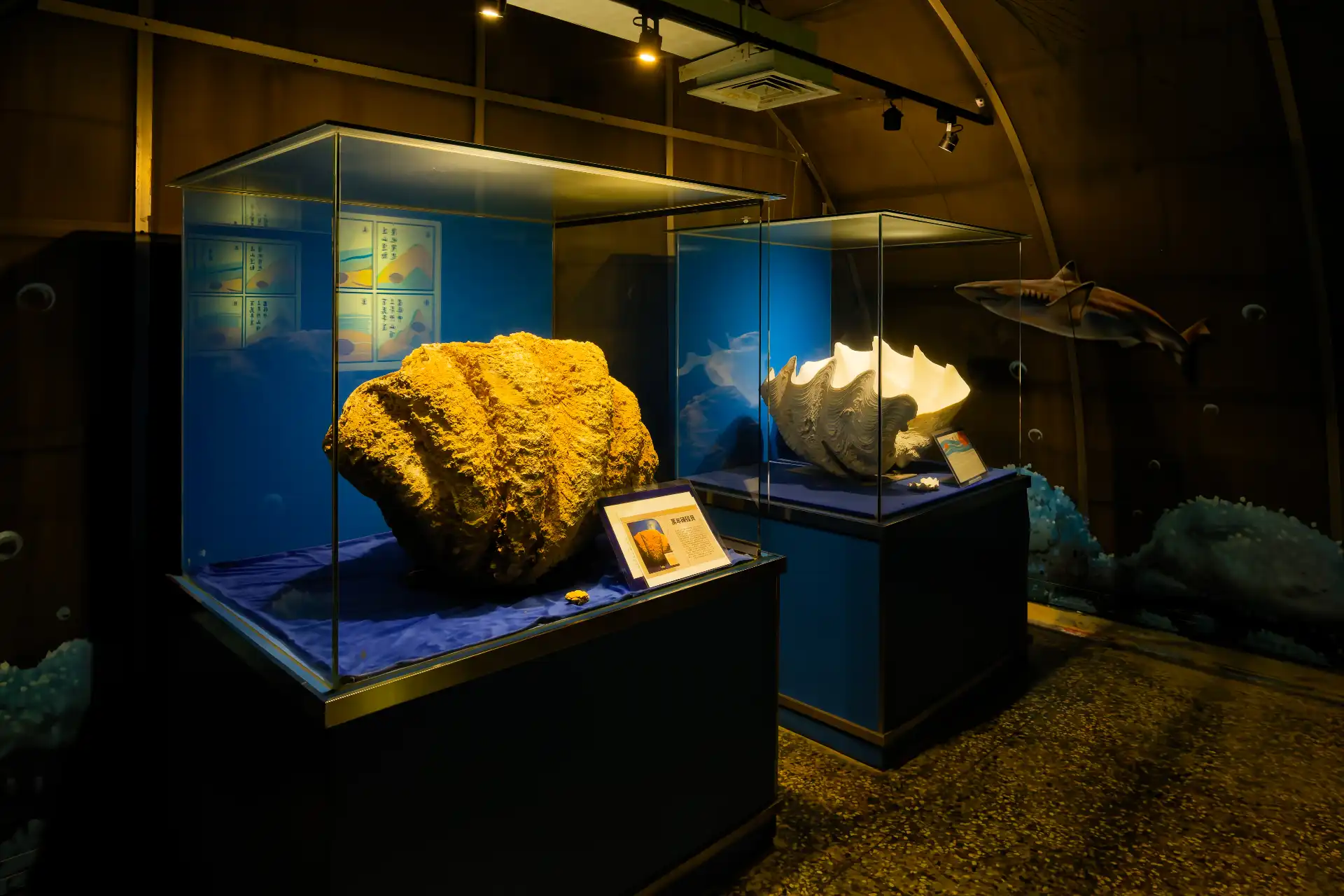
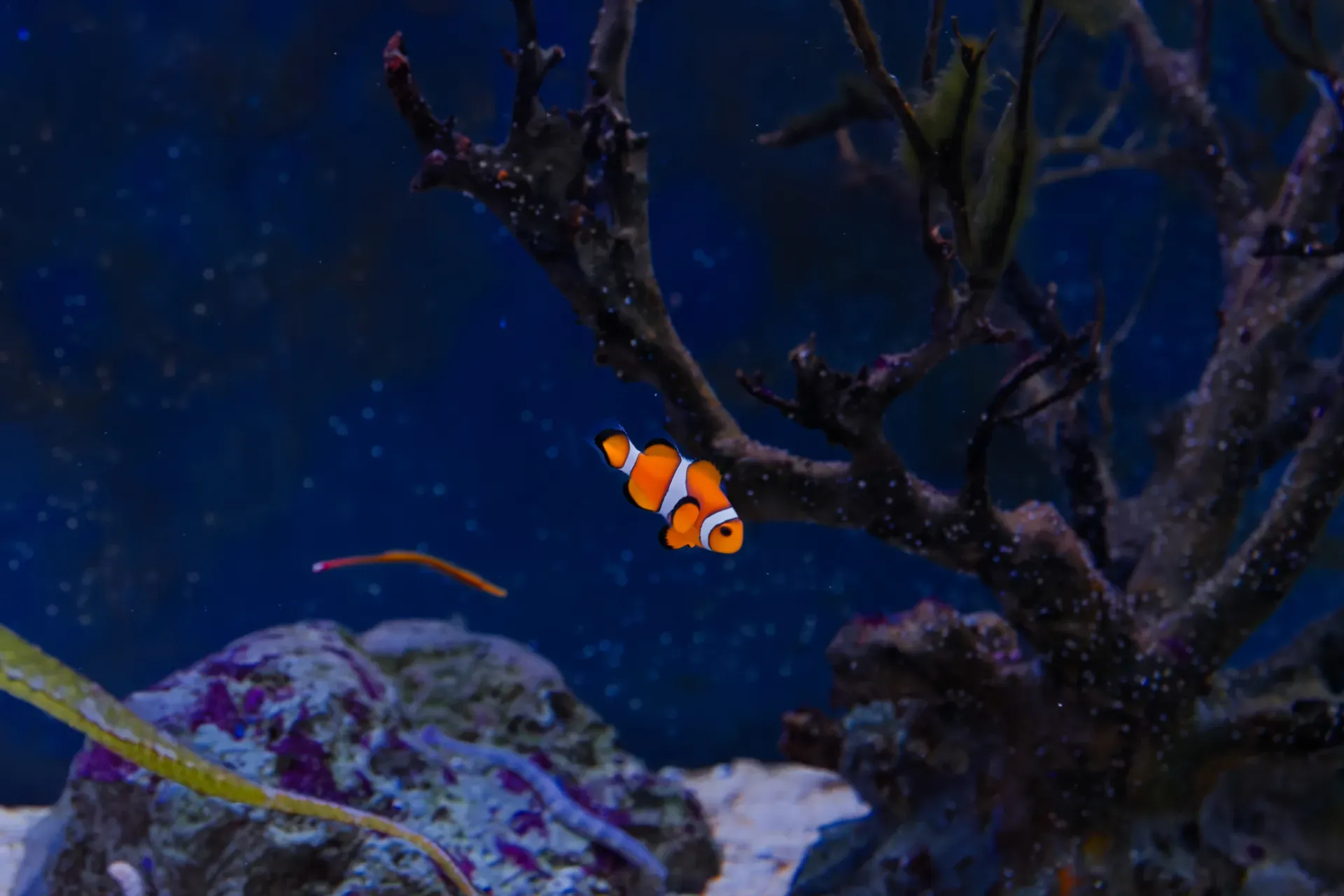
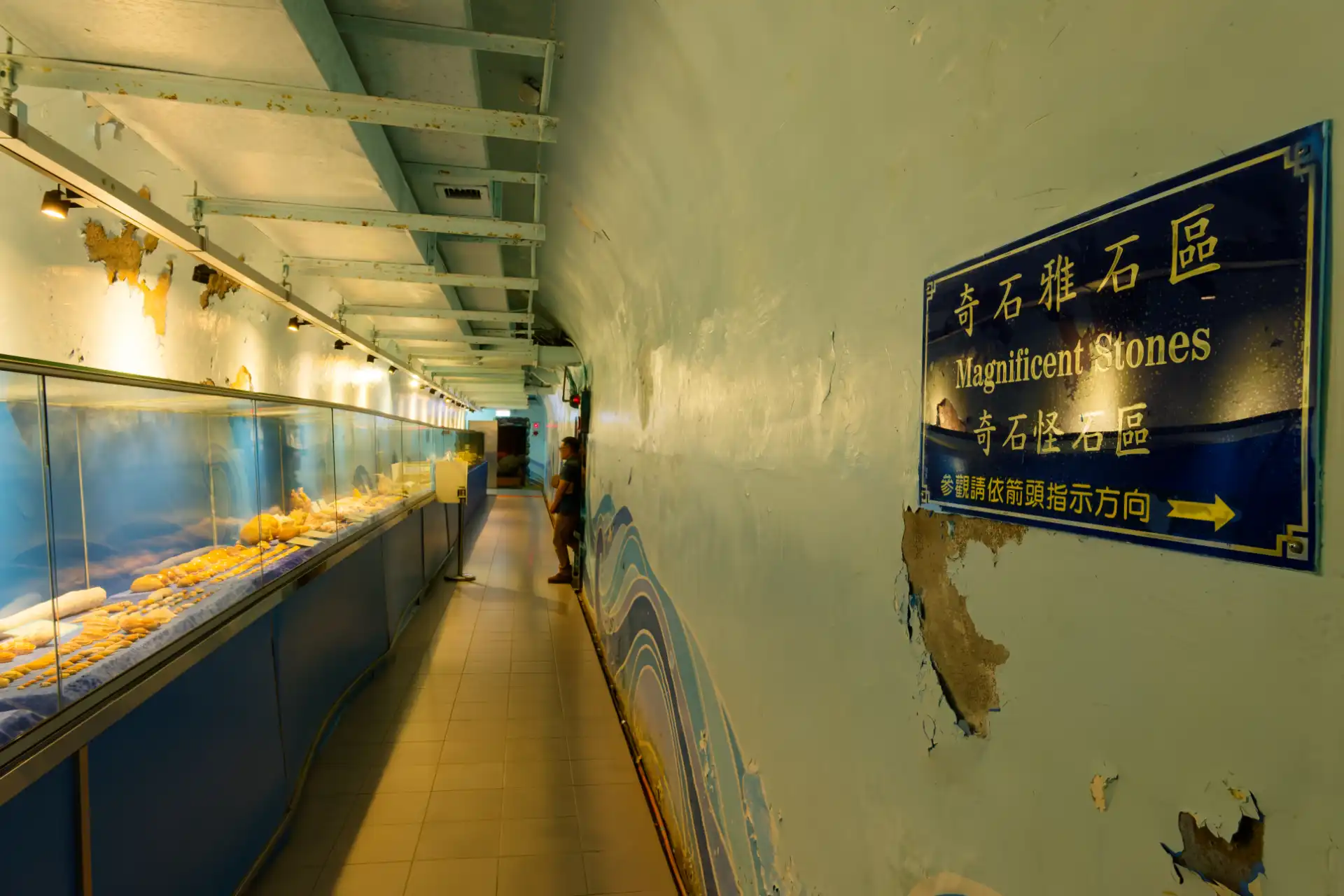
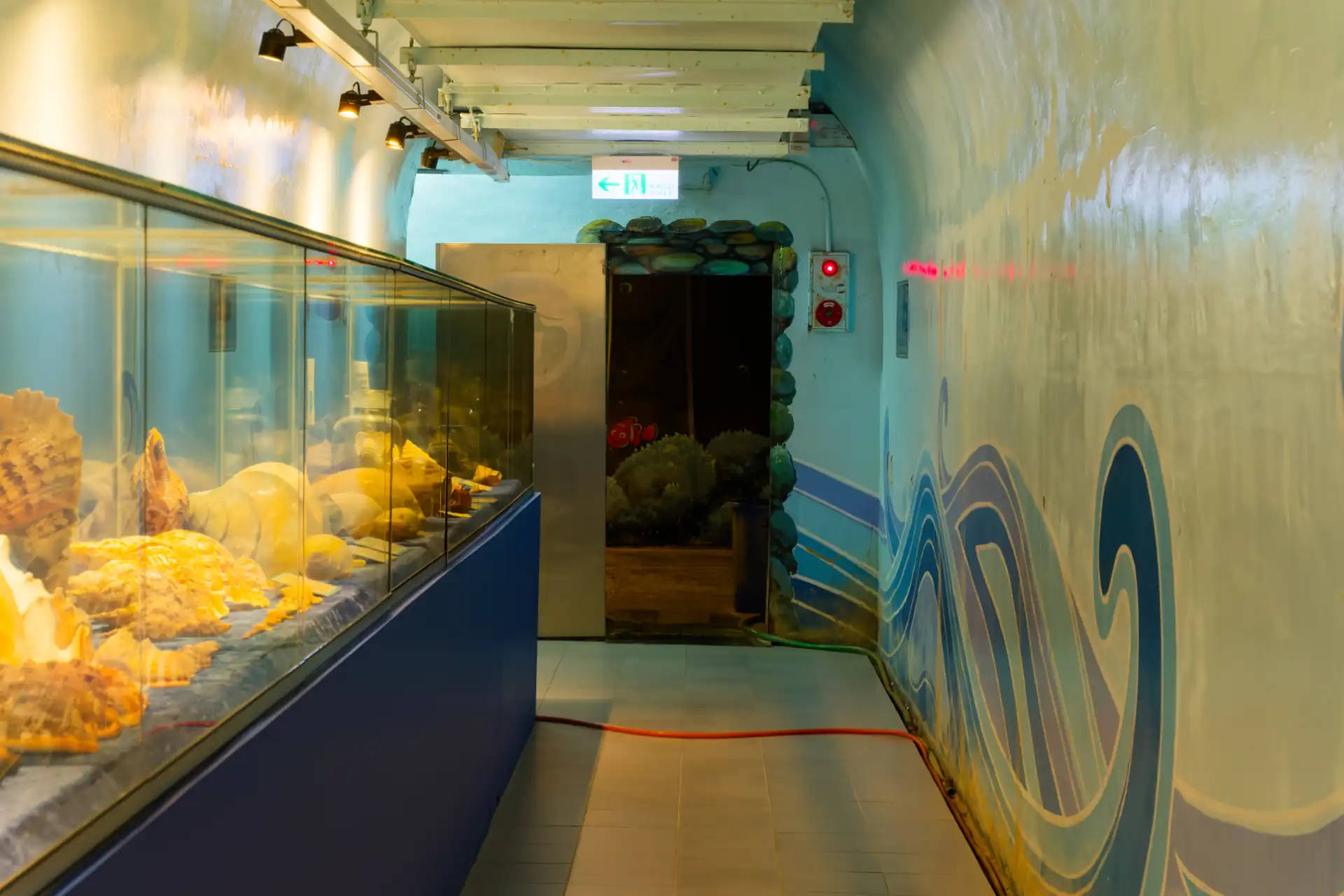
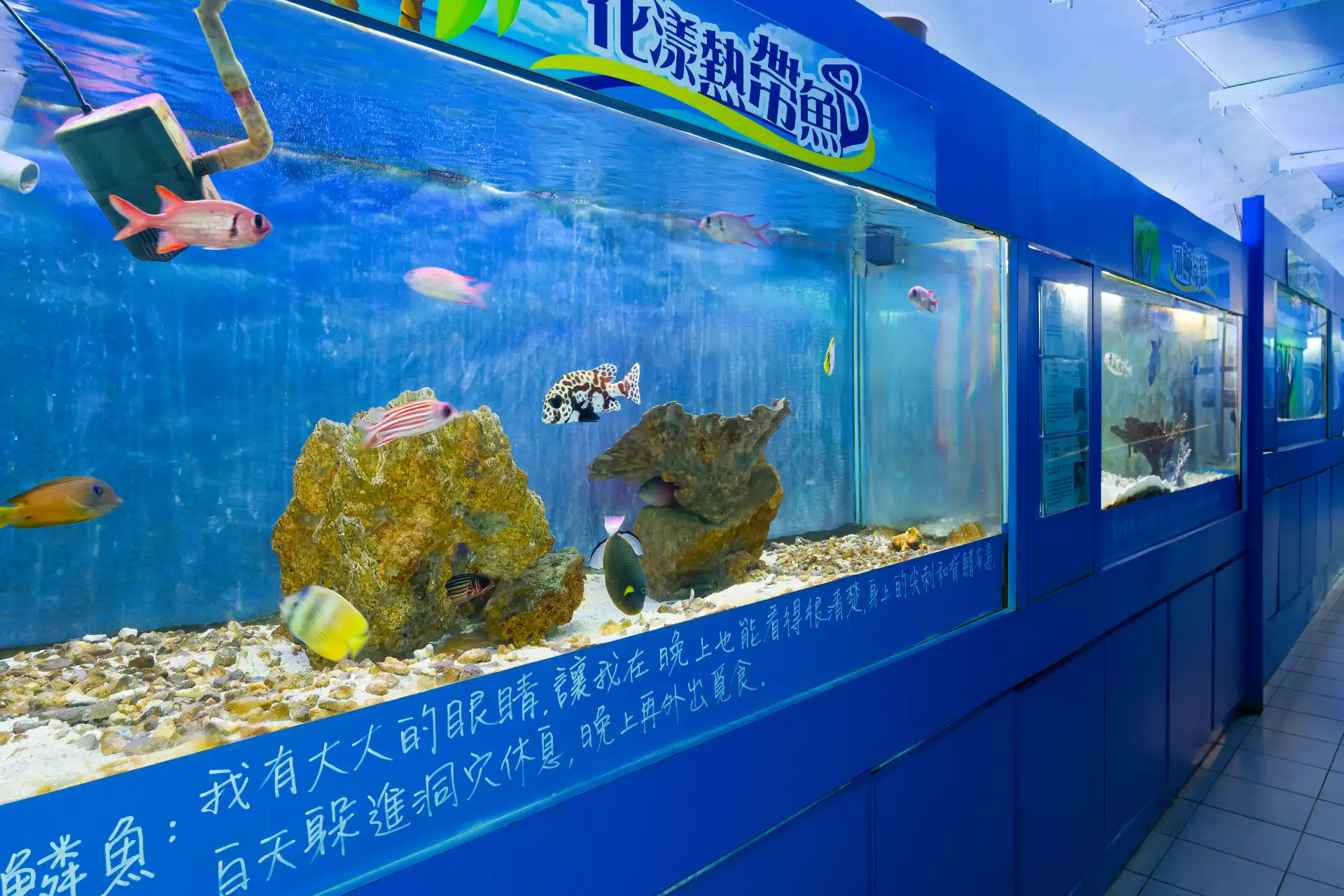
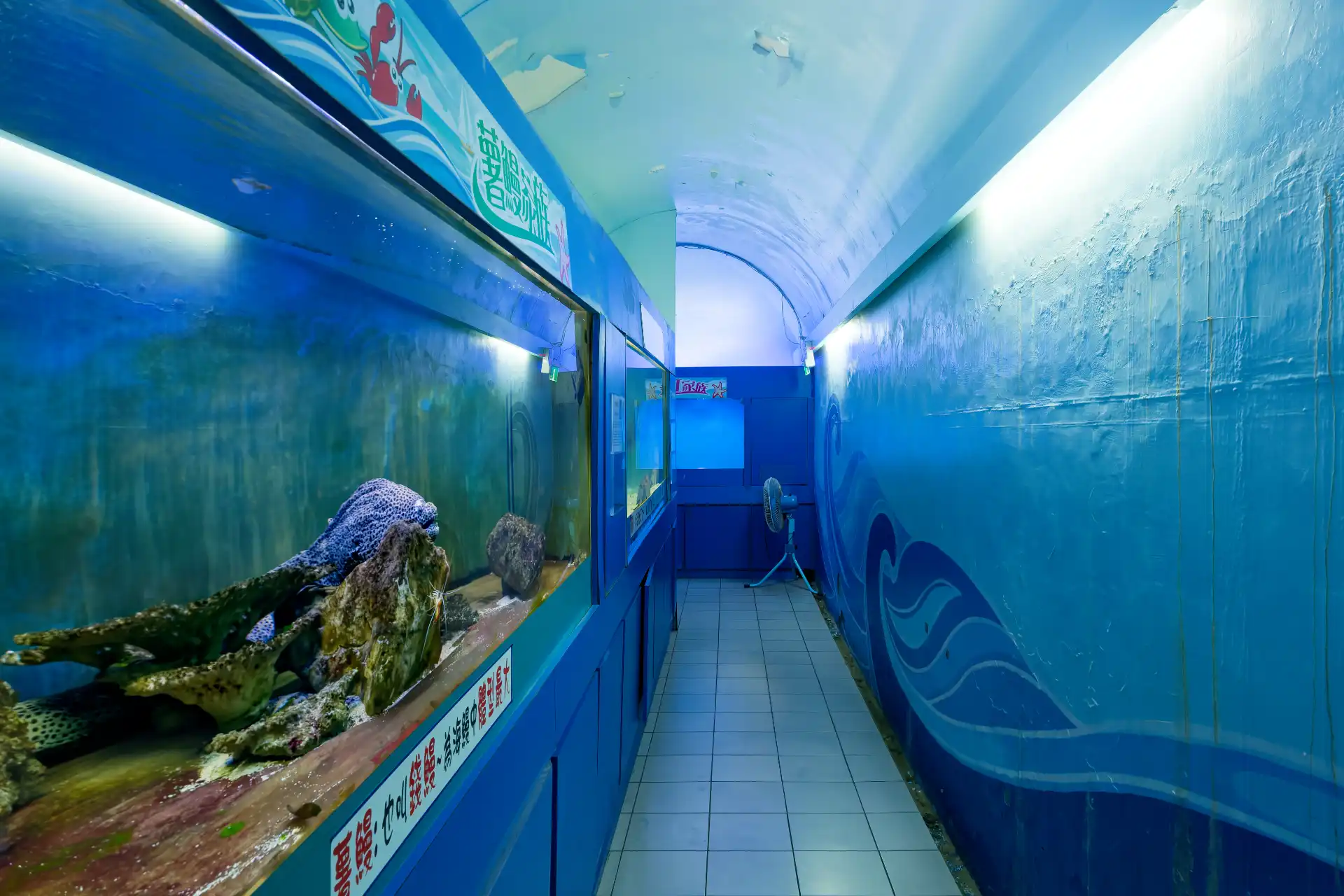
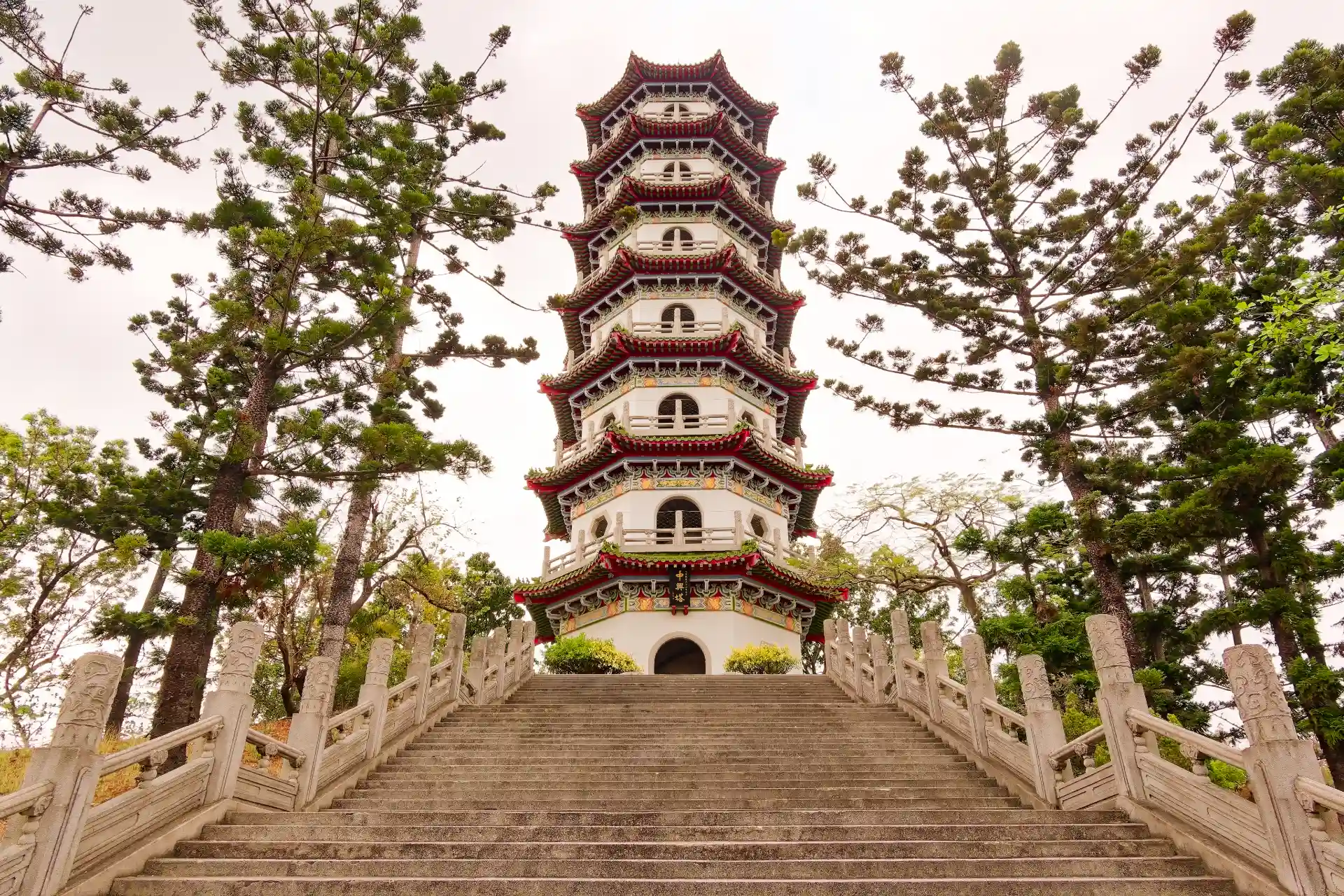
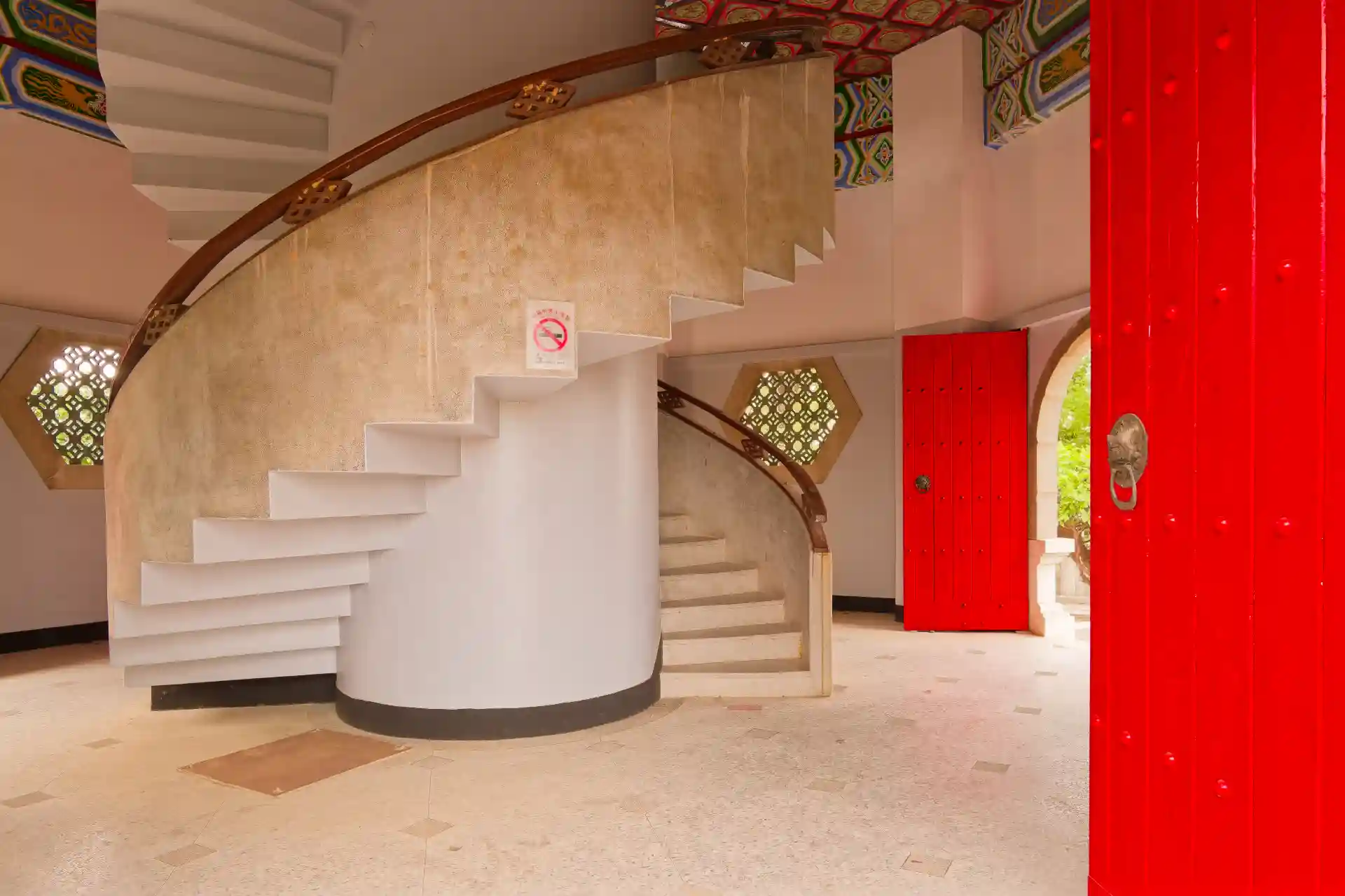
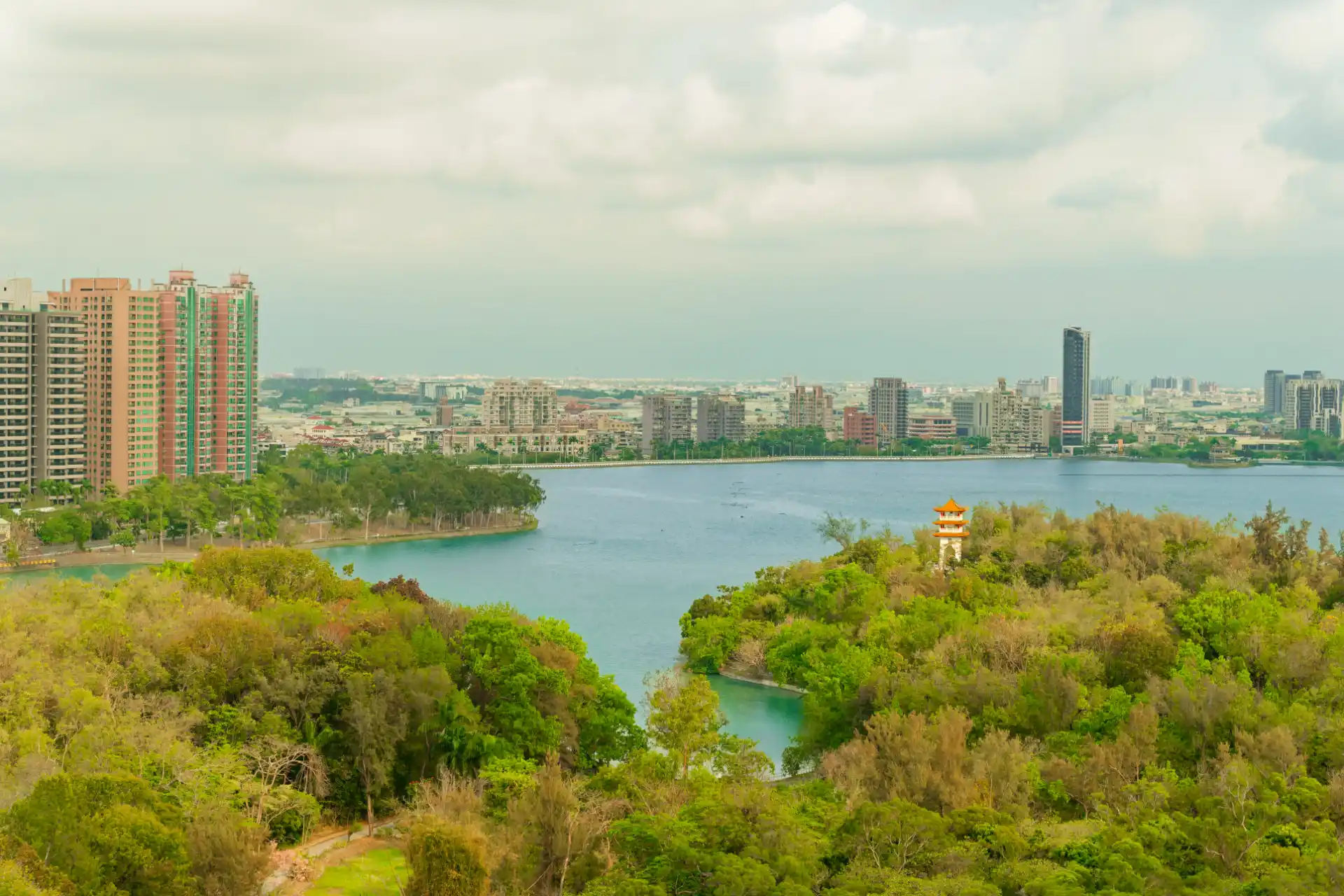
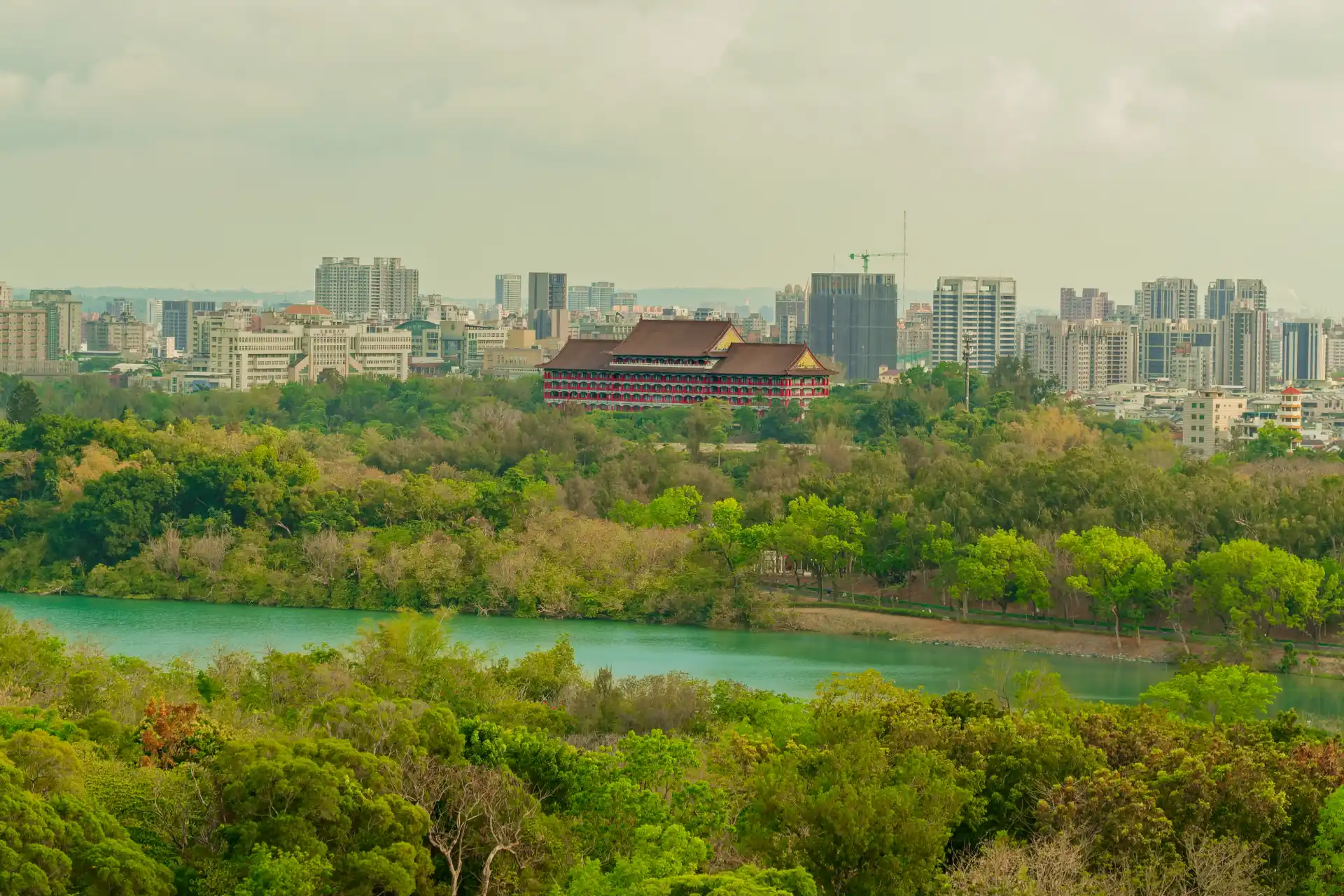
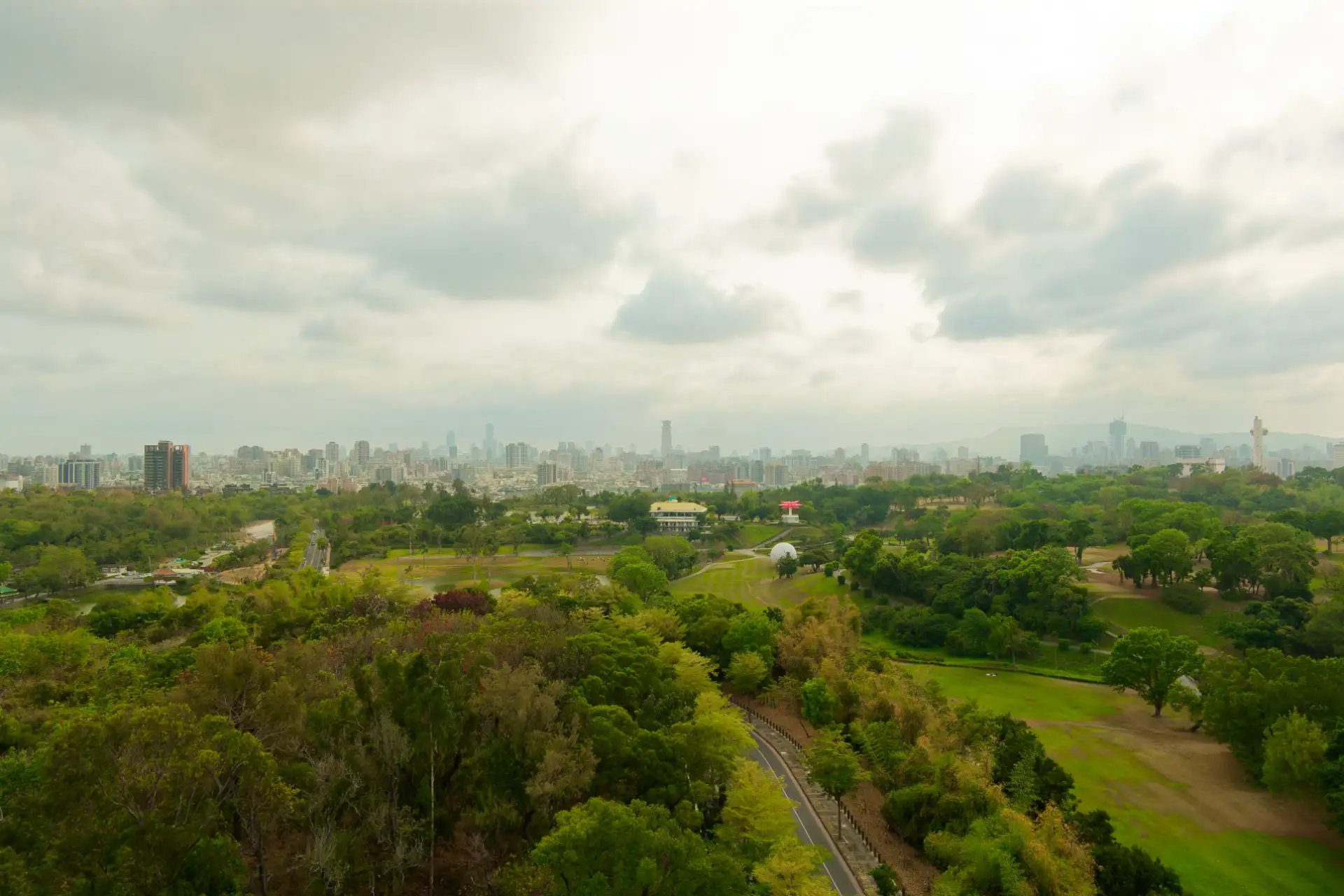
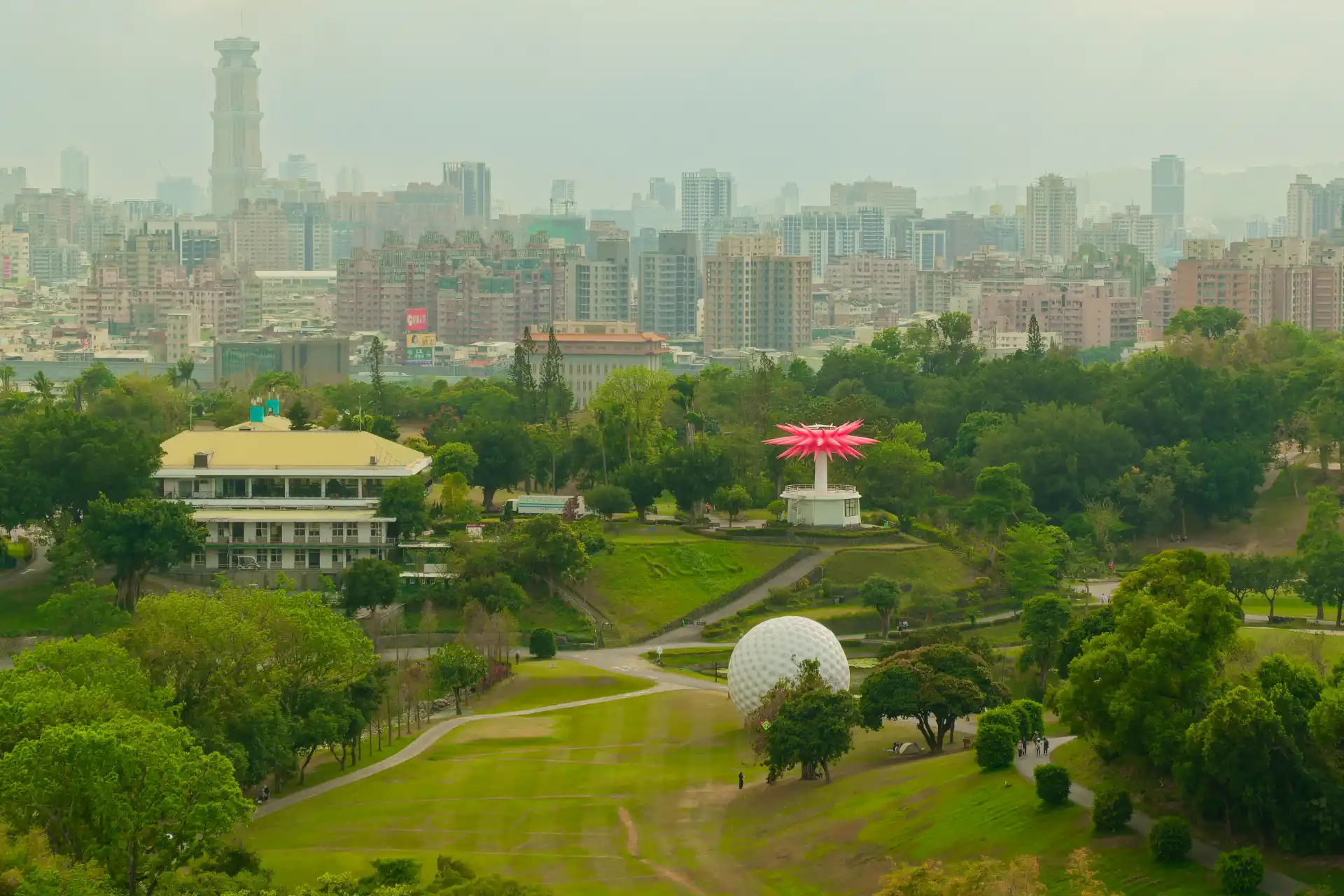
The entrance really did look like a converted nuclear bunker. As a Kaohsiung resident, my discounted ticket cost NT$120 (NZ$6).The bunker’s nuclear blast door weighs 5 metric tons. To protect from radiation, it comprises a steel outer shell and inner lining of lead.The tunnel zig-zags through the mountain to dissipate any blast pressure. A consequence of this is that the aquarium’s state of disrepair is immediately obvious upon entry: the wall on the right side of this photo is the first thing you see.The tunnels are three meters wide, with more than half their width taken up with fish tanks.Ironically—given I chose to visit an aquarium—I’m scared of fish. So I took more photos of the bunker facilities than the Peculiar Sea-animals Ares.I noticed my heart rate rising as I passed some of the larger fish. I really don’t know why I visit aquariums.Unsurprisingly, I avoided touching and feeling in the Touch and Feel Room.Back in the main tunnel, I saw this Counteractive Shooting Hole……Which nowadays affords a side view of a fish tank.Further along, a one room had an info panel (next to the mermaid), which outlined the Story Of The Command Center.The coral room was a bit more spacious.A side room contained nothing but this black coral. A group of people entered immediately behind me and gasped when they saw it. I translated the information panel and learned why: it’s one of the largest specimens of black coral in the world. And at 130 cm high, and having grown only about an inch every 100 years, it could be thousands of years old.The giant clam room included a “killer shell” (on right). An English-language information panel said a victim “will stop into its body so his feet will be grasped one cannot be freed. Gradually, this man will suffer from lack of oxygen and finally suffocates to death.” (Wikipedia says this is a myth.)There are around 300 living creatures in the aquarium. This clownfish was about the only one I was okay with.I found the dictator’s emergency exit, but it was closed so I backtracked through the bunker……Past the Magnificent Stones……And the magnificent shells……Past these innocuous-looking fish……And very quickly past this terrifying thing on the left……And out of the bunker. My heart rate returned to normal and I got back on my scooter.My next stop was the Chung-Hsing Pagoda (中興塔), just uphill from the lake. It’s of Indian Buddhist origin and 53 meters tall. Next to the steps, an anachronistic message carved in stone (in English) read “It causes righteous indignation to think that our rich homeland is now under the yoke of the Chinese communists.”The double helix staircase had 238 steps to the top.From the top floor, there was a great view back over Chengcing Lake……The Kaohsiung Grand Hotel……And towards the city center. (I can see my apartment building from here.)The park in the foreground is a former golf course which was converted to a public park last year. I’m used to Taiwanese puns failing miserably when translated to English, but in this case the English name is quite clever: Kaohsiung Green Park. It includes some fun sculptures, like the white golf ball and pink starburst.
0:00
/0:09
As I was leaving Chengcing Lake, I passed another cool installation: these wavy tentacles on the International Art Center.
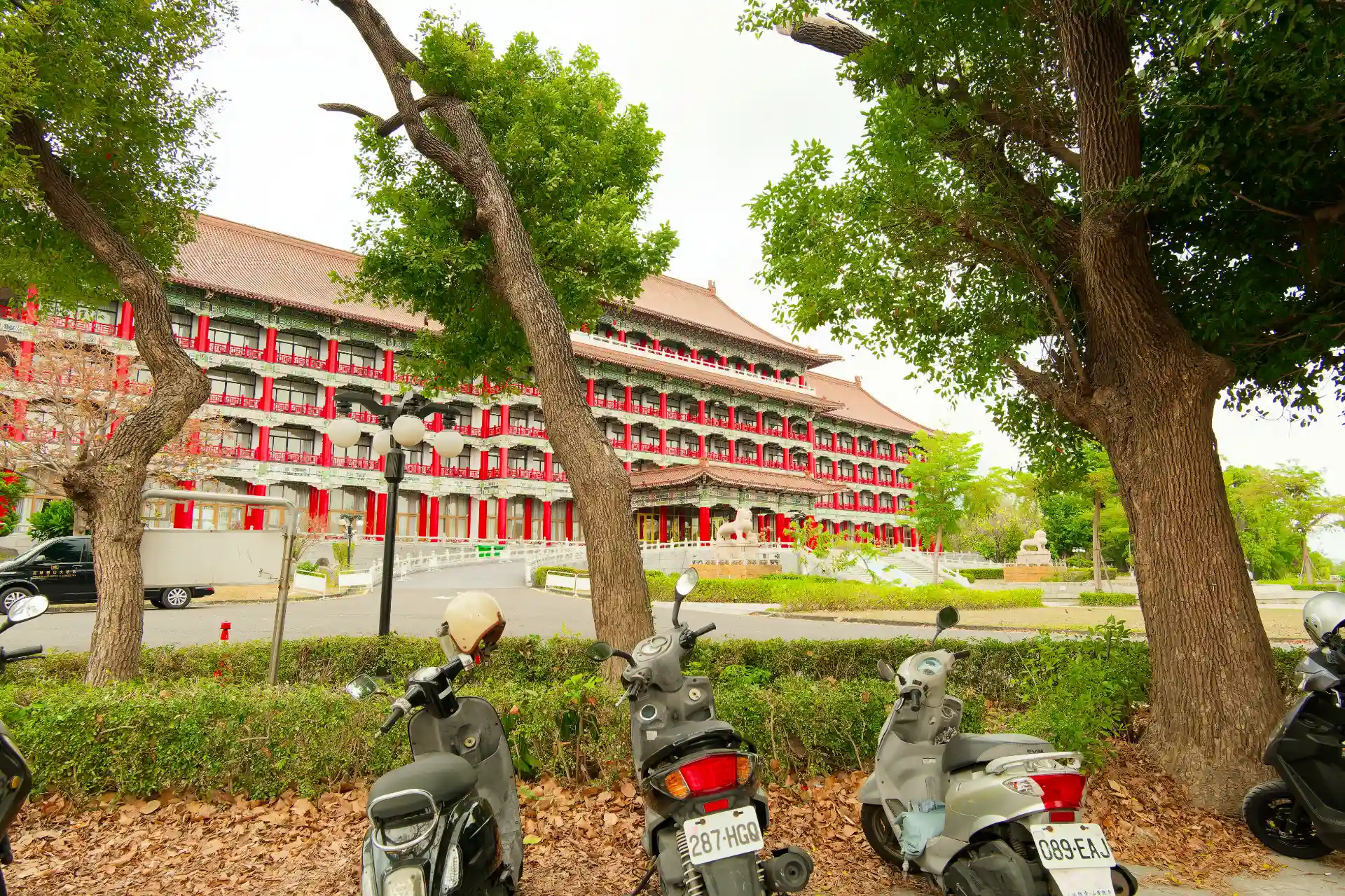
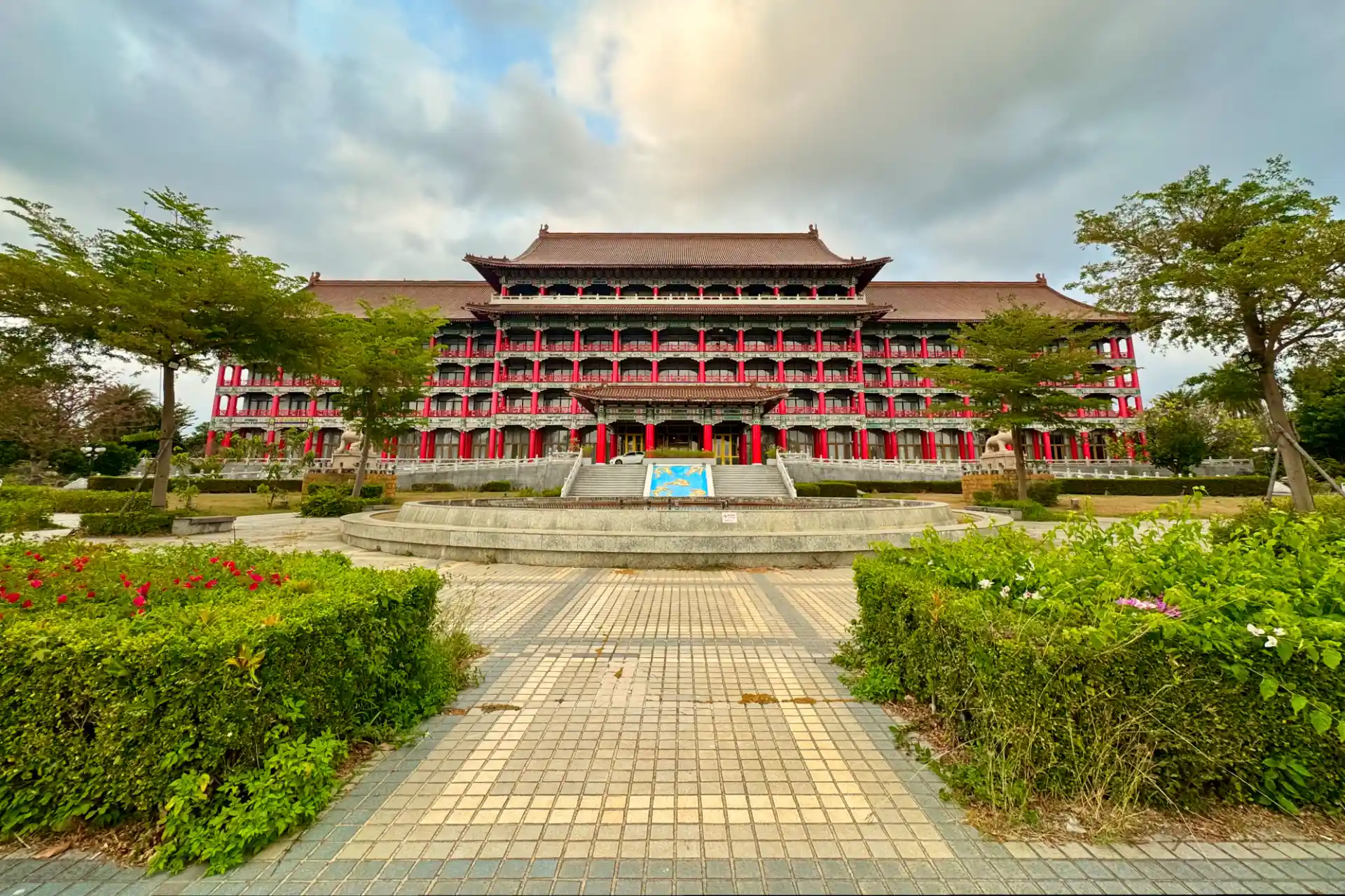
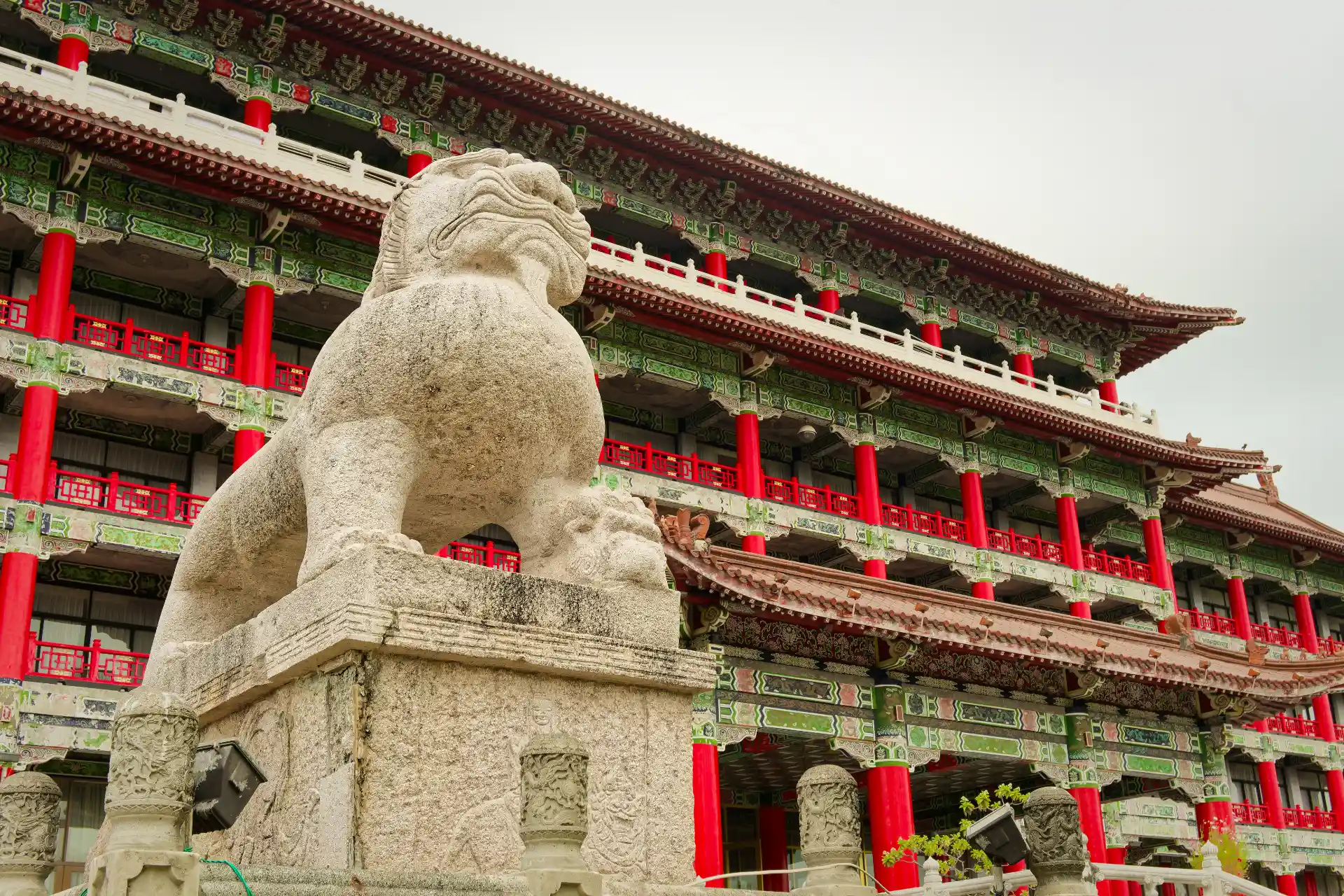
I stopped for a closer look at the Kaohsiung Grand Hotel (高雄澄清湖圓山大飯店). It’s another of the dictator’s projects, built to house visiting dignitaries. At the gate, I asked the guard if I could come in to take photos. He said sure, as long as I parked in the designated scooter area.The hotel opened in 1971. Its more famous sister, the Taipei Grand Hotel, famously featured in Ang Lee’s 1994 film Eat Drink Man Woman.I’d like to stay here sometime. Although… current prices range from NT$3,500 (NZ$175) to NT$10,000 (NZ$500) a night, so it’s hard to justify when I live 15 minutes away. At least the scooter parking was free.