How to use the toilet in Taiwan
A guide of convenience for those not privy to convention…
When it comes to Taiwanese toilets, there’s a lot to go on: smart toilets, squat toilets, family toilets. Concertinaed toilet paper, unflushable toilet paper, completely absent toilet paper. Indiscreet urinals, emergency pull cords, and—of course—bubble animal buttholes.
So, without farting around, let’s get to the bottom of things…
Smart toilets
When I lived in New Zealand, I thought of these as Japanese toilets. And indeed, most of the smart toilets in Taiwan seem to come from Japan. But over here they’re not Japanese; they’re smart.
Here’s the Panasonic smart toilet from my previous apartment:
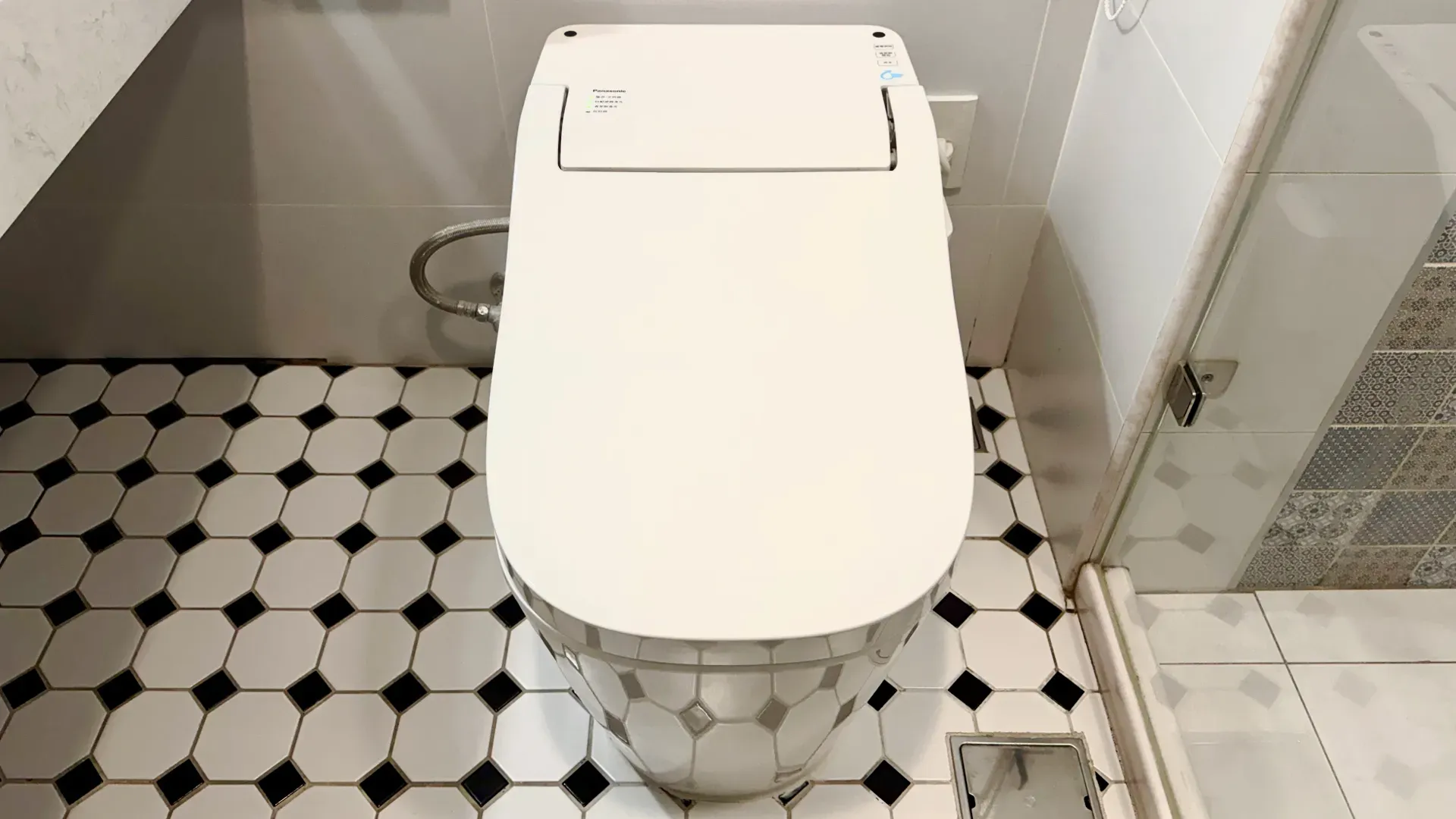
The wall-mounted remote had 16 buttons. There were 3 more on the toilet itself.
Based on trial and error, with a little help from Google Translate, here’s my best understanding of what the 16 buttons actually did:
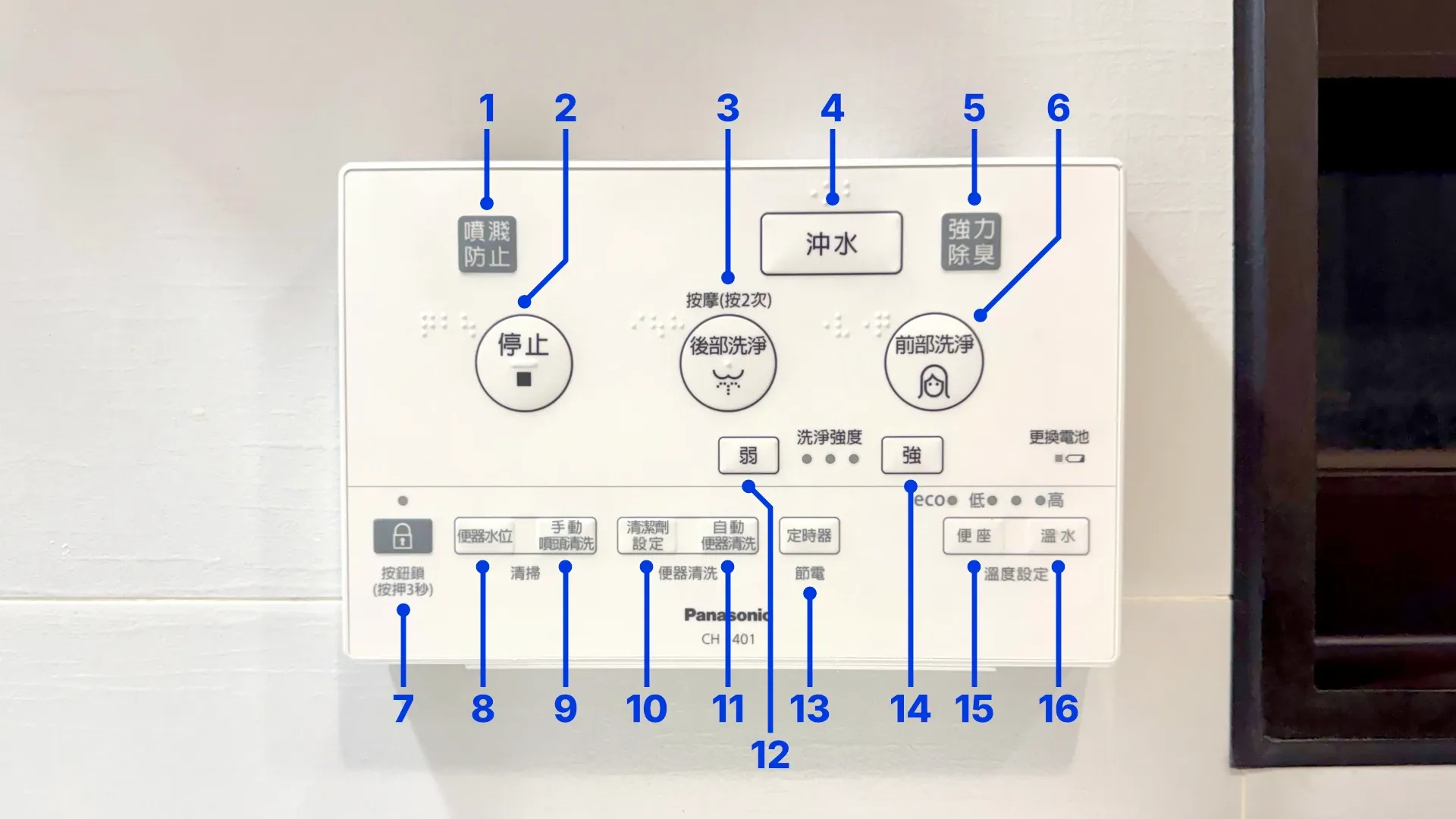
- [噴濺防止] Anti-splash pee mode (press this before urinating to lower the water level and, if the toilet deems it necessary, add more bubbles to prevent splashing)
- [停止] Stop everything
- [後部洗浄] Start butt bidet
- [沖水] Flush
- [強力除臭] Deodorization on/off
- [前部洗浄] Start vaginal bidet
- [按鍵鎖] Child lock
- [便器水位] Alternate between high and low water levels
- [手動噴嘴清洗] Manually start bidet nozzle cleaning cycle (the toilet also auto-cleans the nozzles before and after use)
- [清潔劑設定] Manually start toilet bowl cleaning cycle
- [自動便器清洗] Automatic toilet bowl cleaning on/off
- [弱] Reduce bidet water pressure
- [定時器] Eco mode on/off
- [強] Increase bidet water pressure
- [便座] Adjust toilet seat temperature (eco/low/medium/high)
- [溫水] Adjust bidet water temperature (eco/low/medium/high)
And the buttons and lights on the toilet itself:
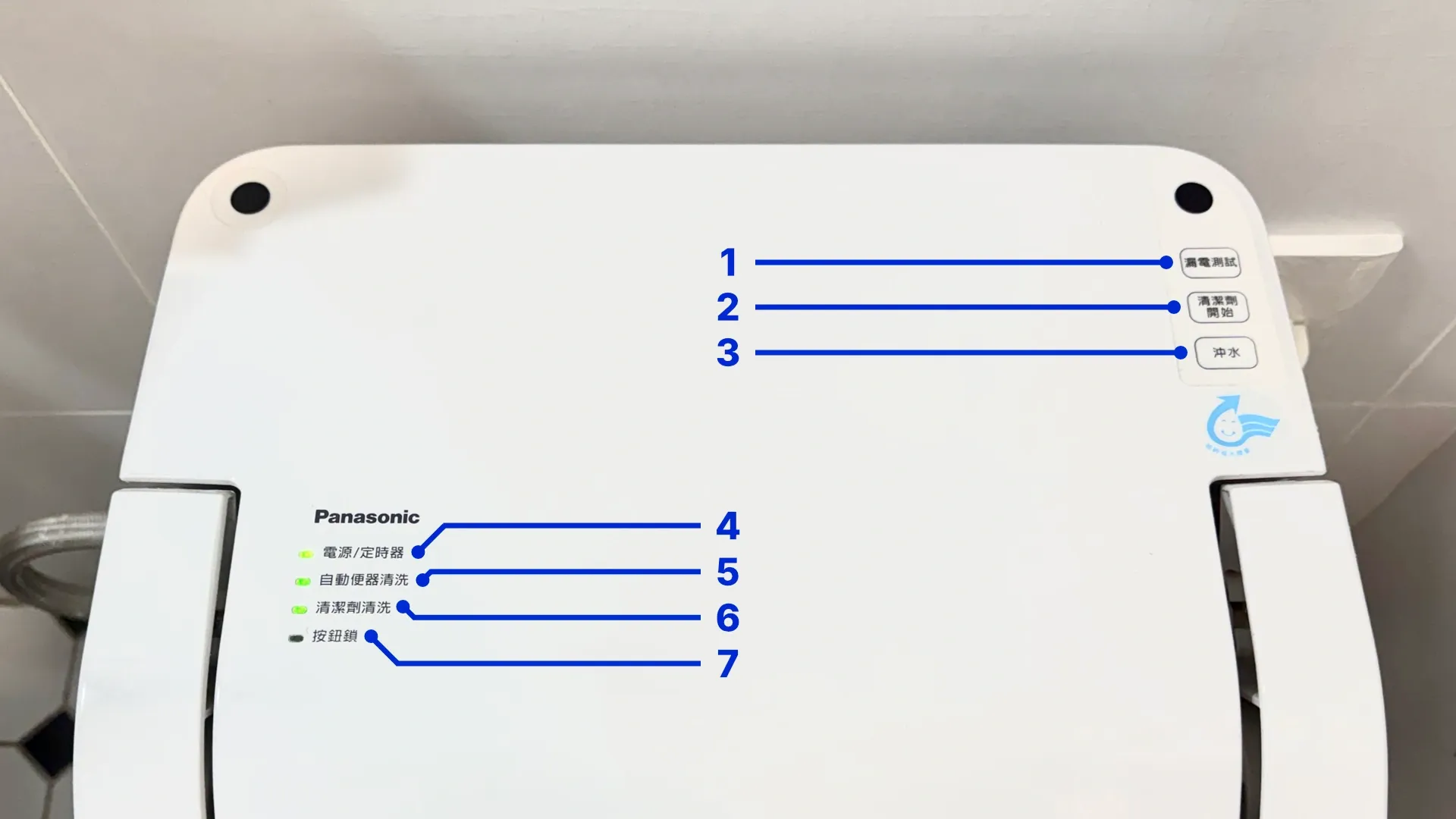
- [滿電測試] Test electrical functions
- [清潔劑噴洗] Pump in new detergent
- [沖水] Flush
- [電源 / 定時器] Power/timer (on)
- [自動便器清洗] Automatic toilet bowl cleaning (on)
- [清潔劑清洗] Detergent in use (on)
- [按鈕鎖] Child lock (off)
The bubbles came from Panasonic-branded detergent which went into a reservoir on the right side of the toilet. It was a similar process to topping up the washer fluid in a car.
From memory, one detergent bottle cost around NT$160 (NZ$8) and lasted three or four months.
Here’s a video of the toilet flushing, then using the detergent for a bowl clean:
But recently, I farewelled that magnificent toilet and moved to a new apartment.
This has meant getting to know a whole new set of toilet features…
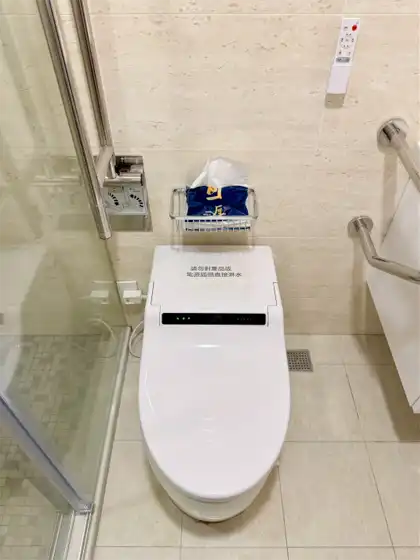
My new smart toilet has a much smaller remote (attached to the wall near the top-right of this photo). It looks relatively simple until you lift it out of the holder—and see the list of extra features available through different key combinations…
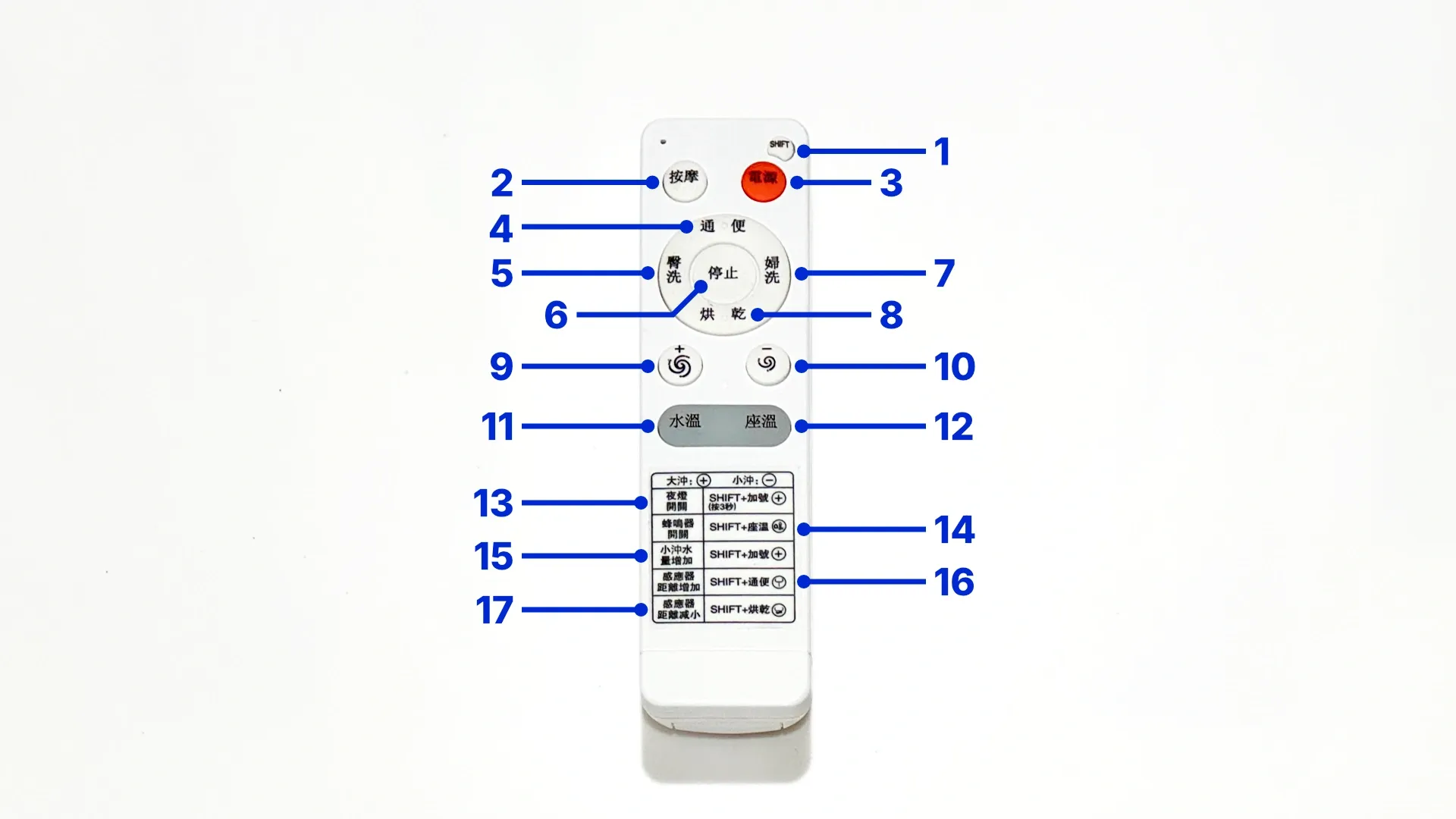
- [SHIFT] Access functions 13 thru 17
- [按摩] Massage (pulse the bidet water to stimulate relaxation)
- [電源] Power
- [通便] Facilitate bowel movement (pulse the bidet water to stimulate a bowel movement)
- [臀洗] Start butt bidet
- [停止] Stop everything
- [婦洗] Start vaginal bidet
- [烘乾] Start butt-drying warm air
- [+] Big flush
- [-] Small flush
- [水溫] Set bidet water temperature (low/medium/high)
- [座溫] Set toilet seat temperature (low/medium/high)
- [夜燈開關] Automatic night light on/off
- [蜂鳴器開關] Beep sounds on/off
- [小沖水量增加] Alternate between more or less water for small flushes
- [感應器距離增加] Increase sensor distance for automatic flushing
- [感應器距離減小] Decrease sensor distance for automatic flushing
You might’ve noticed this toilet lacks buttons for cleaning. It automatically washes the bidet nozzles before and after use, but there’s no self-cleaning feature for the toilet bowl.
It does, however, have some other highlights:
- A manual flush pull-cable. My previous smart toilet could not be flushed during power outages (🤢), so this is an exciting upgrade.
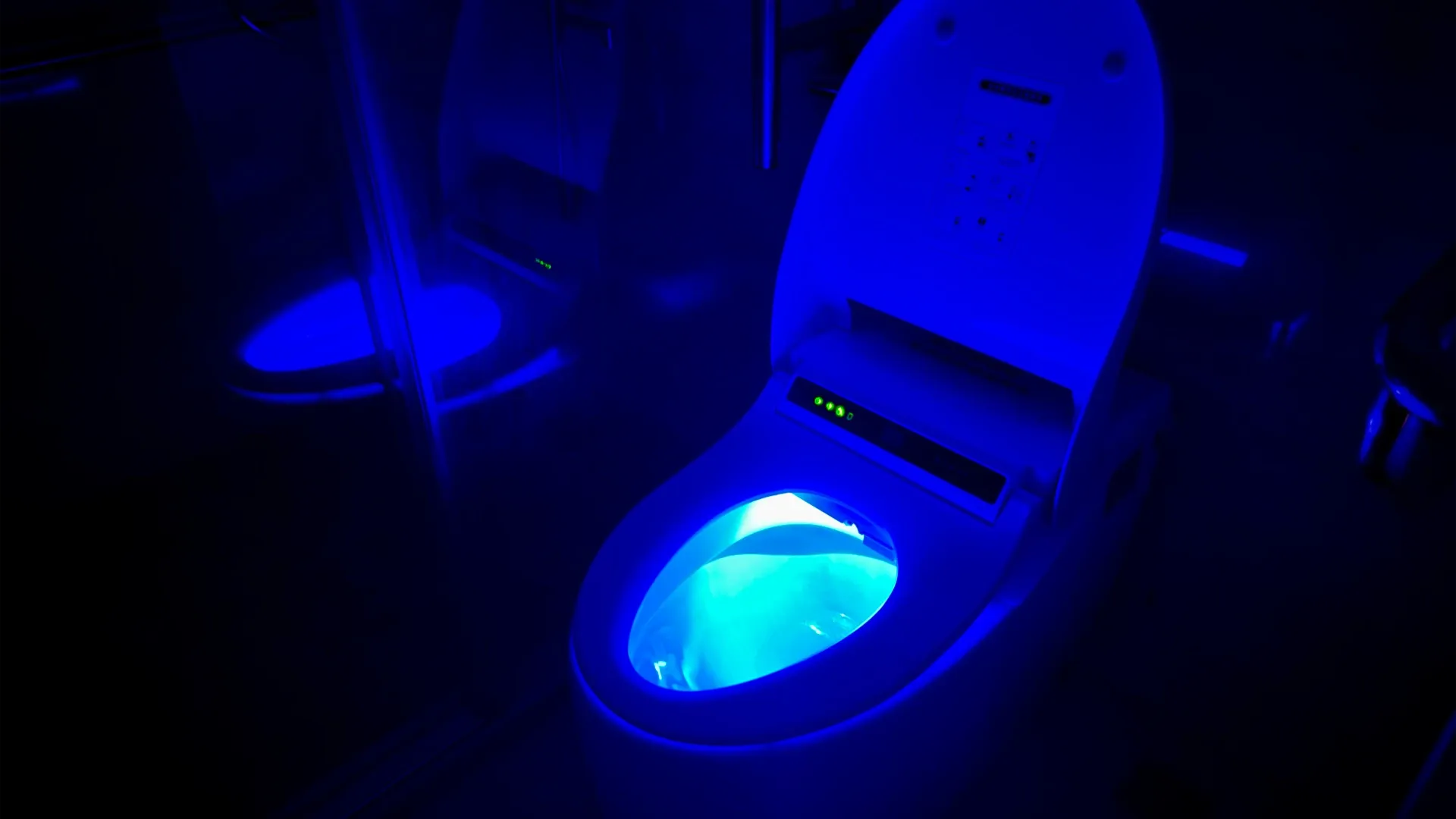
- An automatic night light, which illuminates the inside of the toilet bowl so you can hit your target in the dark:
Just for shits and giggles, here’s a video of this toilet flushing. Note how the waste water is pushed forward by a jet of water from the back of the toilet, draining out through the front:
Here in Taiwan, smart toilets aren’t just in private homes. They’re also common in hotels, and I’ve seen some in public bathrooms—including at airports, cinemas, and department stores. A common feature in these places is a noise generator to mask your typical toilet sounds.
If you encounter a smart toilet in Taiwan (or for that matter, a Japanese toilet in Japan), I suggest taking time to enjoy the ride. You haven’t lived until you’ve experimented with the ‘Facilitate bowel movement’ feature.
(Actually I lie. I only just translated my new toilet’s remote, so the truth is I’m yet to try it…)
But if you do, please take your phone with you. Not to record the facilitated bowel movement, but to help you find the flush button.
Squat toilets
Roughly half of public toilets in Taiwan are squat toilets. Most public bathrooms include a mix of squatting and sitting options. Stall doors typically include icons that show what type of toilet you’ll find inside.
I suggest making an informed decision.
On the couple of occasions where I’ve had no option but to use a squat toilet, I found it terrifying. This is because, as a wildly inflexible person who didn’t visit Asia until my mid-30s, I never thought to master the Asian squat.
(Pooping while balancing on the balls of your feet is a perilous activity I don’t recommend.)
Family toilets
The family that poops together…?
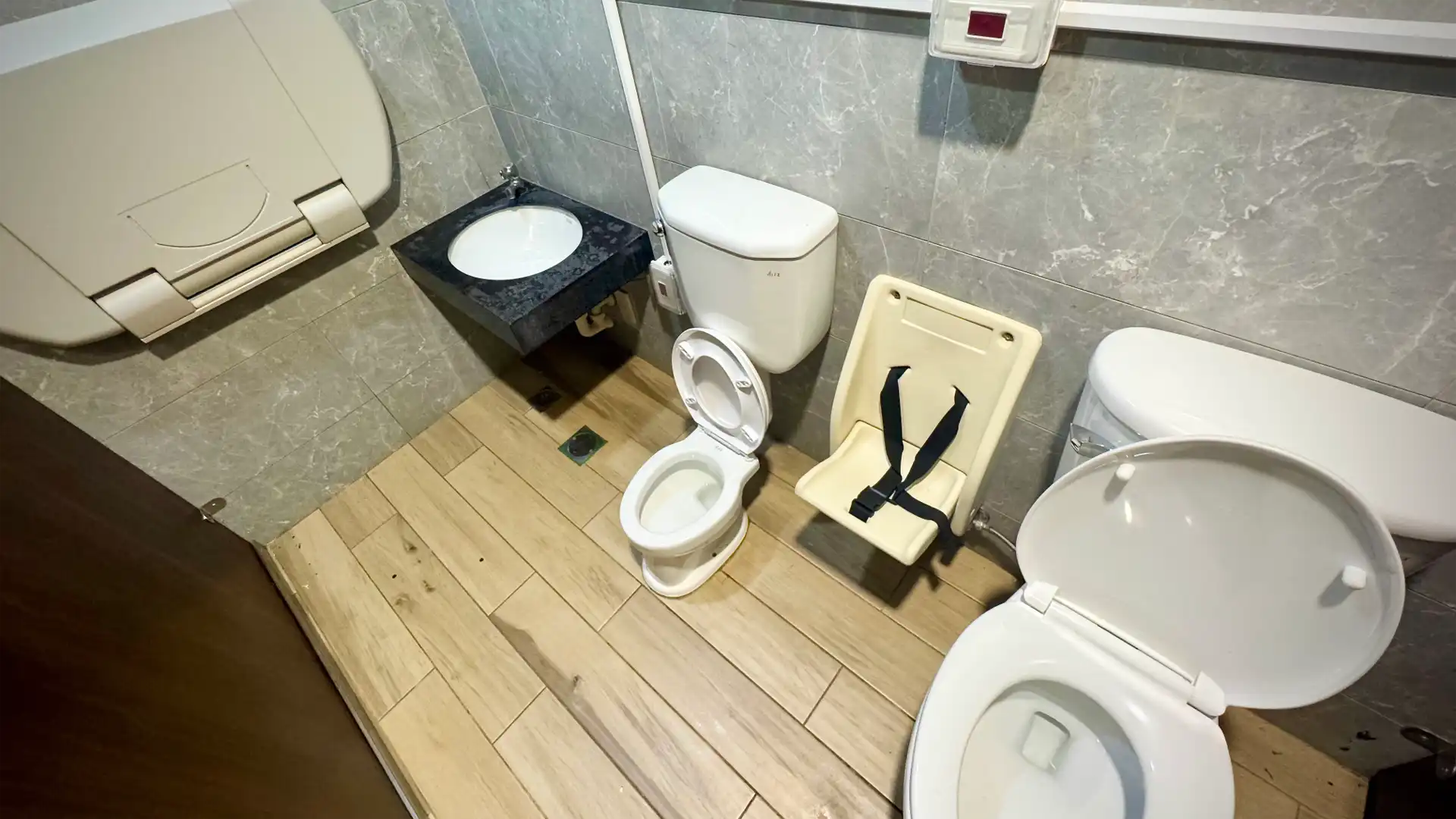
I first encountered a family toilet near Lotus Pond in northern Kaohsiung. I entered a public bathroom and saw two toilets in one stall: one was a regular-sized sitting toilet, and one was a fully-functional half-sized version. They were a meter apart.
When I’ve mentioned to Taiwanese friends that I never saw this arrangement in New Zealand, they seemed baffled. It’s so obvious to them that children need a mini toilet in the same stall as their parents’ adult-sized version.
And while I concede this is a logical approach, I think if I did have kids, I’d struggle to move past the British-influenced modesty norms that have informed my bathroom routine to date.
Family toilets aren’t for me. But I’m delighted they exist.
Concertinaed toilet paper
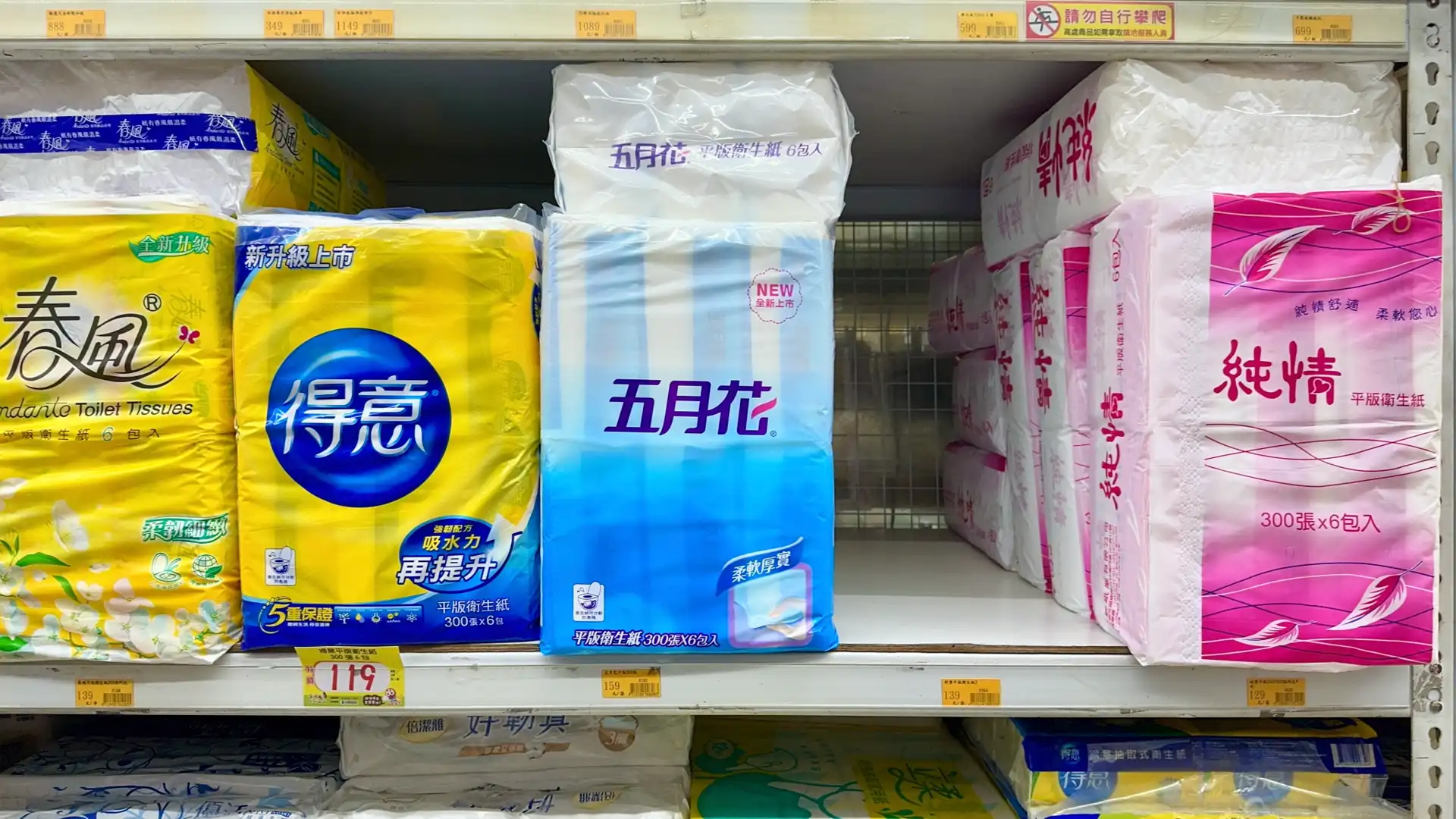
In Taiwan, most toilet paper comes in plastic-wrapped rectangular packs—more akin to tissue boxes than Western-style toilet rolls.
I appreciate the hygiene advantage, and that the plastic keeps the toilet paper dry in Taiwanese bathrooms (which often don’t have a separate shower area, meaning the whole room gets wet).
Still, the extra plastic feels excessive—even though in Taiwan, this issue is hardly unique to toilet paper.
The packaging shape also means I need to use Google Translate because, for the functionally illiterate, toilet paper packs look more-or-less the same as those for some facial tissues and kitchen towels.
Unflushable toilet paper
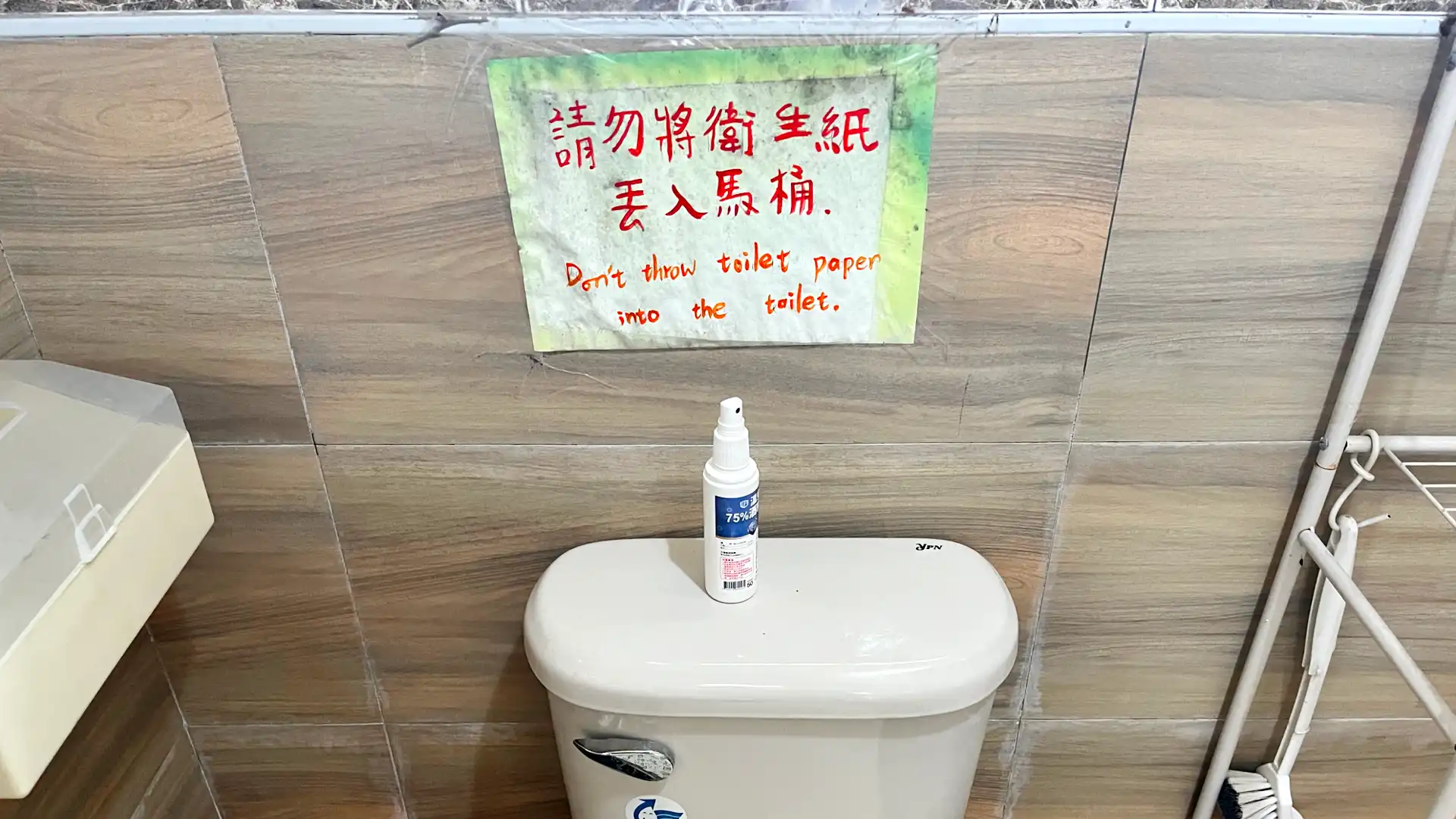
The closest I’ve come to culture shock in Taiwan was discovering that some toilets don’t allow you to flush toilet paper. You have to throw it in the trash instead.
This feels wildly unhygienic to me, but I understand the logic: many older buildings have narrow plumbing that can’t readily handle toilet paper. And historically, some locally-produced toilet paper was thicker and therefore slower to break down.
I’m lucky that neither of my Taiwanese apartments have had this restriction. But when I’ve encountered this situation at B&Bs or cafés, for example, it’s been an uncomfortable discovery every time.
(In addition to taking your phone into a toilet stall to find the flush button, I recommend translating any signs you see while you’re there: they could be telling you what to do with the paper.)
Completely absent toilet paper
Not all public bathrooms in Taiwan have toilet paper. Occasionally, as in other countries, this is because the supplied paper ran out before you arrived—but it can also be because there was never any paper there in the first place.
Unless you have unfailingly predictable bowel movements, I recommend keeping a pack of bathroom wipes in your bag—along with hand sanitizer, because soap is sometimes missing too.
(Also consider taking a bag for your trash. Public toilets are actually one of the few places you can reliably find trash bins in Taiwan—along with convenience stores, department stores, and MRT stations.)
Indiscreet urinals
In Taiwan, urinating isn’t necessarily a discreet activity.
Urinals are often in view of passers-by. And while you may have your back to other people, it still feels weird to, in a way, be peeing in public.
(I know this situation isn’t unique to Taiwan. But those British-influenced modesty norms are nagging me again…)
Emergency pull cords
Some Taiwanese bathrooms, such as the family toilet above, have obvious emergency call buttons. (Incidentally, my previous apartment also had one in the bedroom.) But the first time I encountered an emergency pull cord, I initially mistook it for a flushing chain—something that could’ve got real awkward, real fast.
The cord was immediately next to a high-mounted cistern so there was an obvious visual connection between the two.
But luckily I decided to Google Translate a small sign before flushing—something I’ve done in more Taiwanese bathrooms than I would ever have predicted—so I avoiding having strangers bust in to rescue me from my own cultural ignorance.
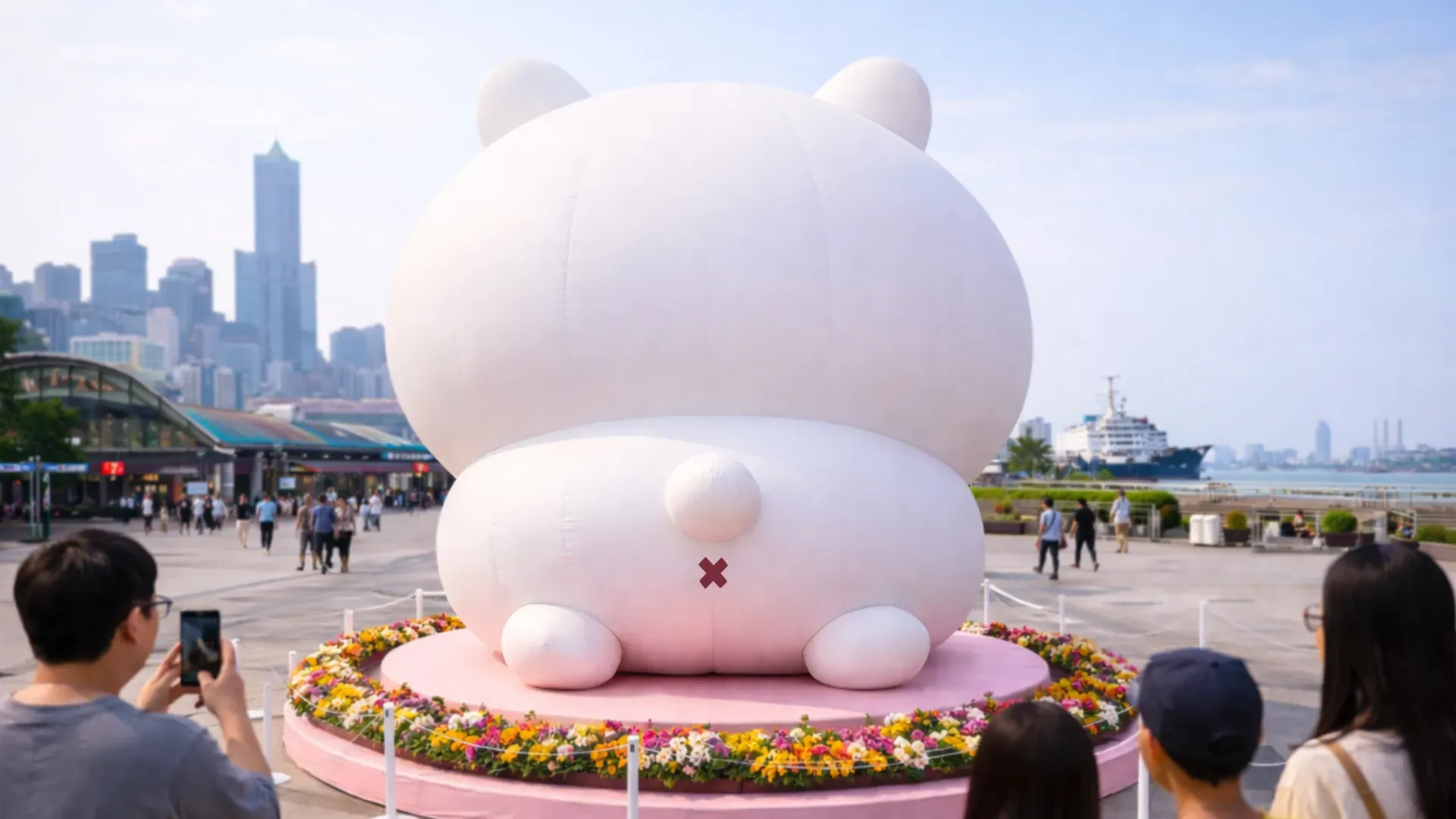
Bubble animal buttholes
This last one’s only peripherally poop-related, but I find it cute and weird and very Taiwanese, so here goes…
Generally speaking, Taiwanese love adding buttholes (or X-marks-the-spot-type butthole locators) to anything cute: inflatable animals, mascots, stuffed toys, and so on.
It’s a cultural quirk I love, and yet cannot get over.
But it turns out that, despite having seen this a bunch of times on everything from giant inflatable mascots to very small toys, I never took a photo of a bubble animal’s butt.
So here’s a representative AI-generated example: