Misty forest trails, vintage mountain trains, and puffed-up bags of chips…
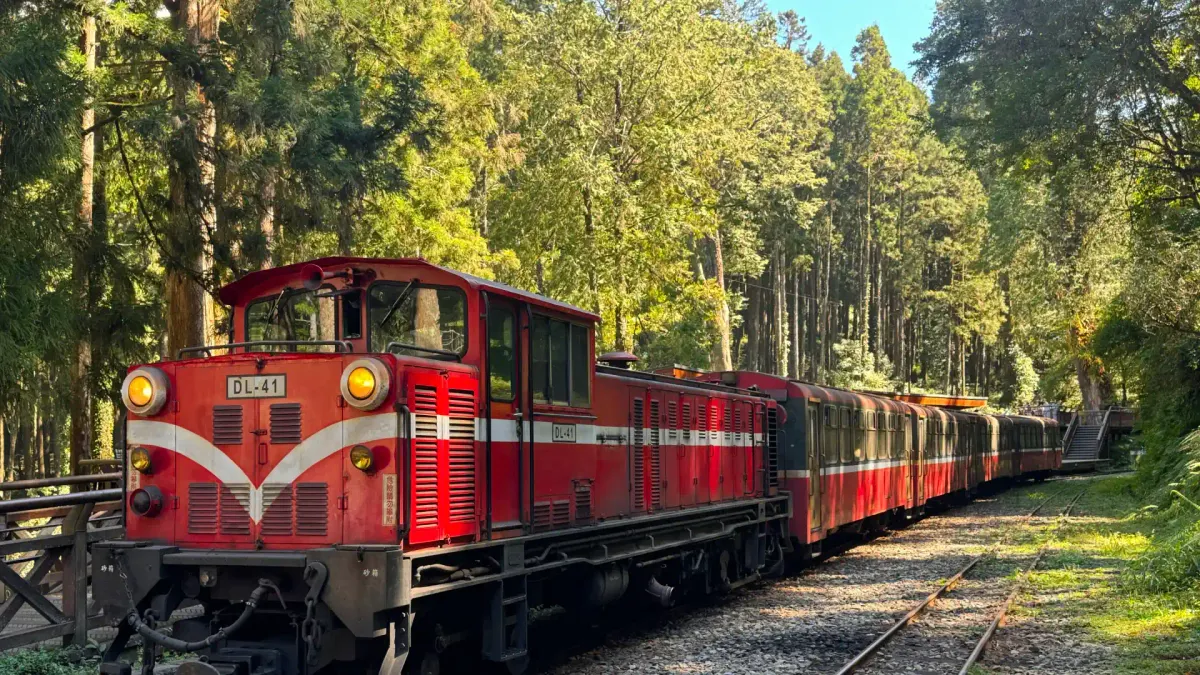
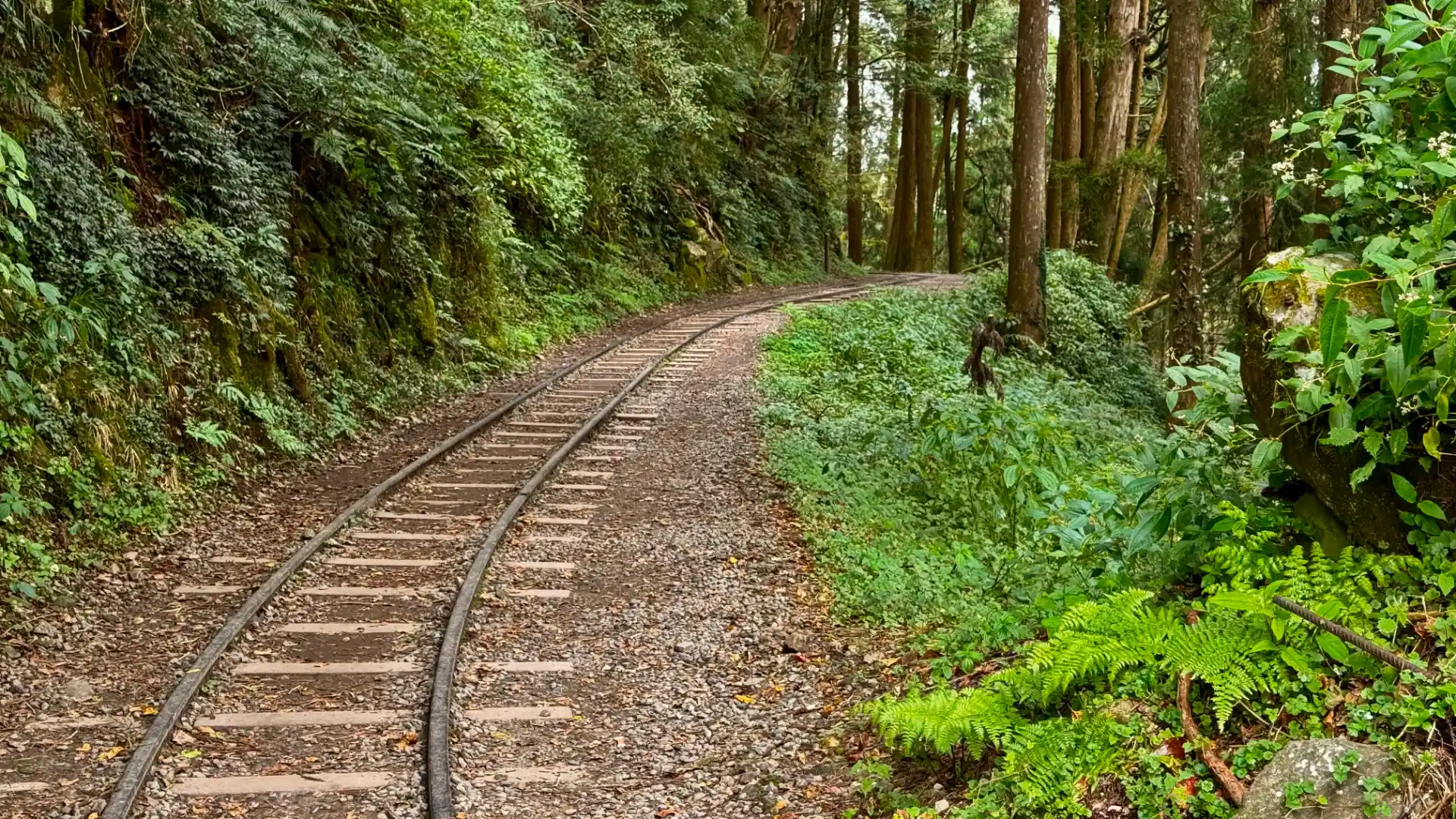
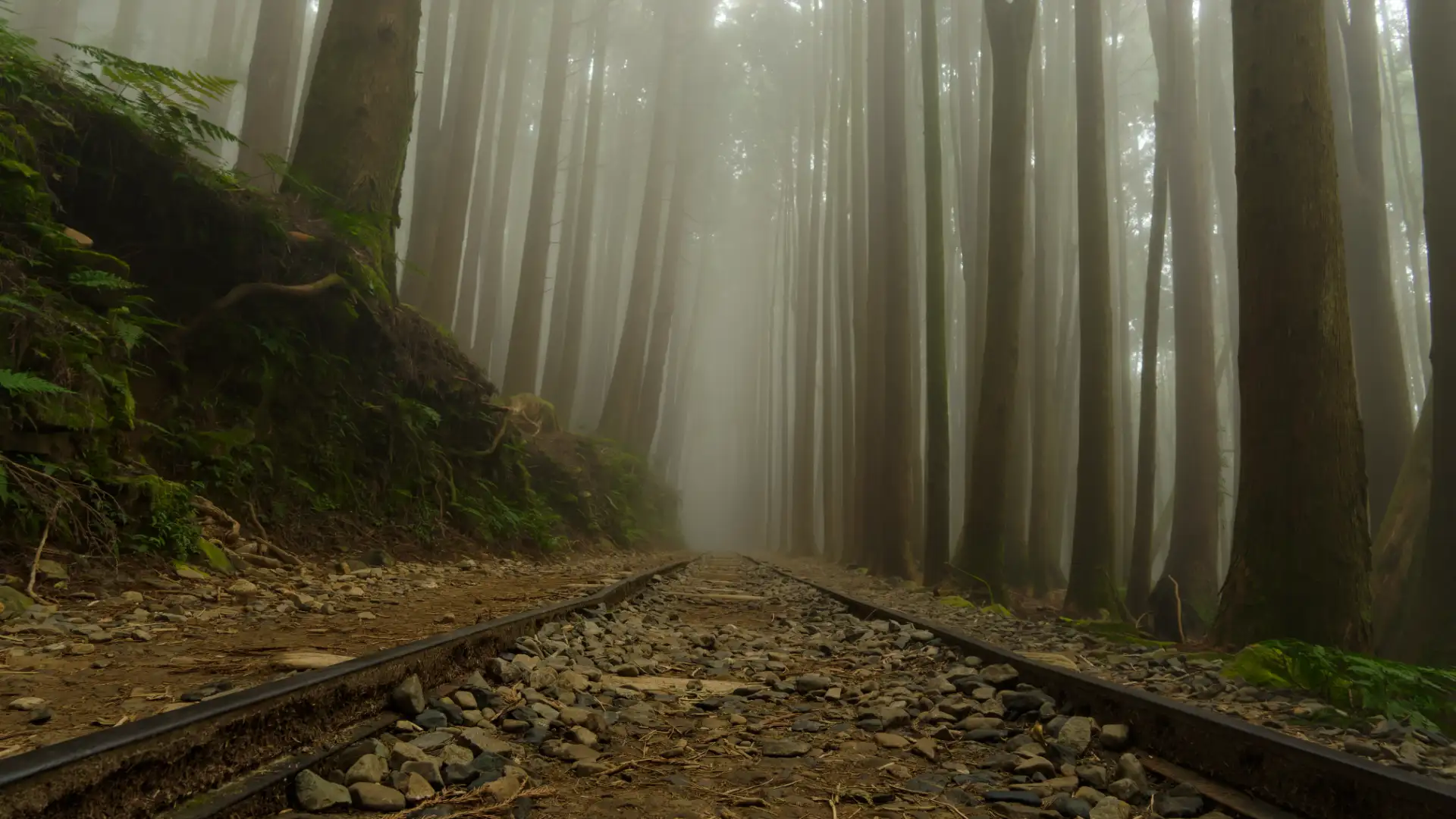
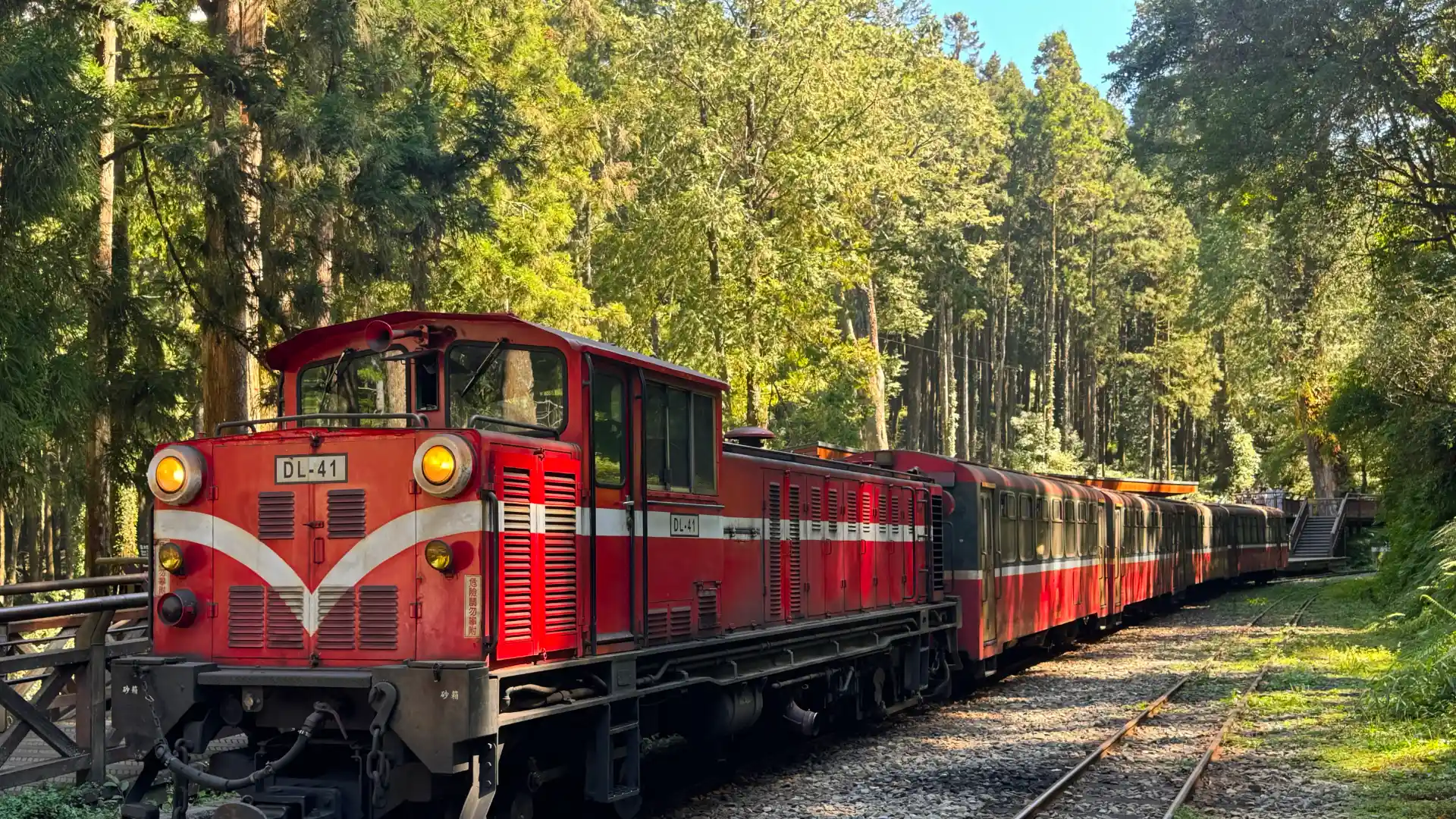
The Alishan Forest Railway. Photo: Zhen-Kang.
Alishan is Taiwan’s famous high-altitude mountain region. It’s known for ancient misty forests, high-mountain tea, a historic narrow-gauge railway, and dramatic sunrises over a sea of clouds.
During a two-day trip this past weekend, I greatly enjoyed 3 of these 4 things.
The best option for exploring as much as possible
My journey started on Saturday morning, when my partner and I rented a car in Kaohsiung.
But this time, a car seemed like the best option for exploring as much as possible.
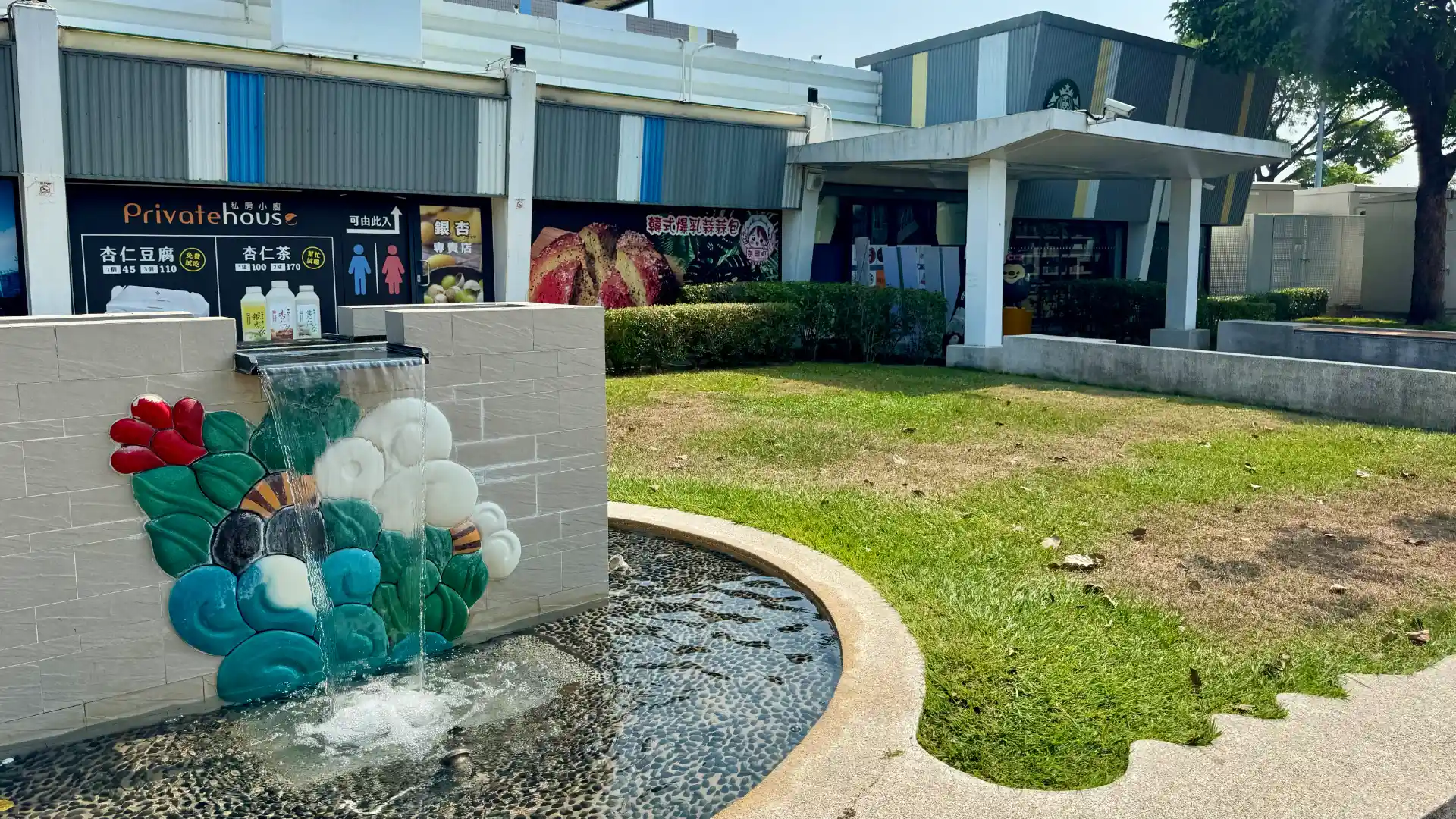
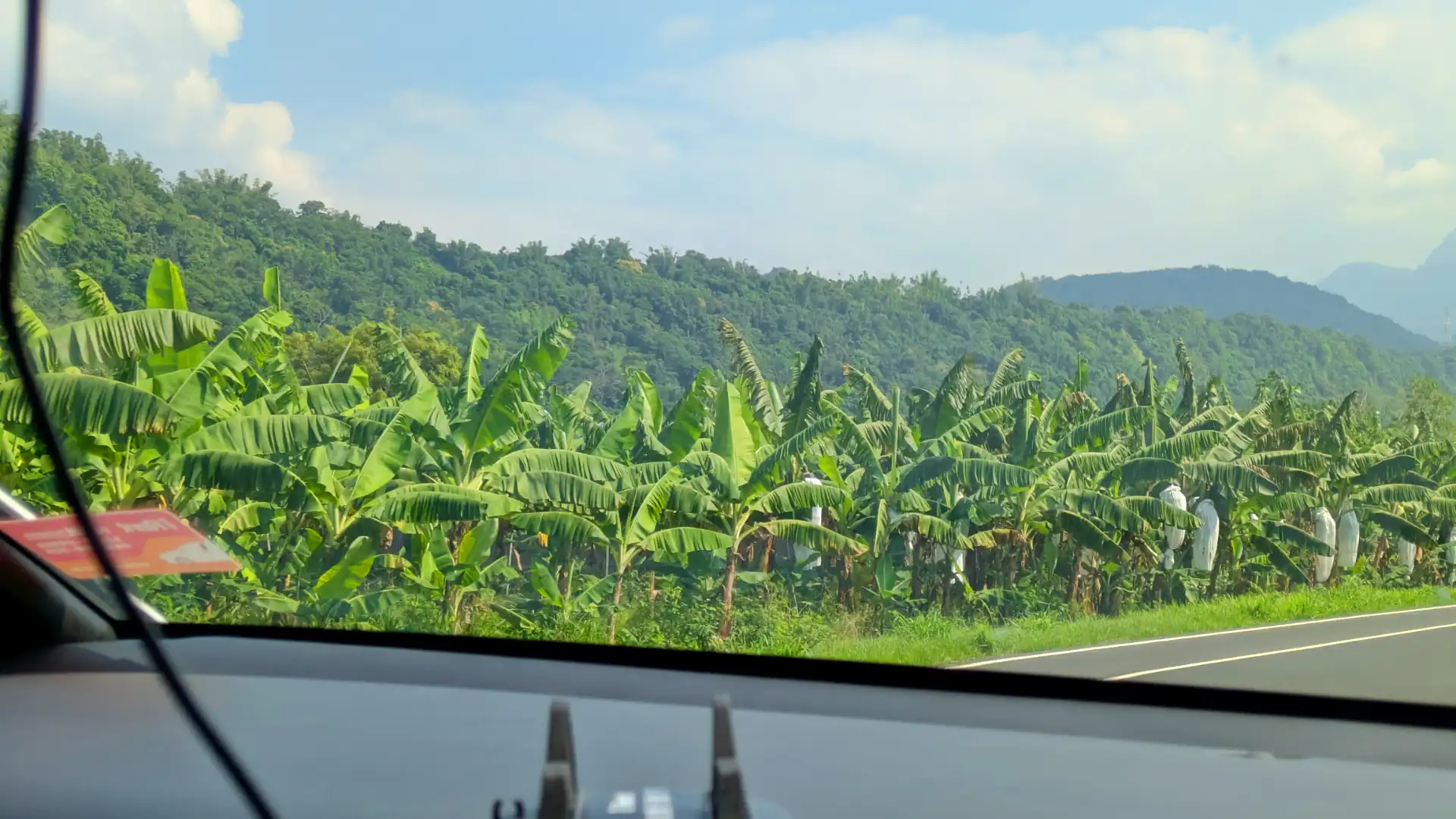
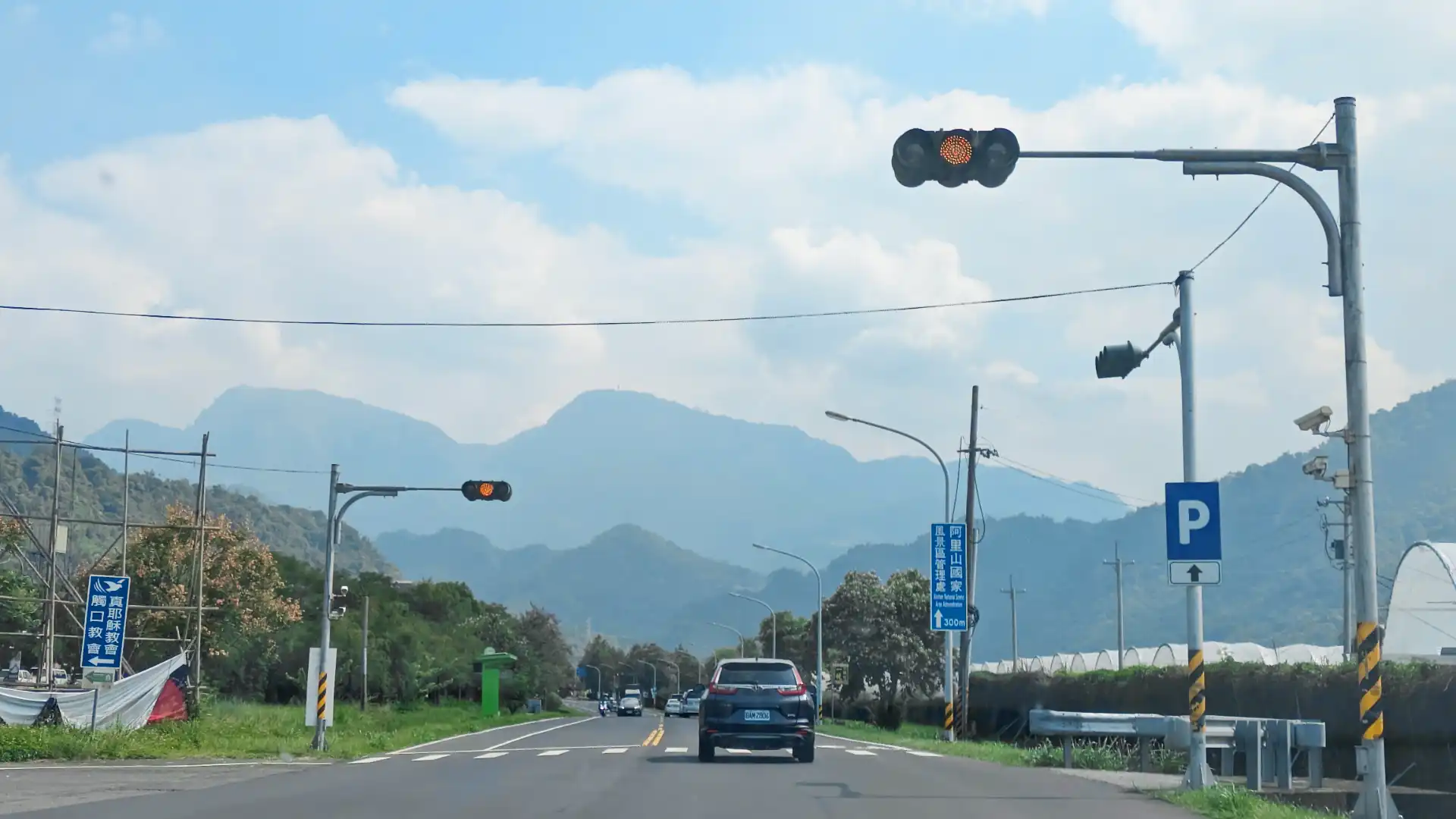
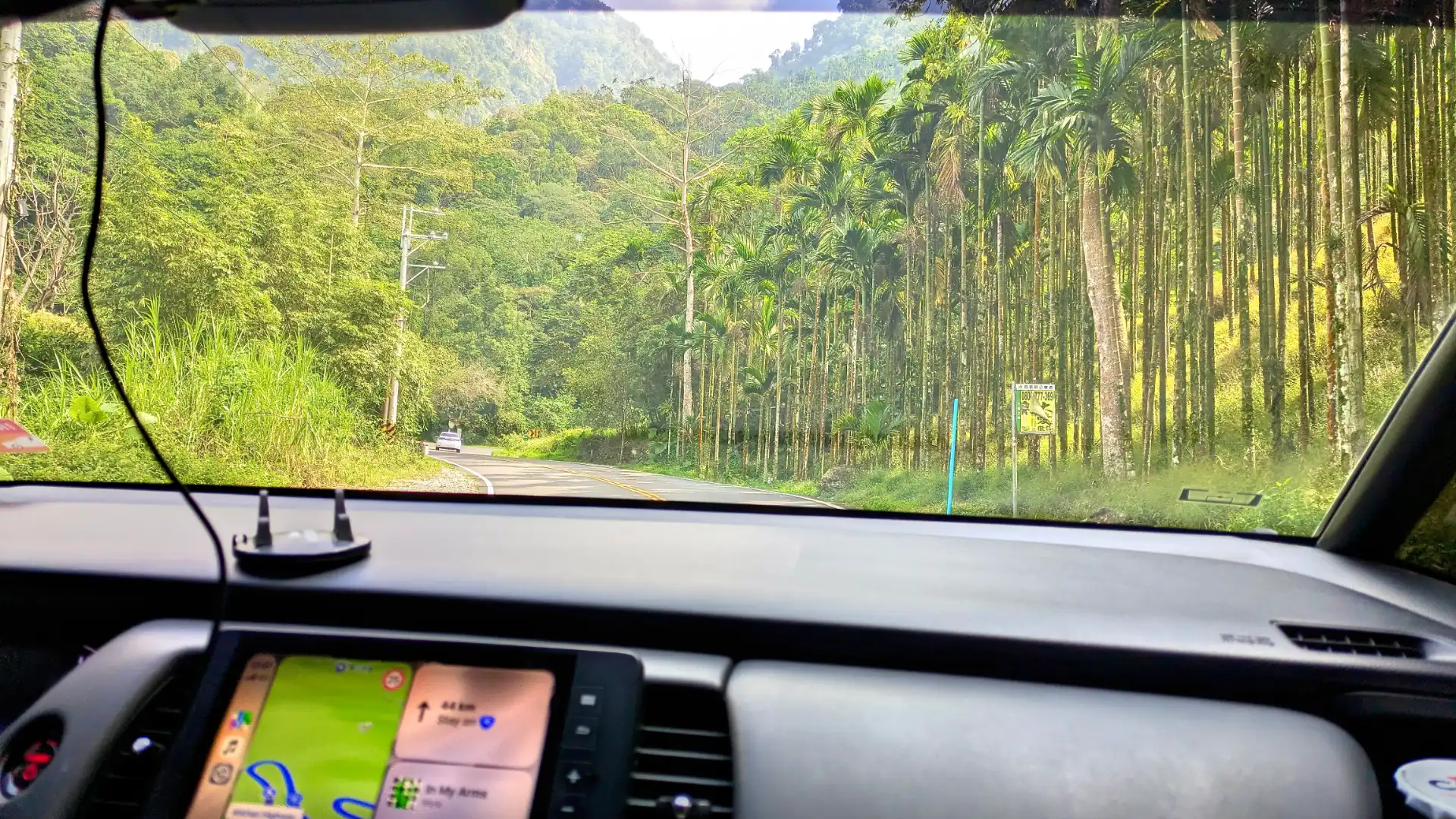
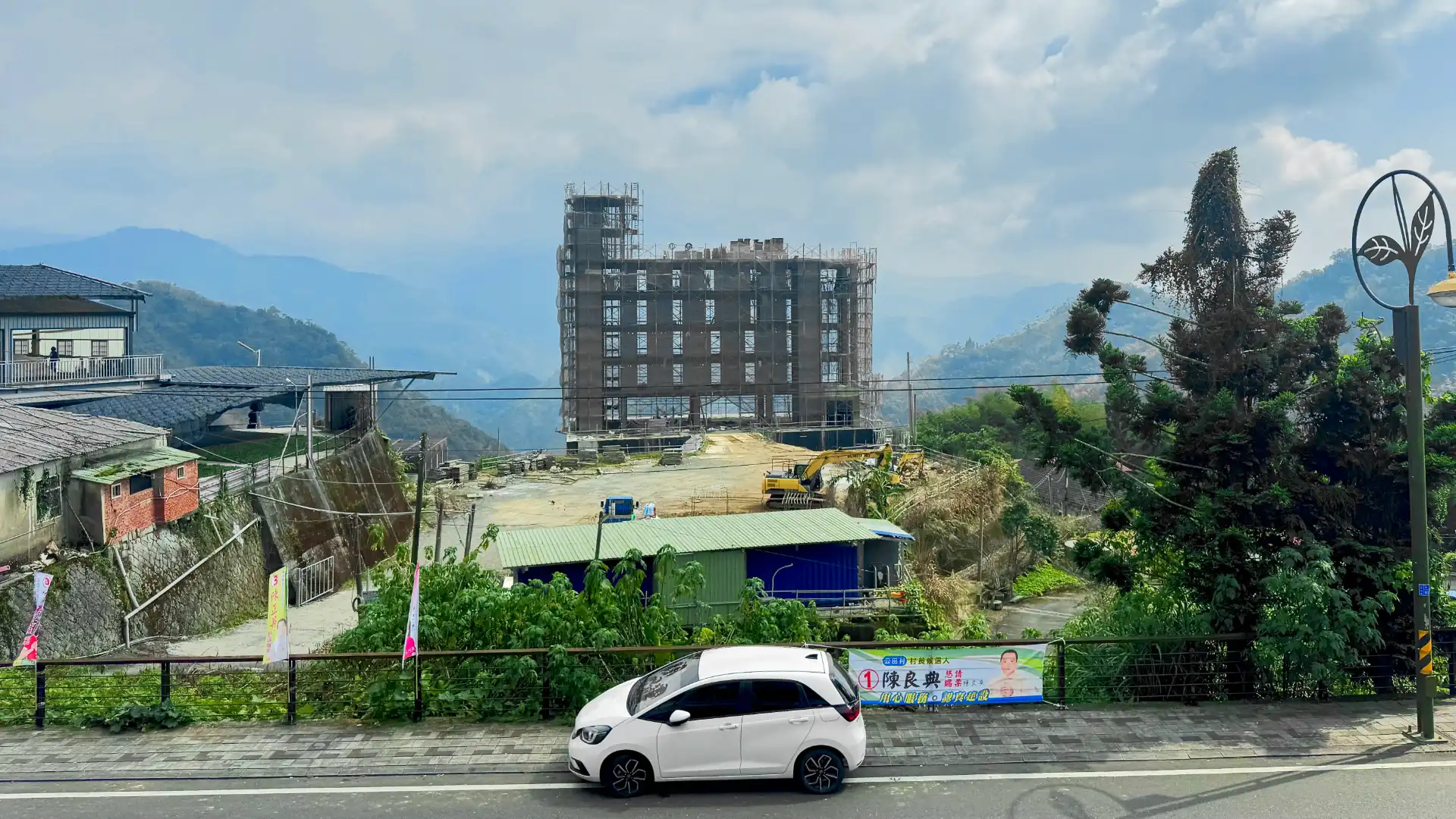
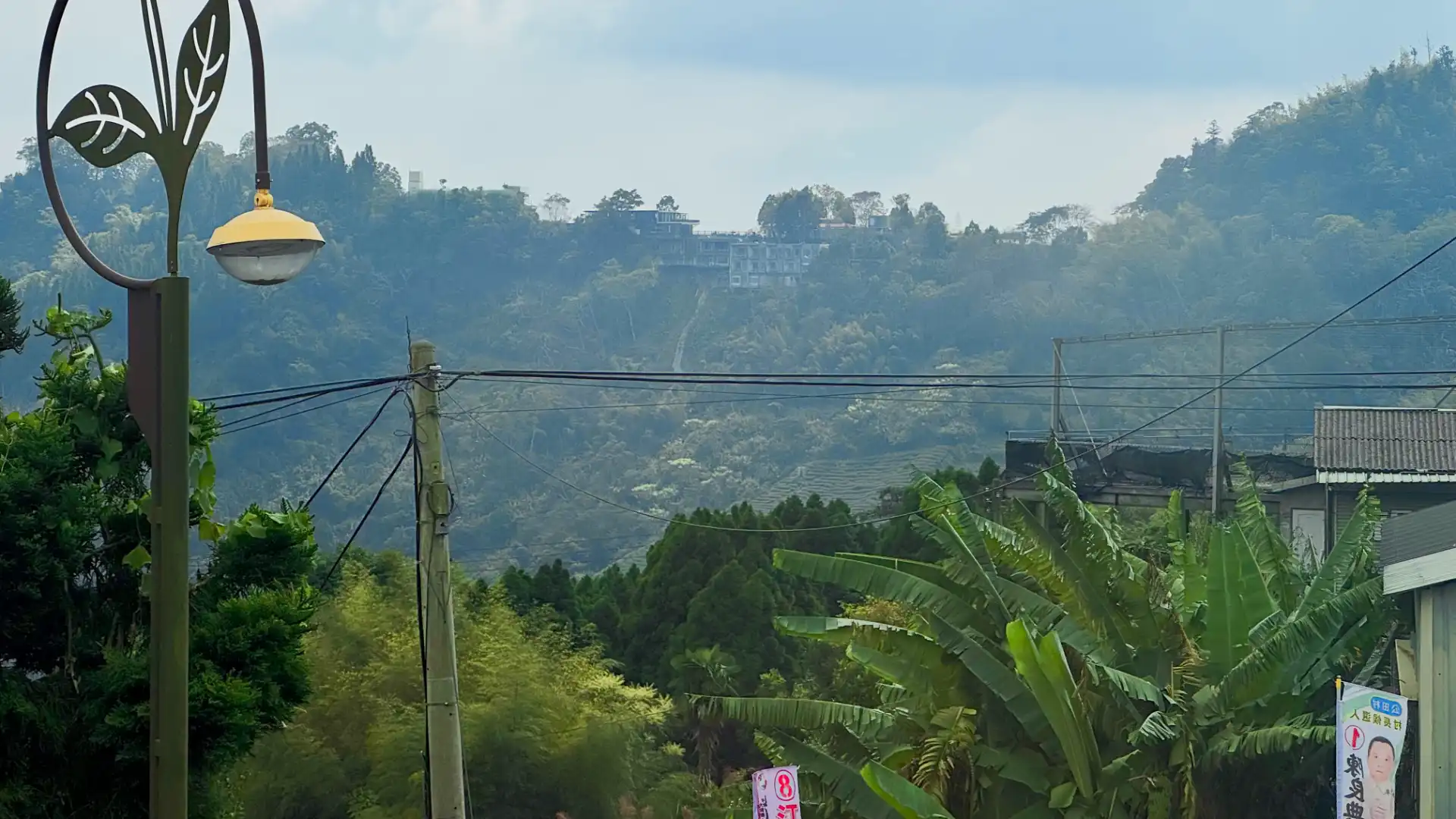
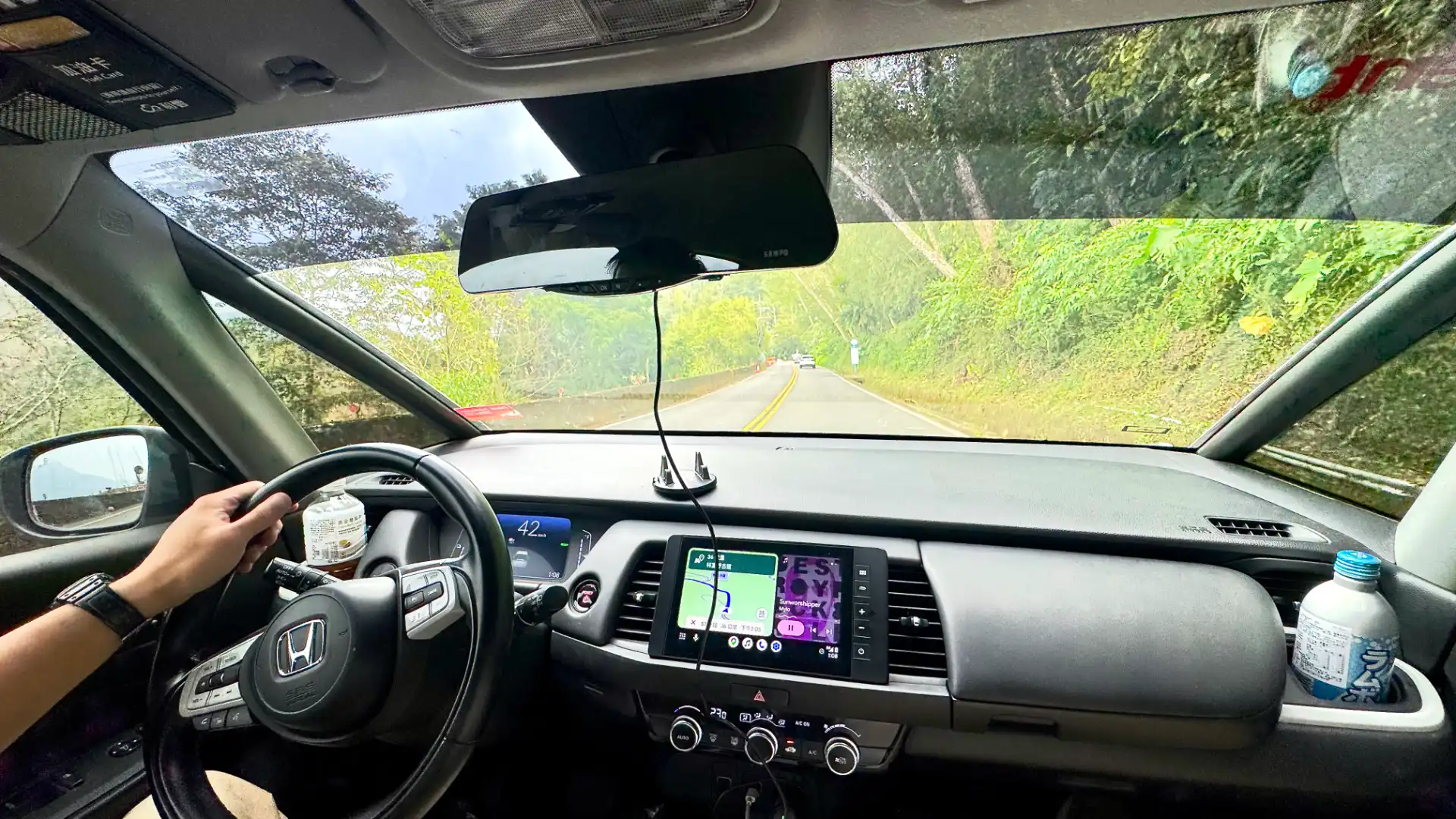
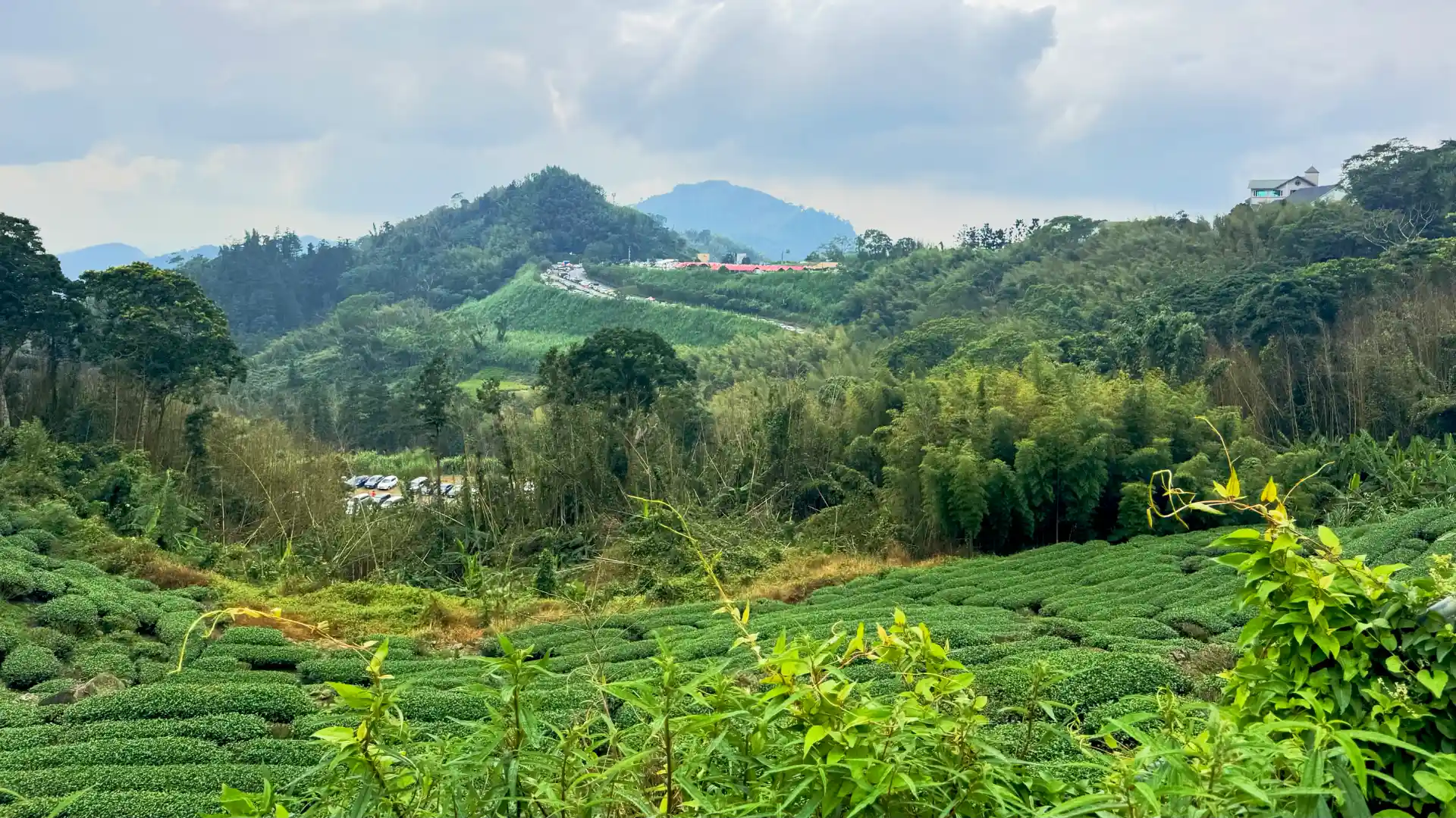
Our rental was this hybrid Honda Fit—a subcompact that felt huge after three years on a motorbike. It lacked a reversing camera—something I didn’t think was possible to omit in 2026—but in all other ways it was excellent. As someone used to driving cars on the other side of the road, I especially appreciated its automatic lane centering (as, no doubt, did the other drivers around me).Our first stop was for coffee at this freeway rest area, near the Kaohsiung–Tainan border.The 7-Eleven had a Halloween banner on one wall. On point for October 31.Just over an hour later, we were passing banana farms in Chiayi County.The mountains then came into view.Heading uphill, we saw plenty of betel nut groves—the Taiwanese equivalent of tobacco farms.At 1,200 meters above sea level, we stopped for lunch at a convenience store. (That would be a strange sentence in New Zealand, but convenience store dining is normal in Taiwan. I had vegetarian fried rice.) From the upstairs dining area, we could see a hotel building site. Behind our car, a banner promoted a candidate in the November 28 local body elections. Candidates are identifiable by randomly-assigned numbers (in this case, the red number 1)—a hangover from the early days of Taiwanese democracy when illiteracy was more common.In the distance, we could see other buildings clinging to the mountainside.The highway roads were good but narrow. We passed dozens (if not hundreds) of tour buses. Excluding stops, it was around a three-hour drive to our accommodation, which was halfway up the mountain.Our B&B was in a converted tea-processing factory. We saw tea leaves drying on mats inside neighboring buildings. Across the road was a small tea farm, and in the distance we could see a bunch of red-and-white marquees. Our B&B host said they were for a group wedding event, with many couples marrying simultaneously per local indigenous tradition.
A civilized nod to public annoyance
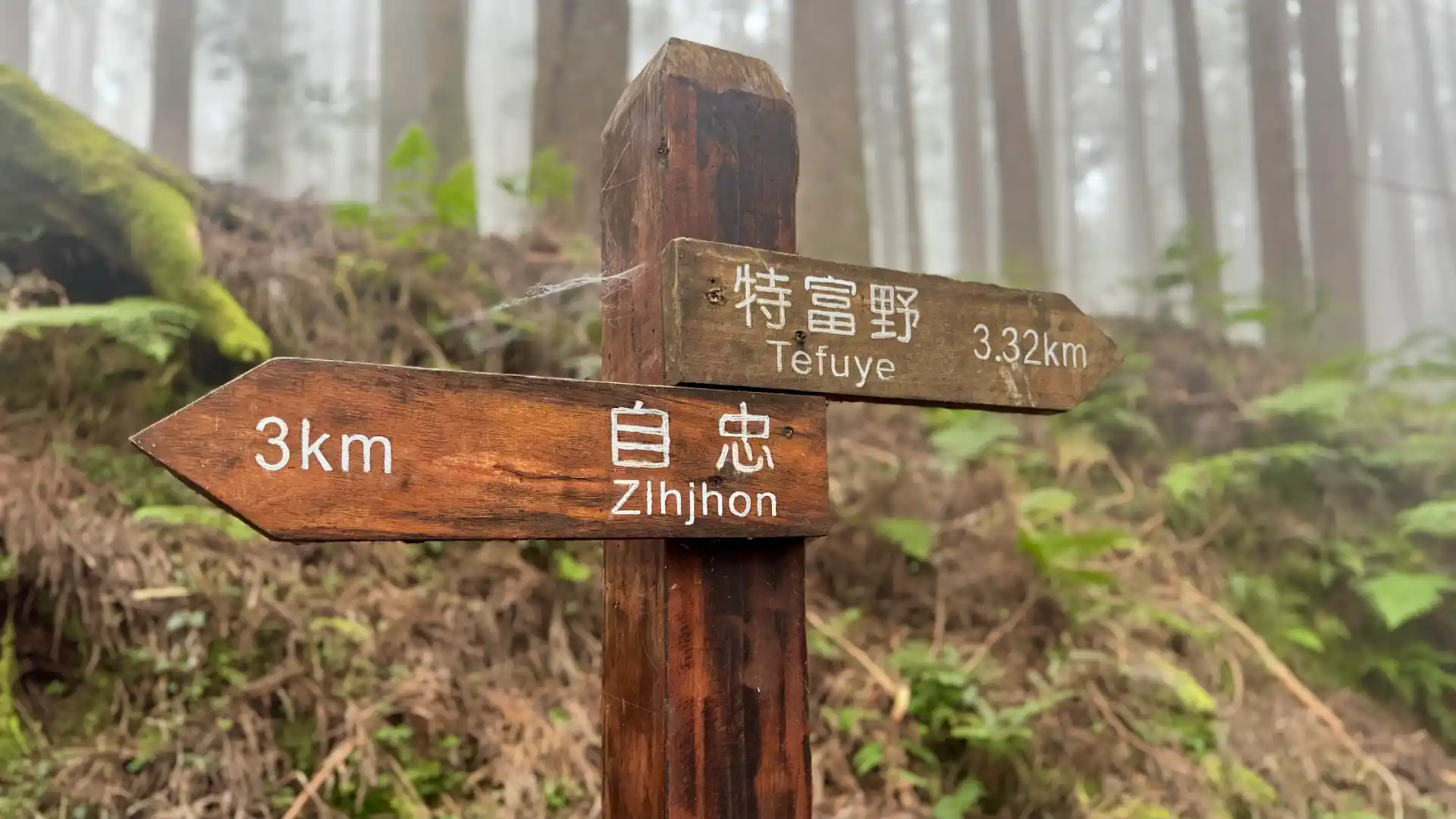
After checking in, we got back in the car to drive another hour uphill. We were heading to the Tefuye Historical Trail (特富野古道), which starts at 1,800 meters above sea level.
The trail was originally a hunting and trading path, before being co-opted into a logging railway during the Japanese Era (1895–1945). The line was one of many on Alishan used to extract wood from Hinoki and Red Cypress trees.
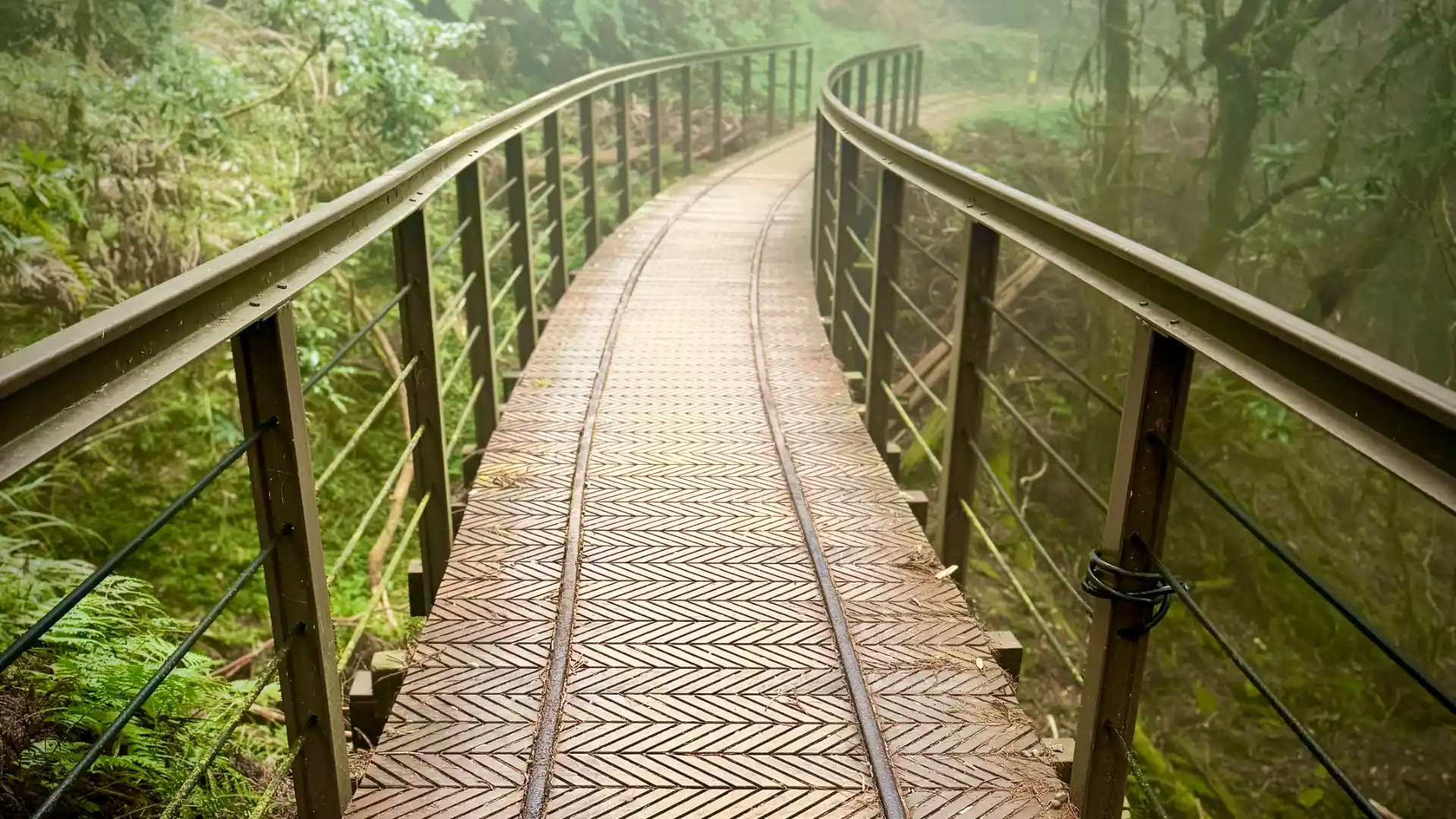
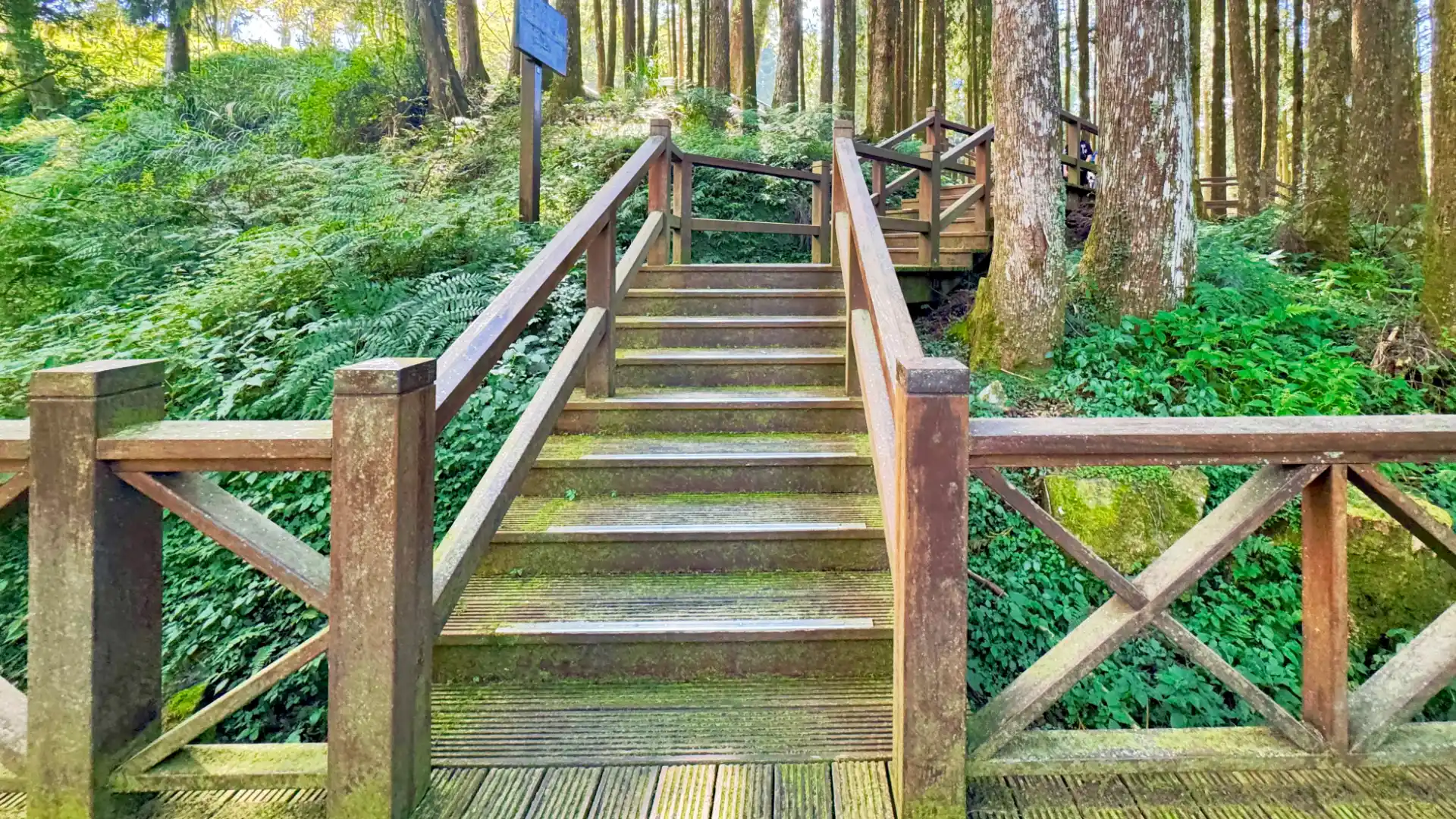
Remnants of the railway have been left intact on the hiking trail, including some sections of narrow-gauge track.
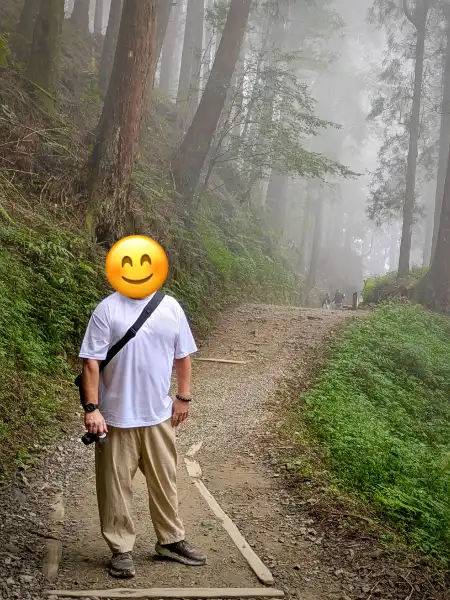
There were dozens of cars and tour buses parked near the trailhead. But despite the trail’s popularity, in the middle of our gentle 3.5-hour hike, we experienced one moment of being able to—when we stopped moving—hear literally nothing but our own breath.
As best I can remember, that was only the second time I’ve experienced total silence while outdoors. And once again, I found it surreal and disarming. Maybe I’m too used to ambient noise.
Speaking of noise, as on hiking trails in New Zealand, at times we passed people who were playing music while they walked. In New Zealand, I’d sometimes encounter people playing hip-hop or dance tracks at avalanche-inducingly-loud volumes. But on Alishan, hikers were quietly playing classical music instead.
A civilized nod to public annoyance.
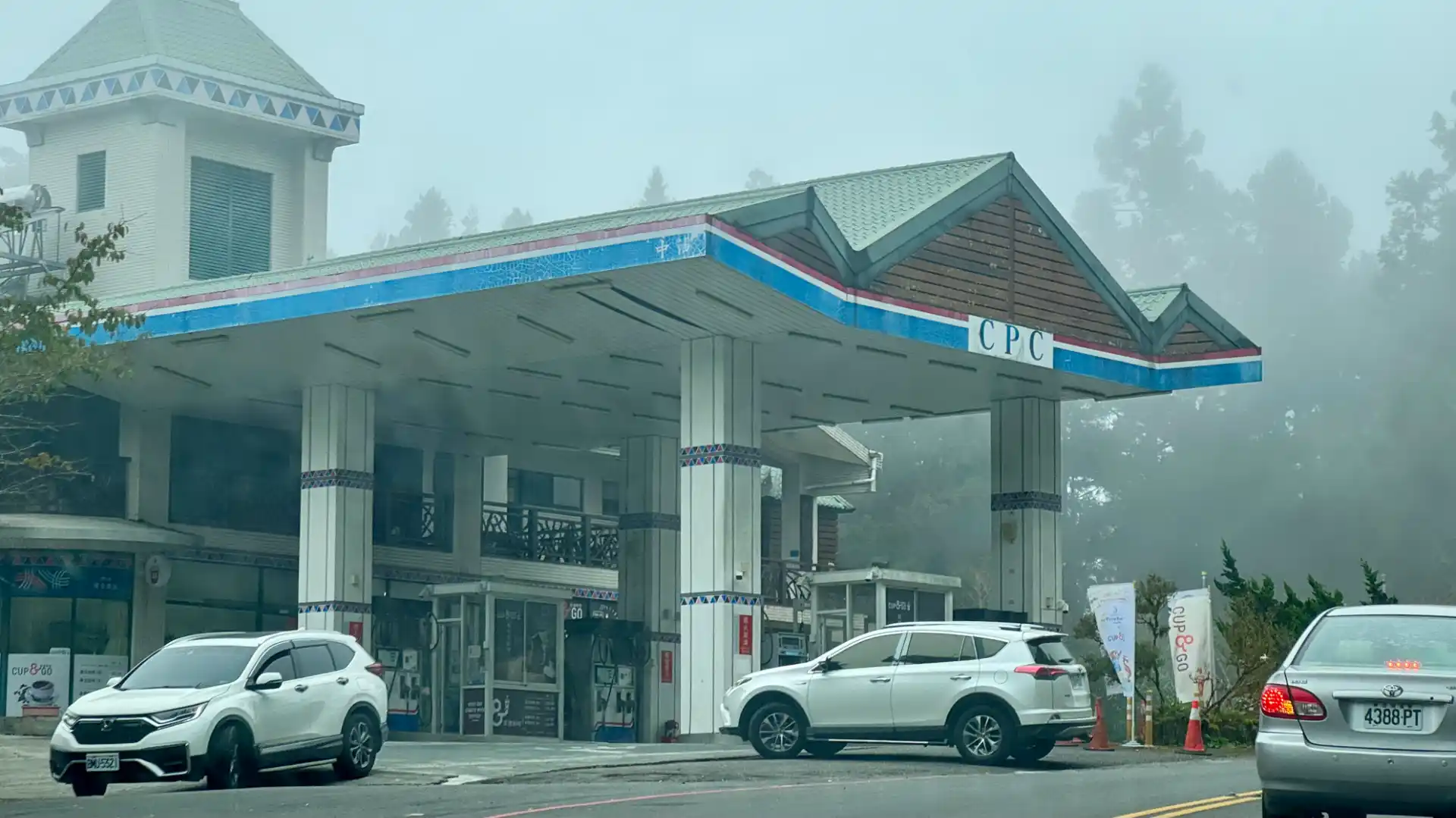
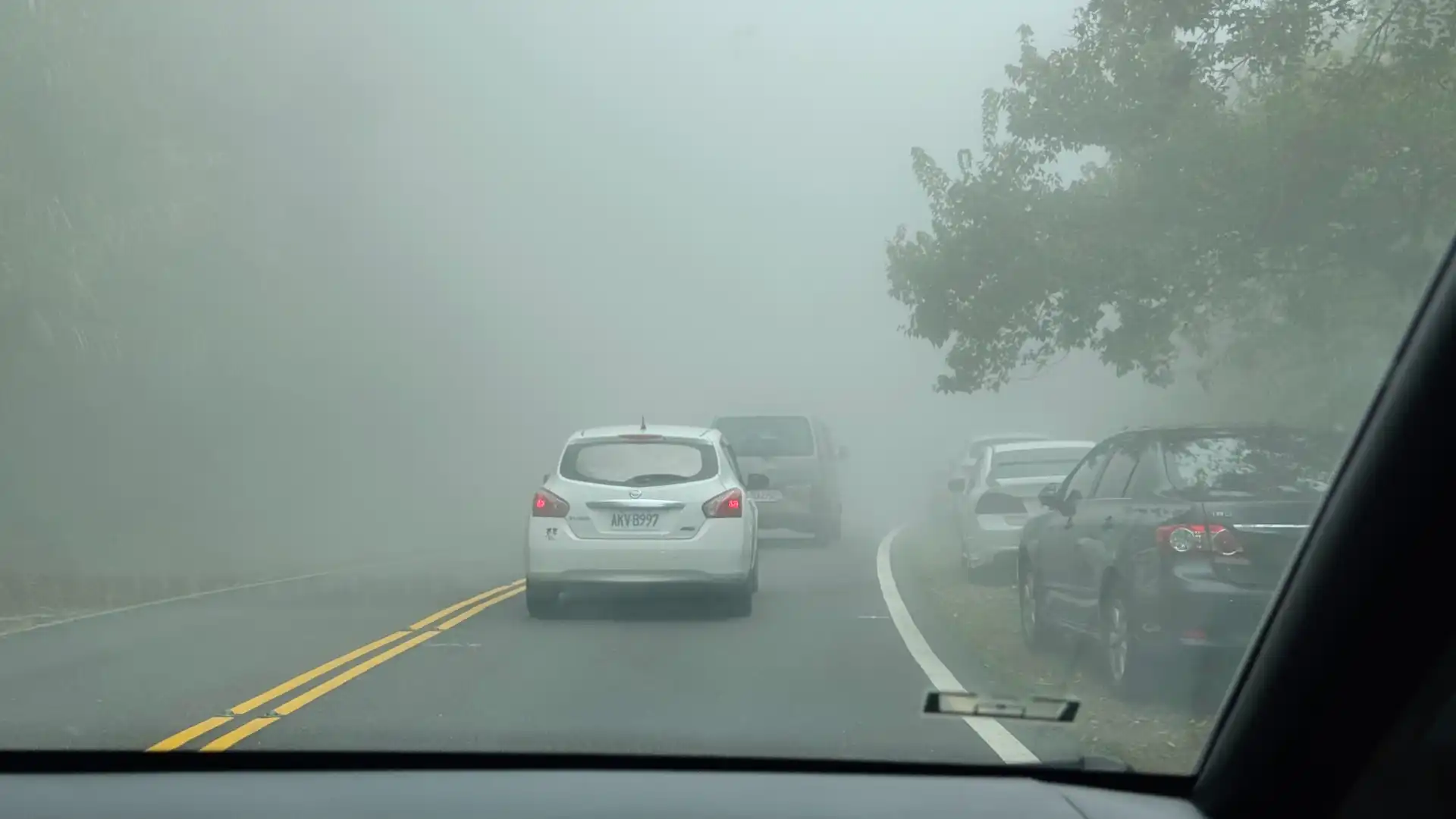
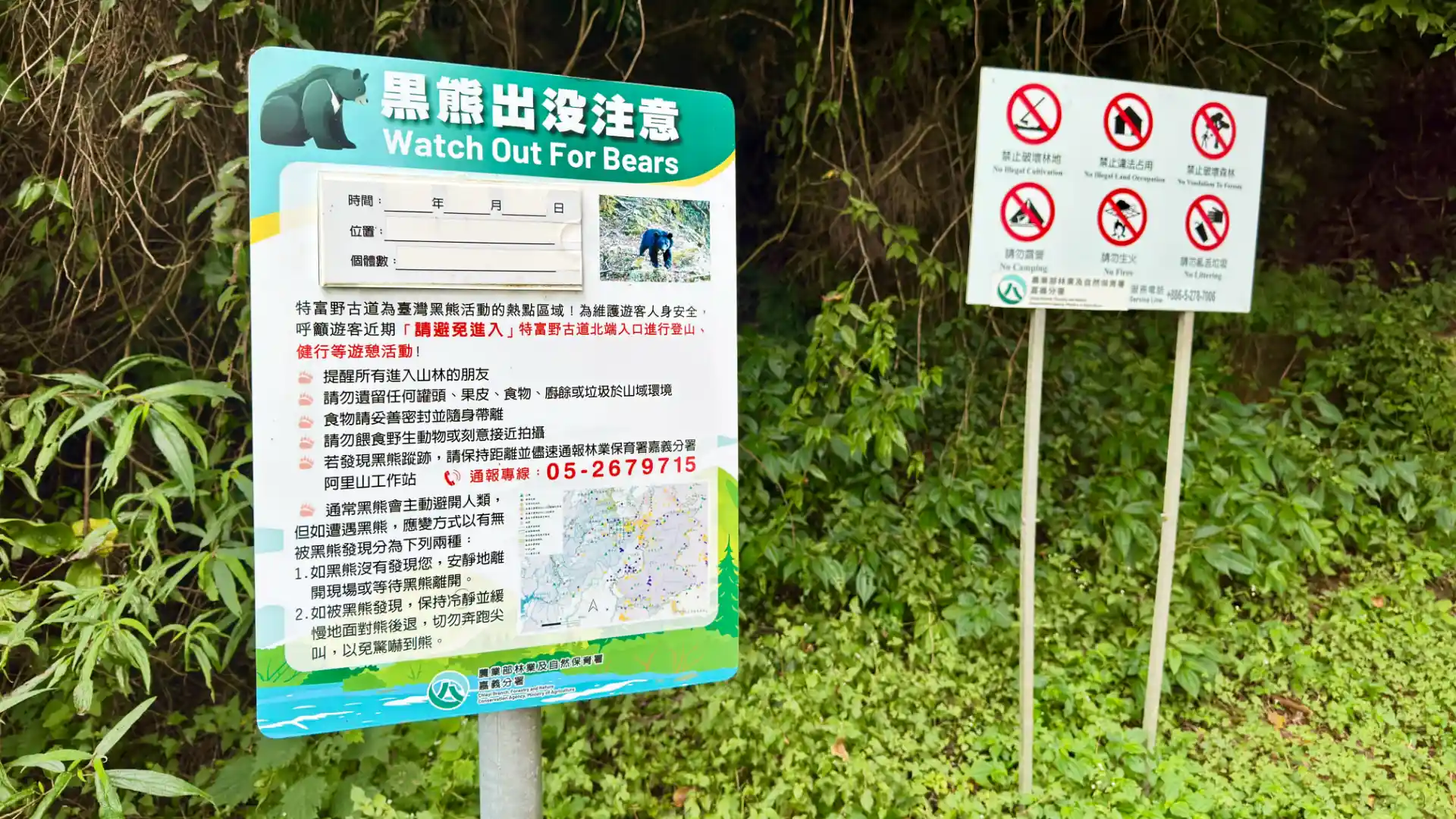
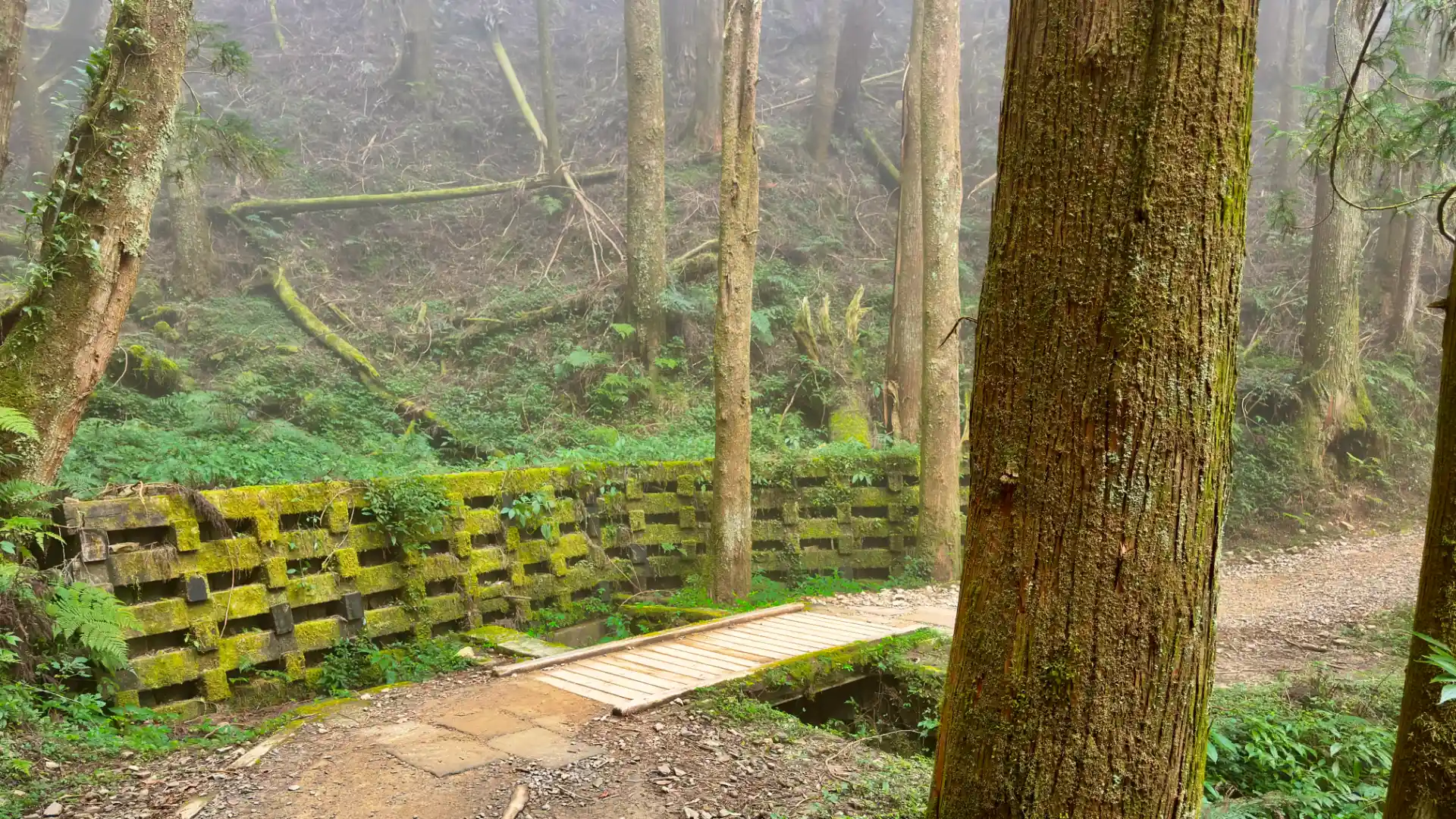
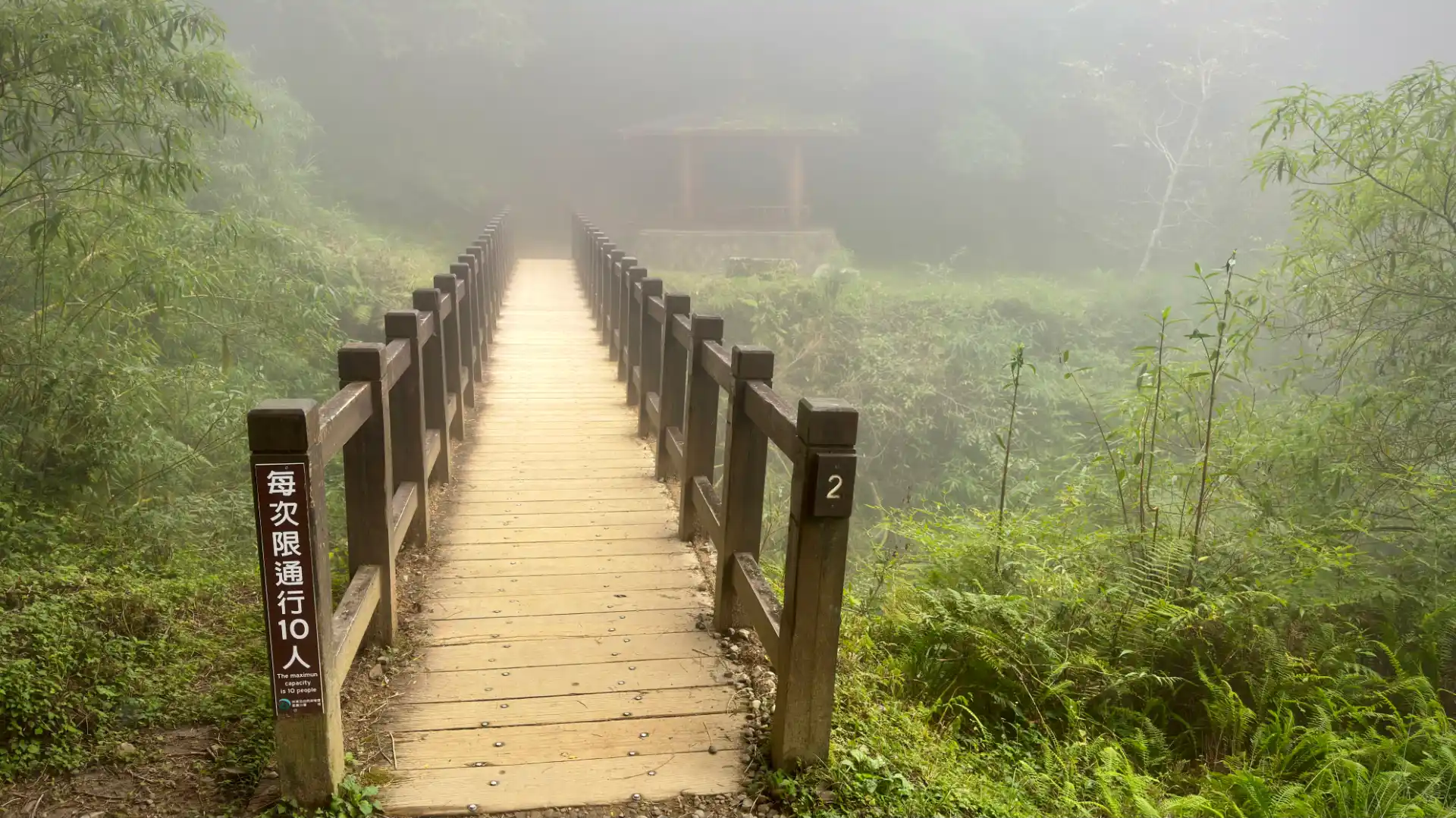
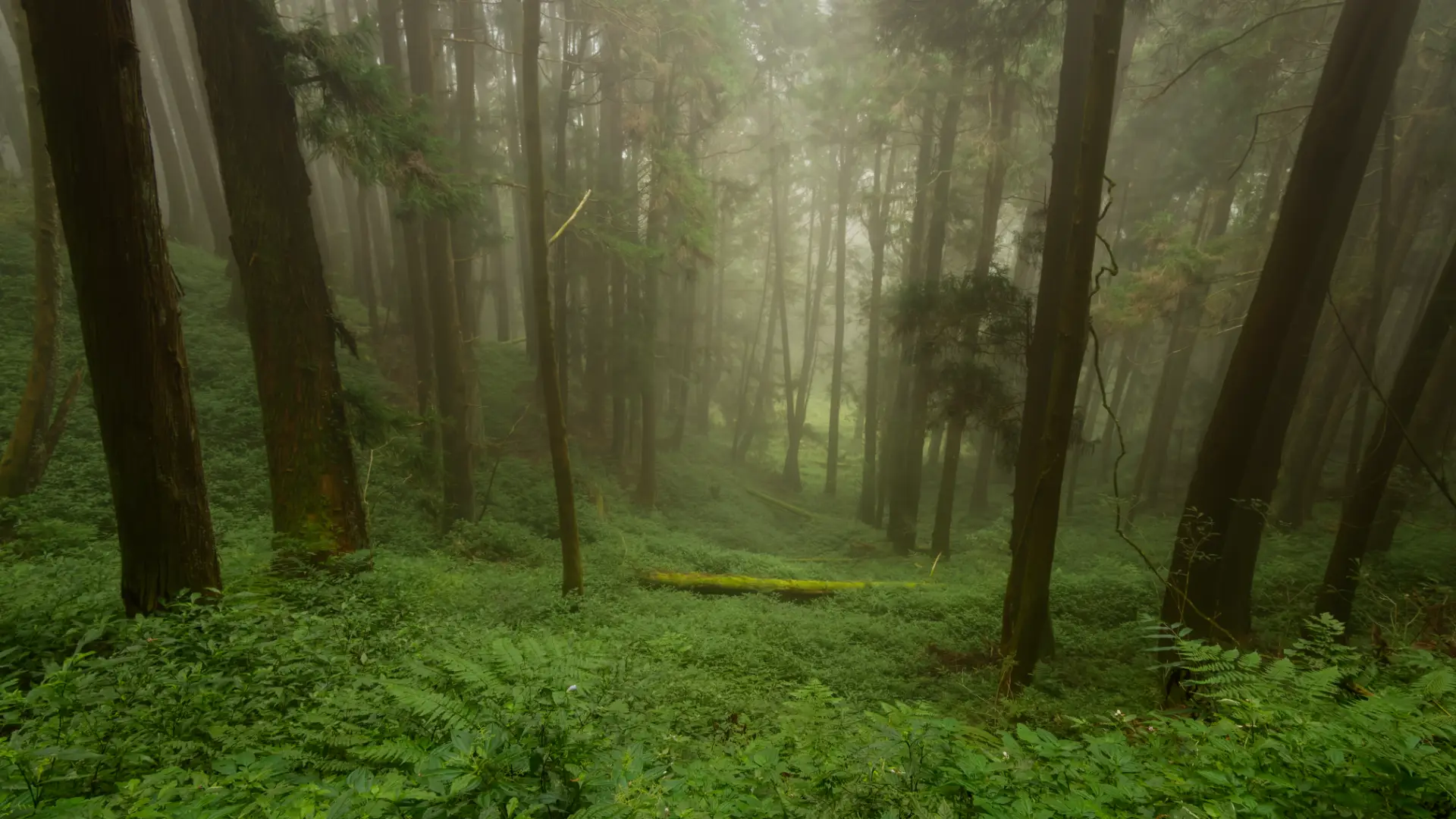
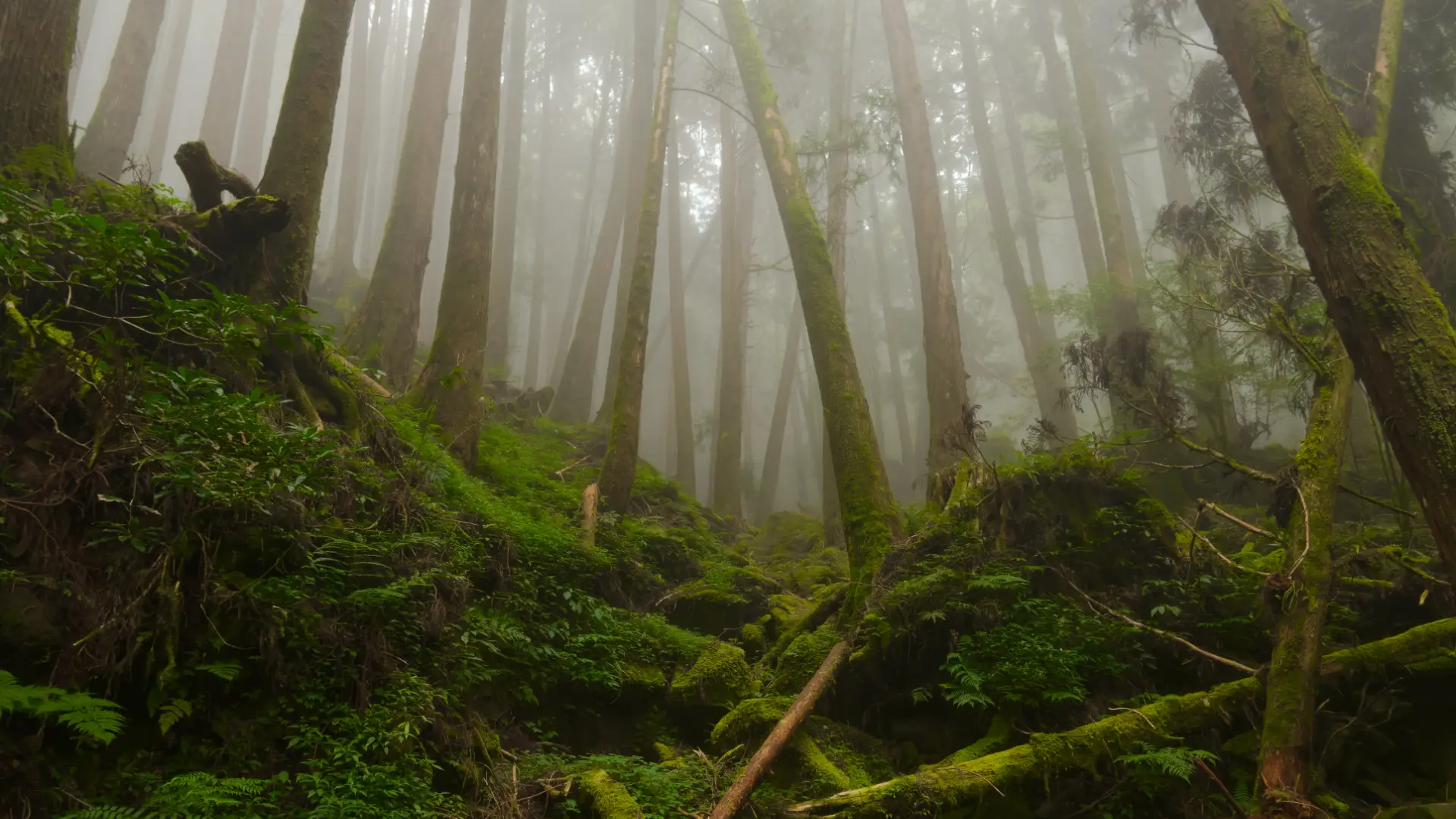
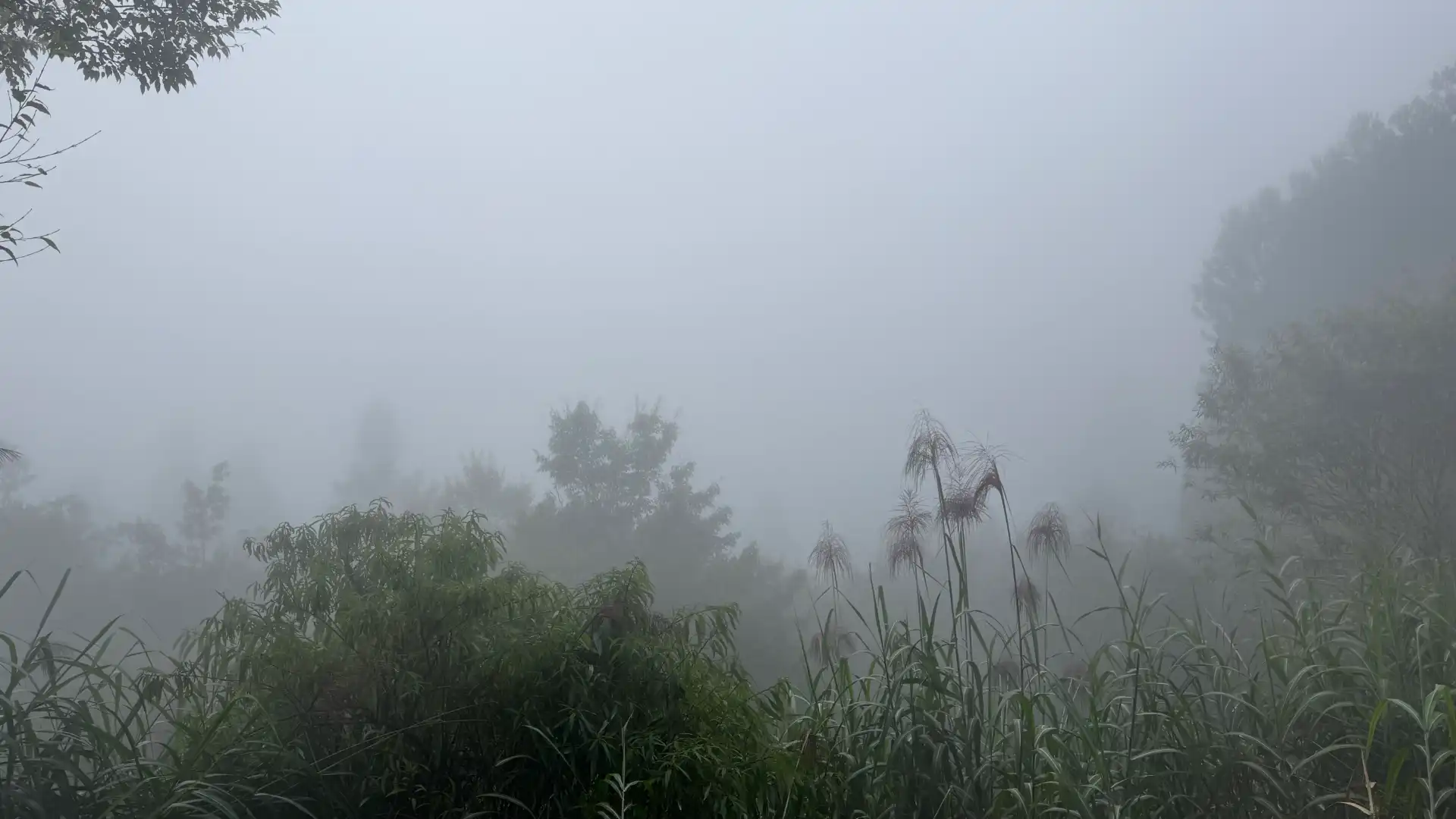
I saw this oddly-roofed gas station as we passed through Alishan Township (2,200m ASL). CPC is a government-owned chain of gas stations. Nationwide gas prices are set weekly, then do not change for the rest of each week. Privately-owned competitors can set their own prices, but they have an obvious disincentive to charge more than CPC. For the past eight weeks, prices have been steady at NT$31.2 (NZ$1.56) per liter for 92 unleaded; NT$32.7 (NZ$1.64) for 95 unleaded; NT$34.7 (NZ$1.74) for 98 unleaded; and NT$29.9 (NZ$1.50) for diesel.At 2:15pm, it was especially misty as we looked for a parking space near the trailhead.This was the first time in my life I’d seen a bear warning sign. Note the white V-shaped white mark on the bear at the top-left. This will be relevant later on. (The Formosan black bear is endemic to Taiwan, and is Taiwan’s only bear species.)The first stretch of railway track was visible almost immediately after entering the trail. From here, there were intermittent stretches of railway track all the way.It had been 32ºC at sea level, but it was 16ºC on the mountain. I’d accidentally left my hoodie at the B&B, so relative to the people around me, I was a little under-dressed. On the other hand, after a hot Kaohsiung summer (and a hot autumn so far), it was nice to be cold for a while.We saw some wooden retaining walls……A pagoda-style shelter on the far side of this bridge……And plenty of tasteful wooden signage (unnecessarily precise to the nearest 10 meters).
0:00
/0:17
We also saw a Mikado pheasant—the bird on Taiwan’s $1,000 note.
I liked how these rails had been repurposed, and I also liked the pattern on these wooden boards.This was an especially green part of the forest.Magic in all directions……And definitely worth a future visit.
Puffed-up little chips
On the way back to our B&B, we stopped at a viewpoint to photograph the sunset—which was completely obfuscated by cloud.
We had vegetarian hotpot for dinner, and bought snacks for later. The bags of chips were weirdly puffed up: a consequence of low air pressure at high altitude.
When opened, they ejected a puff of artificially-flavored air.
(Unrelated, but during New Zealand’s bizarre 2014 election campaign, an Internet Mana Party press secretary infamously called a reporter a “puffed-up little shit”. I hadn’t thought of that phrase for over a decade until I saw the bags of “puffed-up little chips” in front of me.)
(Incidentally, I later learned the hard way that bottled drinks also behave differently at altitude…)
The obfuscated sunset.The puffed-up little chips.
The sea was too thick
We woke up at 5am to chase the sunrise. The B&B host had recommended a small peak above the group wedding venue, so we tentatively drove up a one-lane road to the top, where we found a few other people waiting for the famous sunrise over a sea of clouds.
But the sea was too thick, so we missed the sun for a second day.
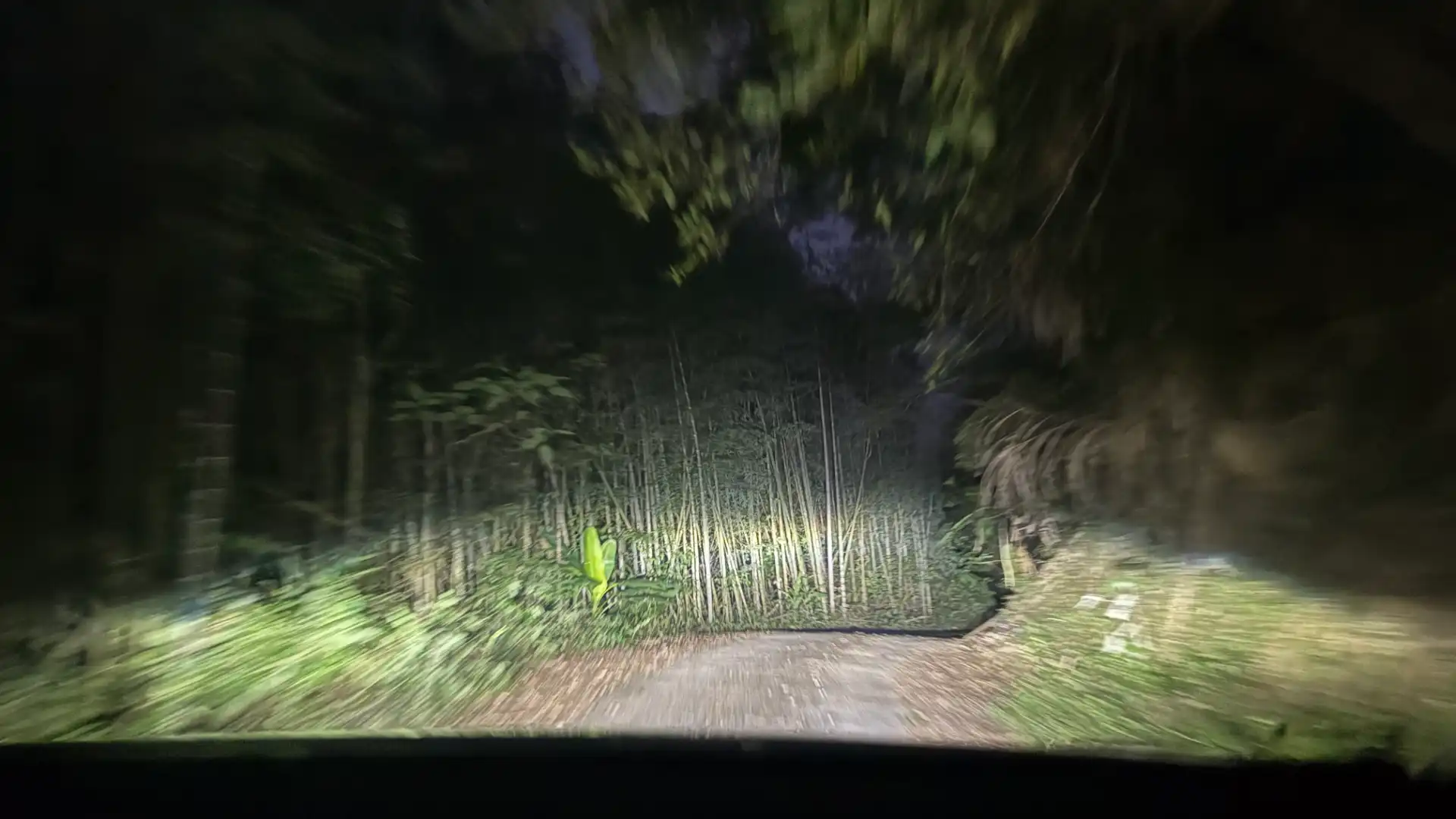
Driving up the one-lane road at 5:15am.
0:00
/0:20
A 6am pan around the mountaintop.
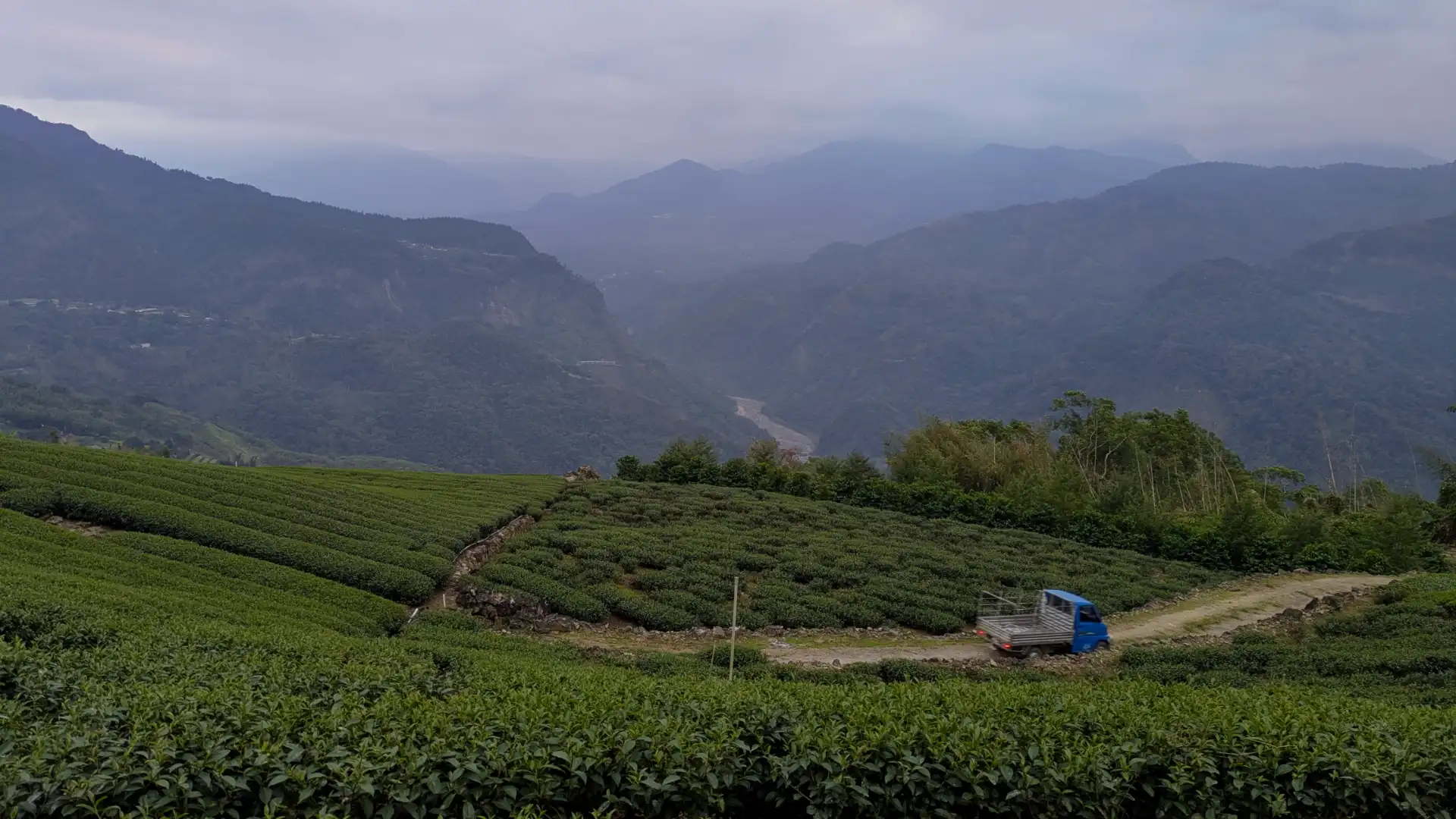
Just after the obfuscated sunrise, we saw a blue ‘fortune truck’ (發財車) drive through the tea plantation. Fortune trucks are micro-sized commercial vehicles—blue by default—that are ubiquitous in Taiwan. The name reflects the idea that they’re money-making machines for hard-working small-business owners. A more accurate (but clunkier) translation might be ‘vehicle that makes you rich’.
A rickety seven-minute ride
After some more sleep, we drove an hour back uphill to Alishan Station. It’s the main mountain station for the Alishan Forest Railway, which stretches from near-sea level to 2,451m ASL.
We caught one of the vintage trains 1.8km downhill to Shenmu Station (2,138m ASL). It was a rickety seven-minute ride to a spot that’s famous for its giant ancient trees.
(Less-rickety trains travel to and from Chiayi City, 71km away, including the luxury train Formosensis (福森號)—which I’d like to take sometime, although apparently it’s hard to get tickets.)
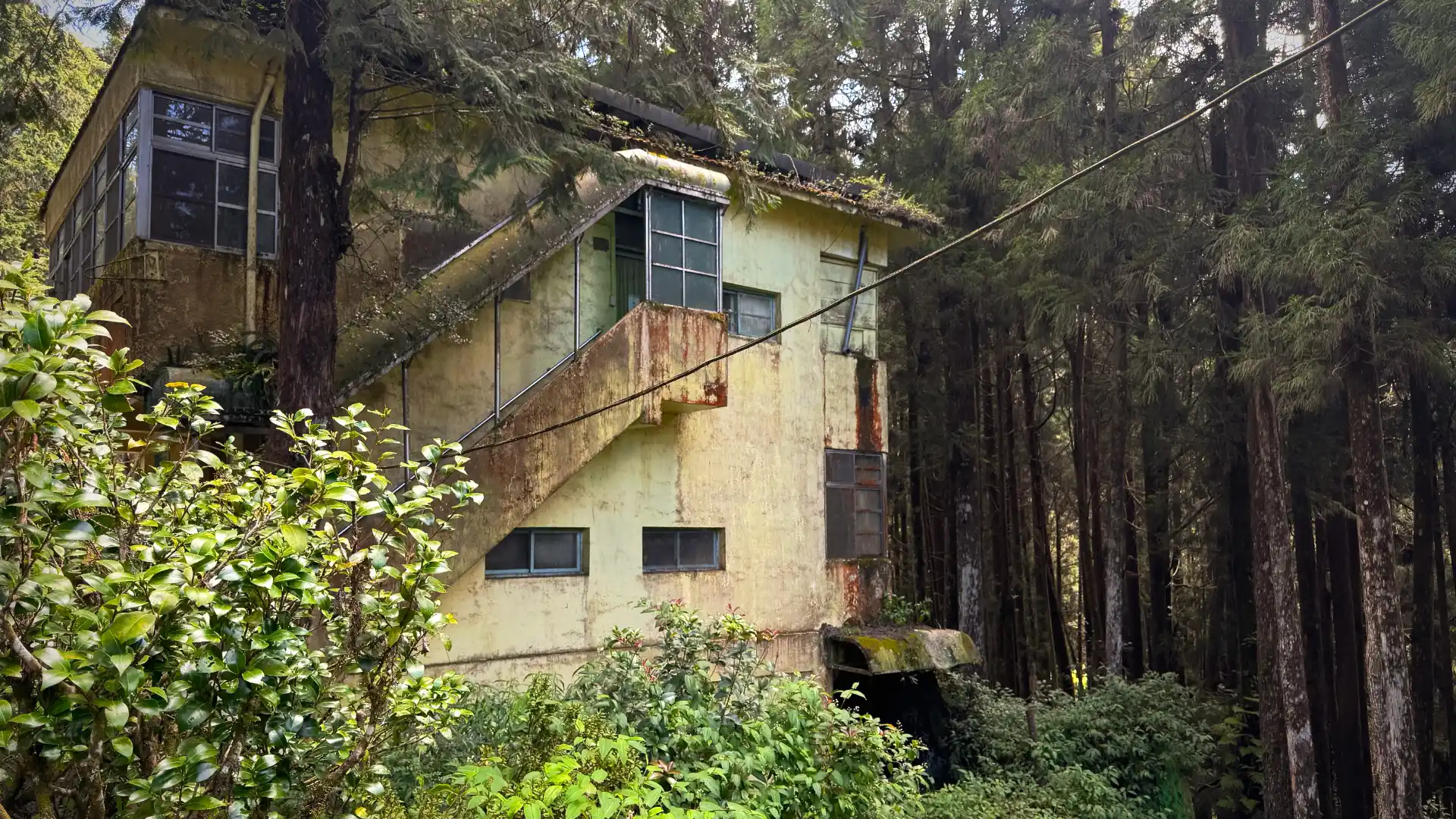
We spent a few hours wandering through the forest, had lunch at an expensive hotel that looked borderline abandoned from some angles, then walked back to Alishan Station before driving down the mountain.
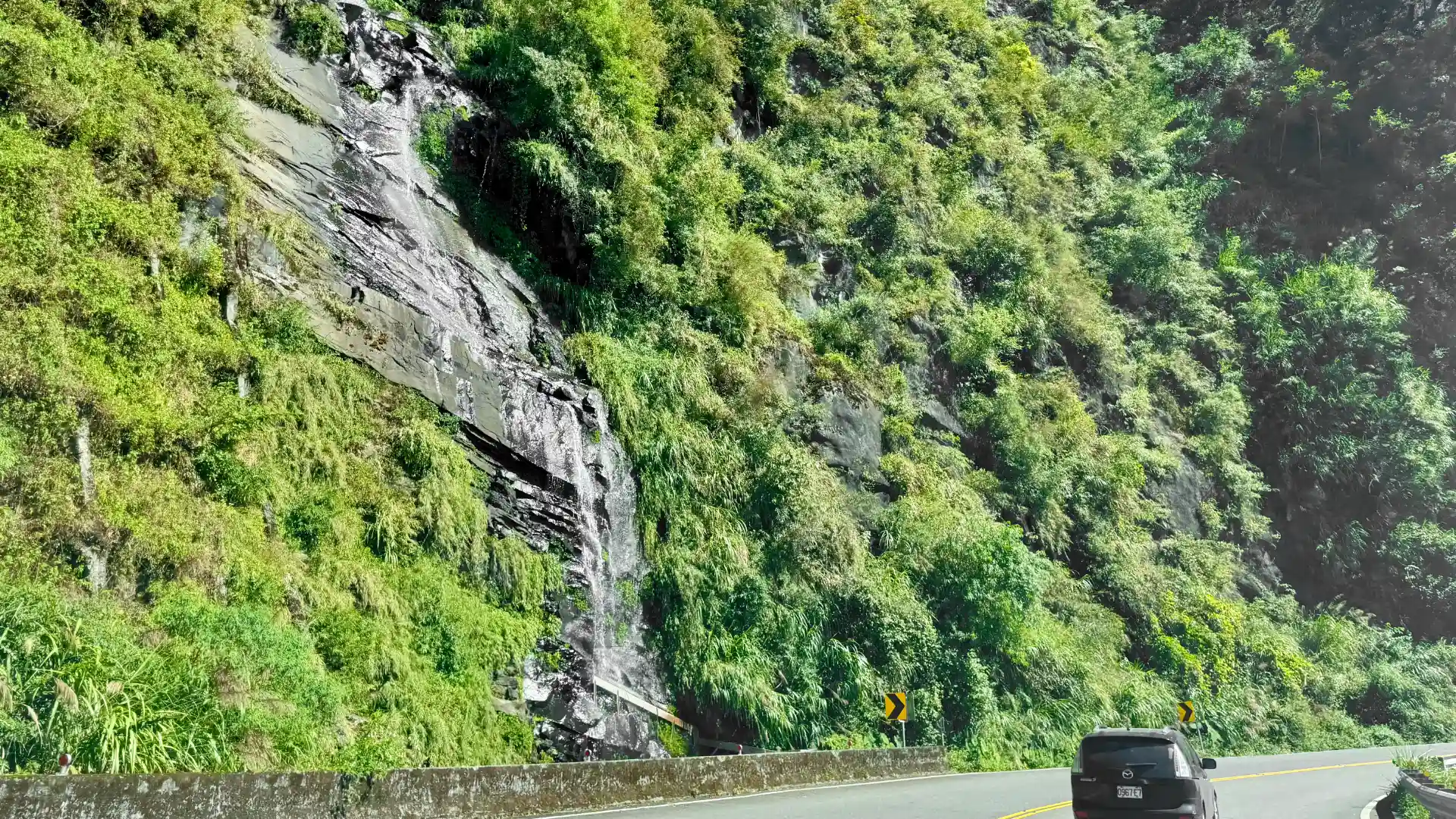
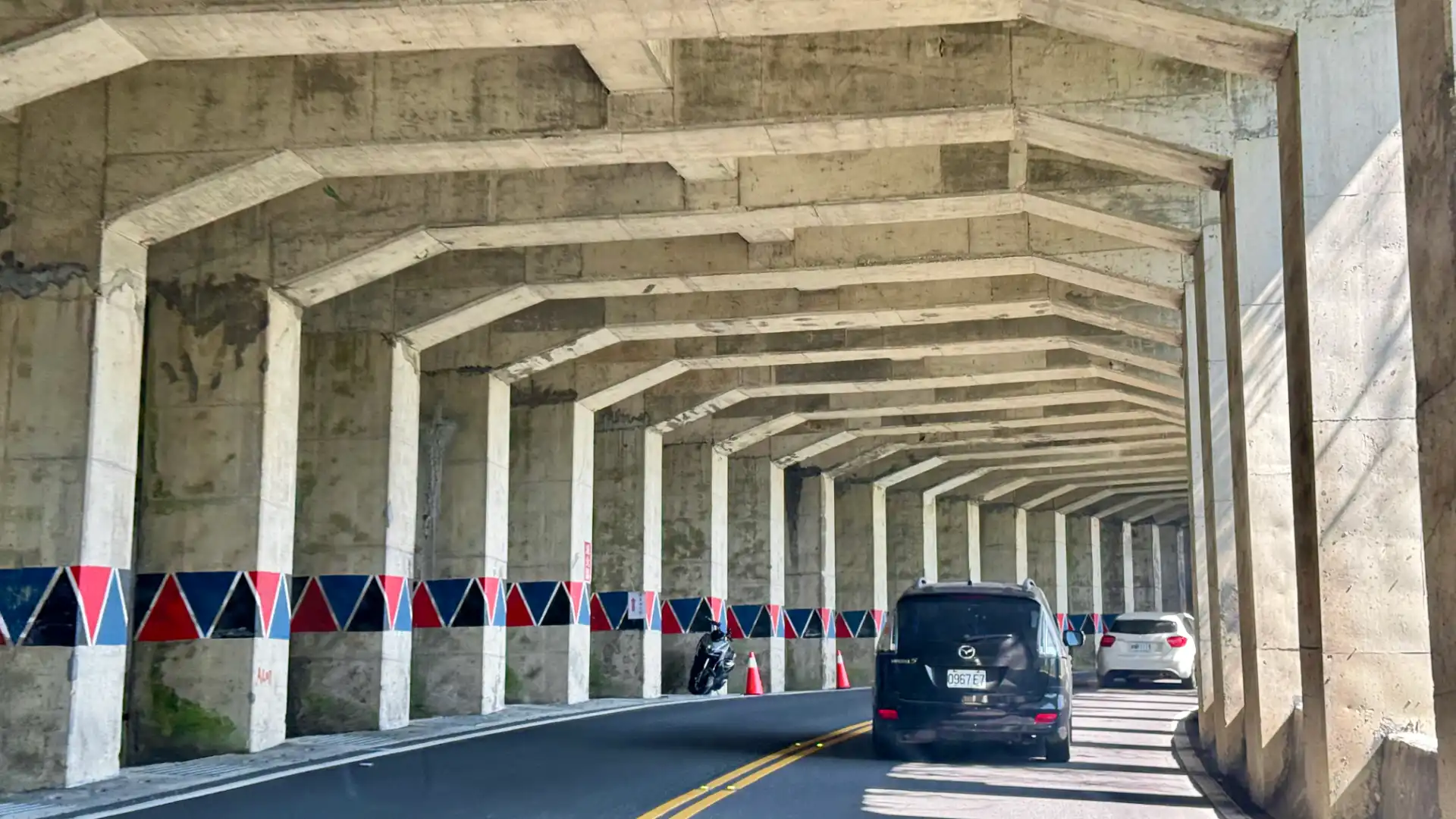
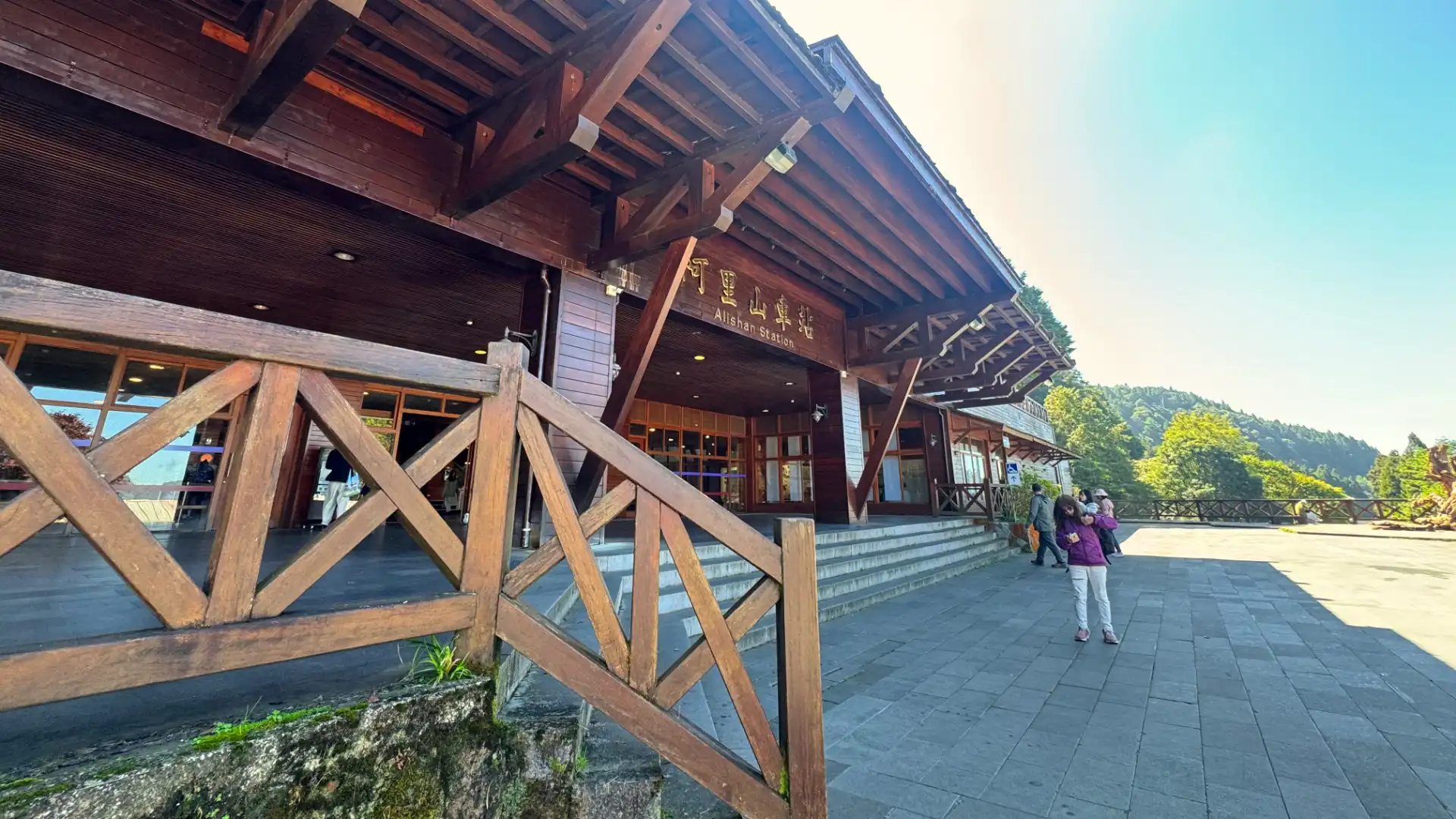
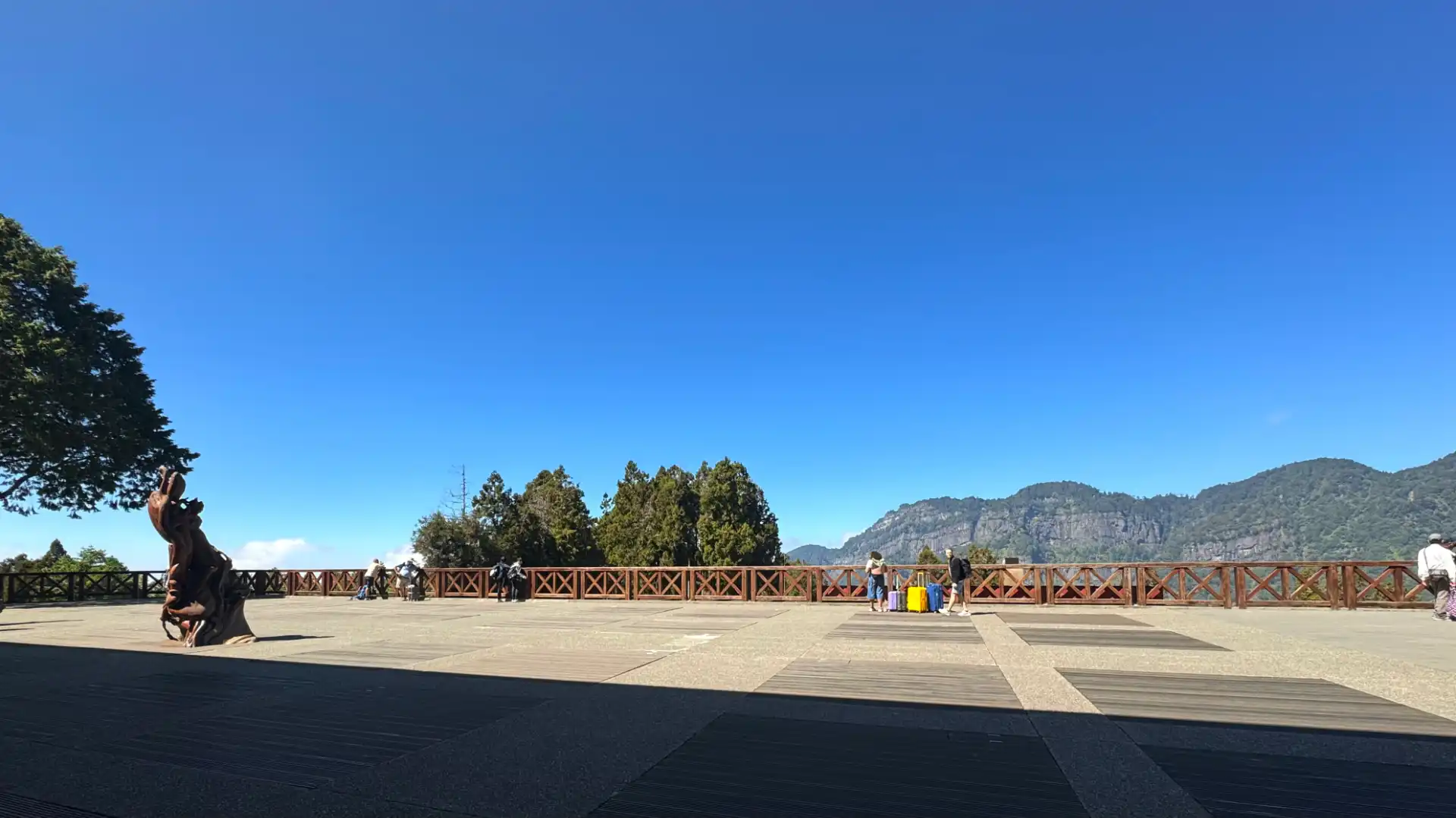
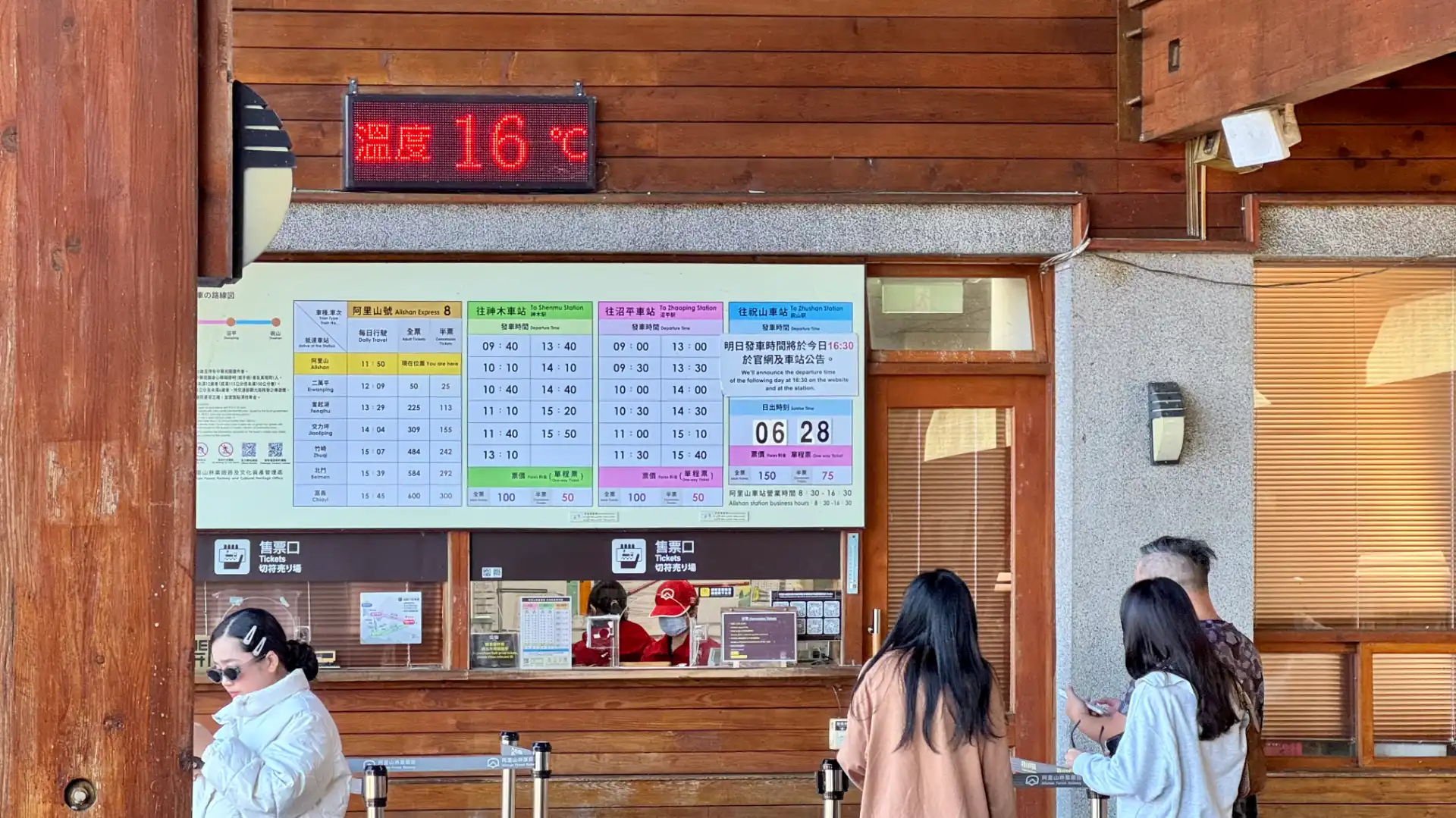
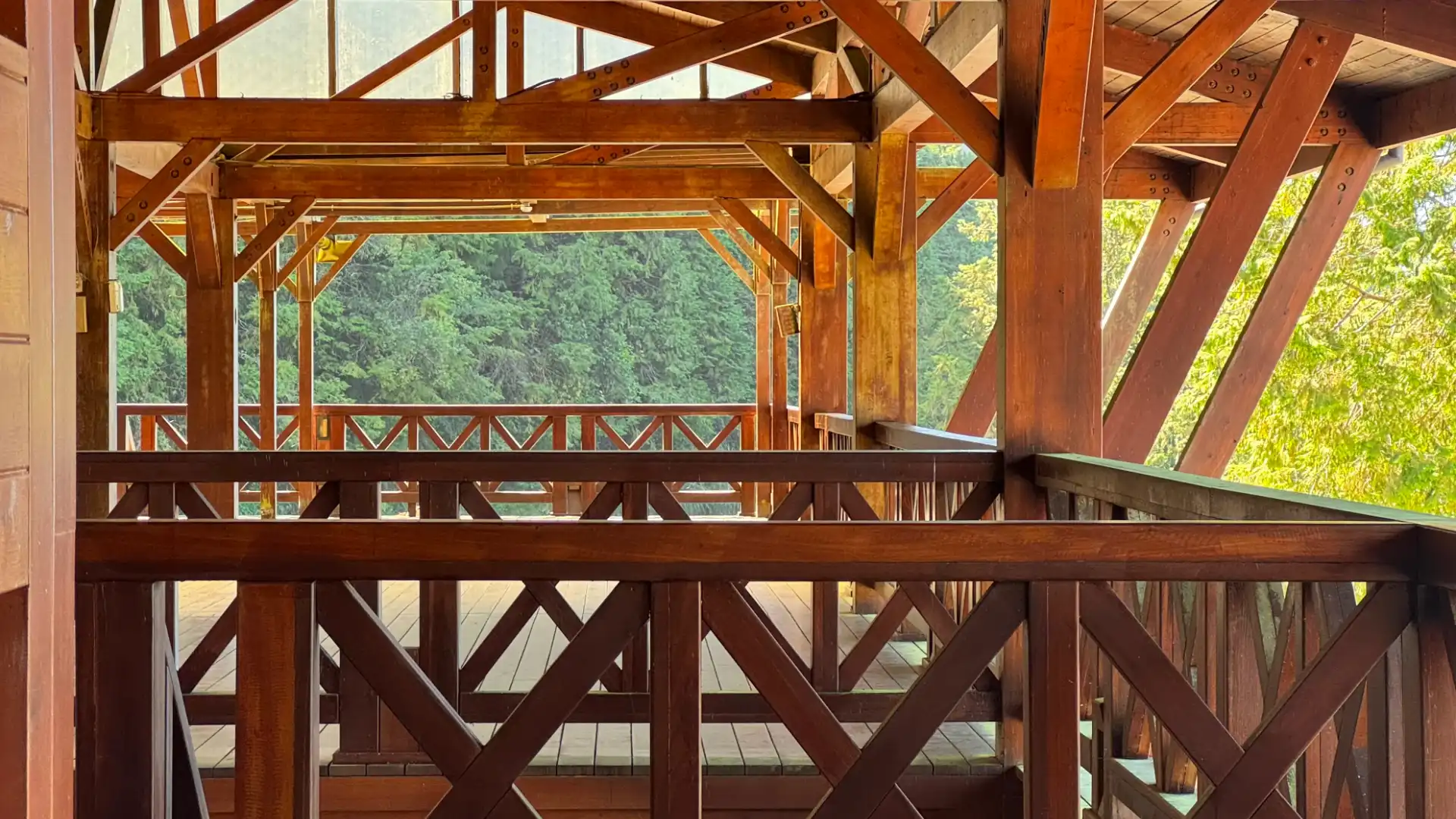
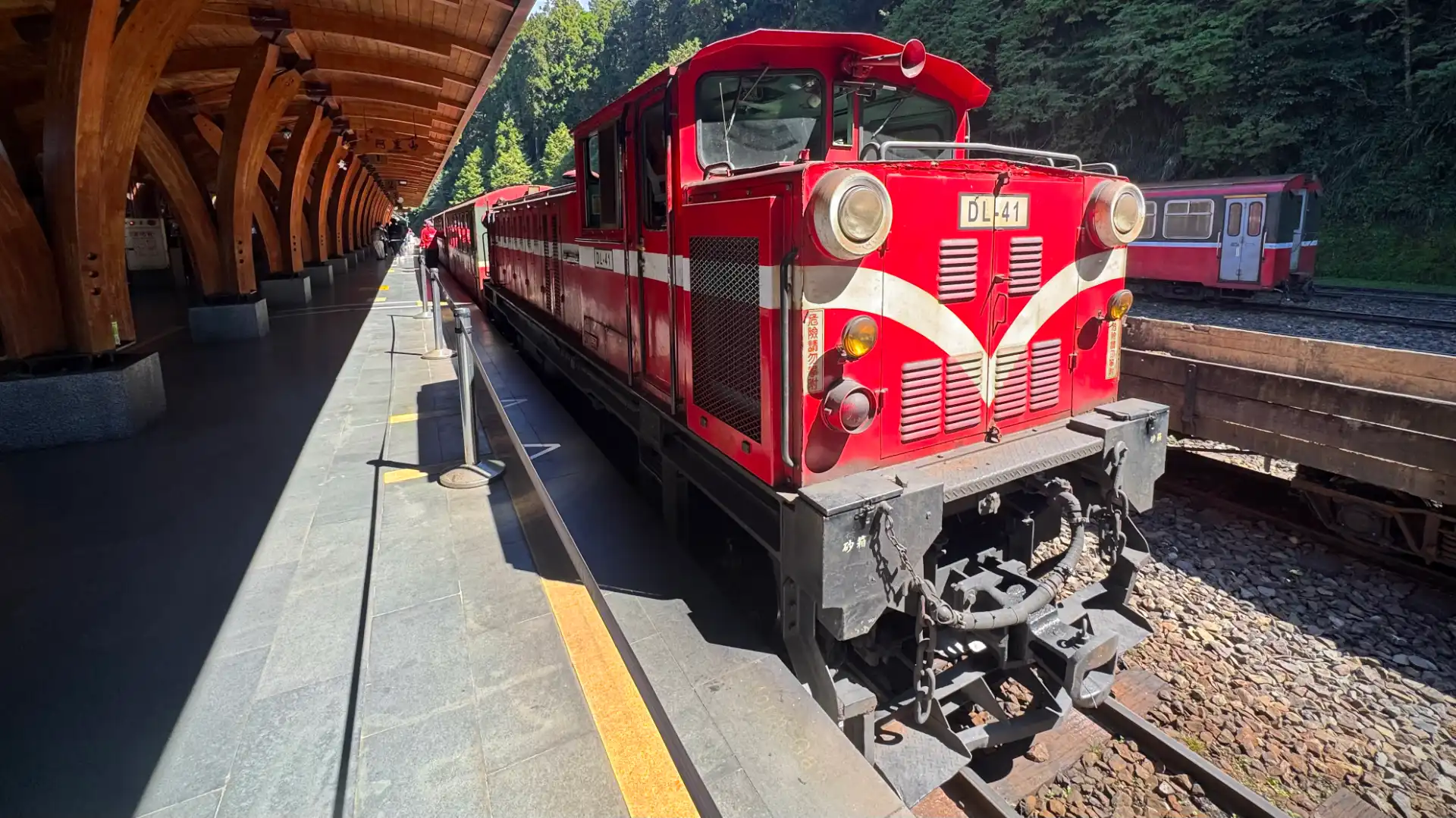
It was sunnier on day two. We saw a couple of minor waterfalls near the road.We drove through a bunch of rock sheds. Note the indigenous pattern on the left side (and the broken scooter).We paid NT$200 each (NZ$10) to enter the national park area. As a permanent resident, I was fortunate to pay the same discounted price as Taiwanese citizens. (Not gonna lie, it was a great feeling to be recognized in this way.) We parked a five-minute walk from Alishan Station, a beautiful wooden building that opened in 2007.Looking across the station plaza, it truly felt like we were high up in the mountains.It was 16ºC for the second day in a row.There was an open-air viewing deck on the third floor.This was our vintage train for the 7-minute ride to Shenmu Station. The white ‘V’ on the front is a nod to the chest pattern of the Formosan black bear.There was bench seating on the inside.
0:00
/0:19
Here’s a small video of a small train.
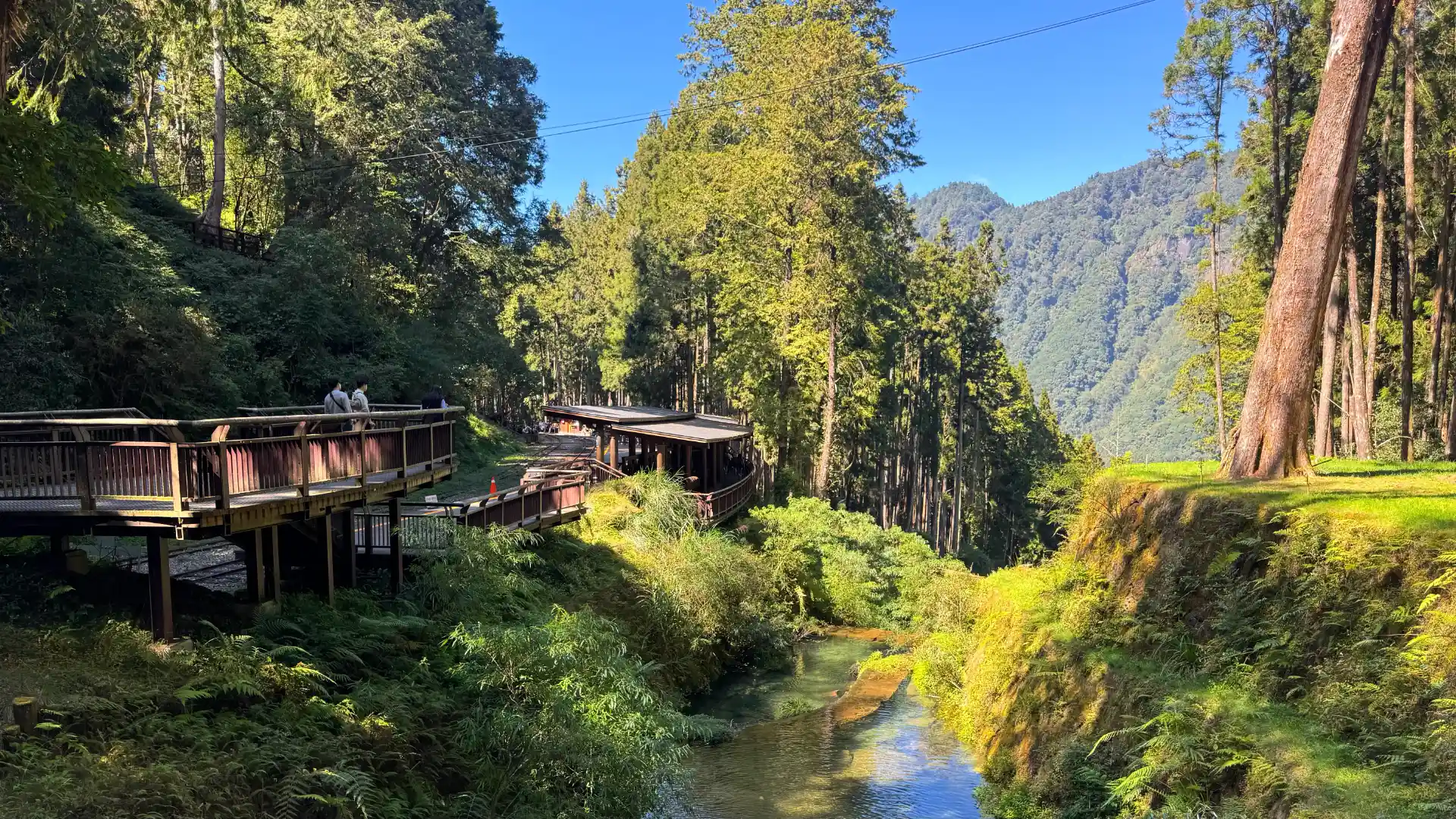
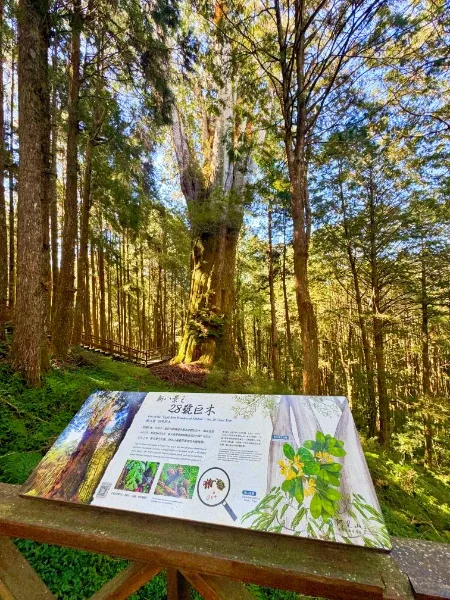
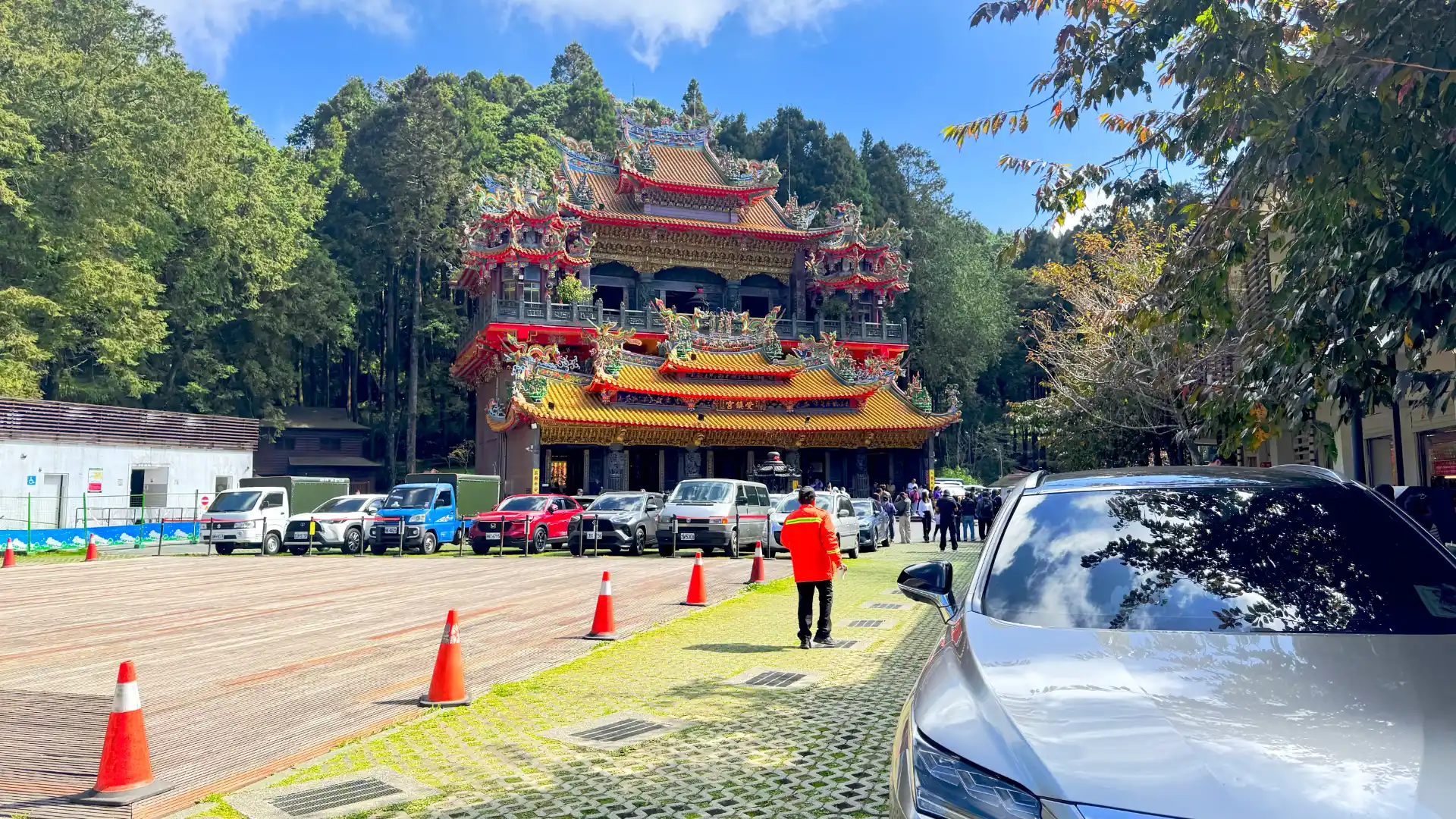
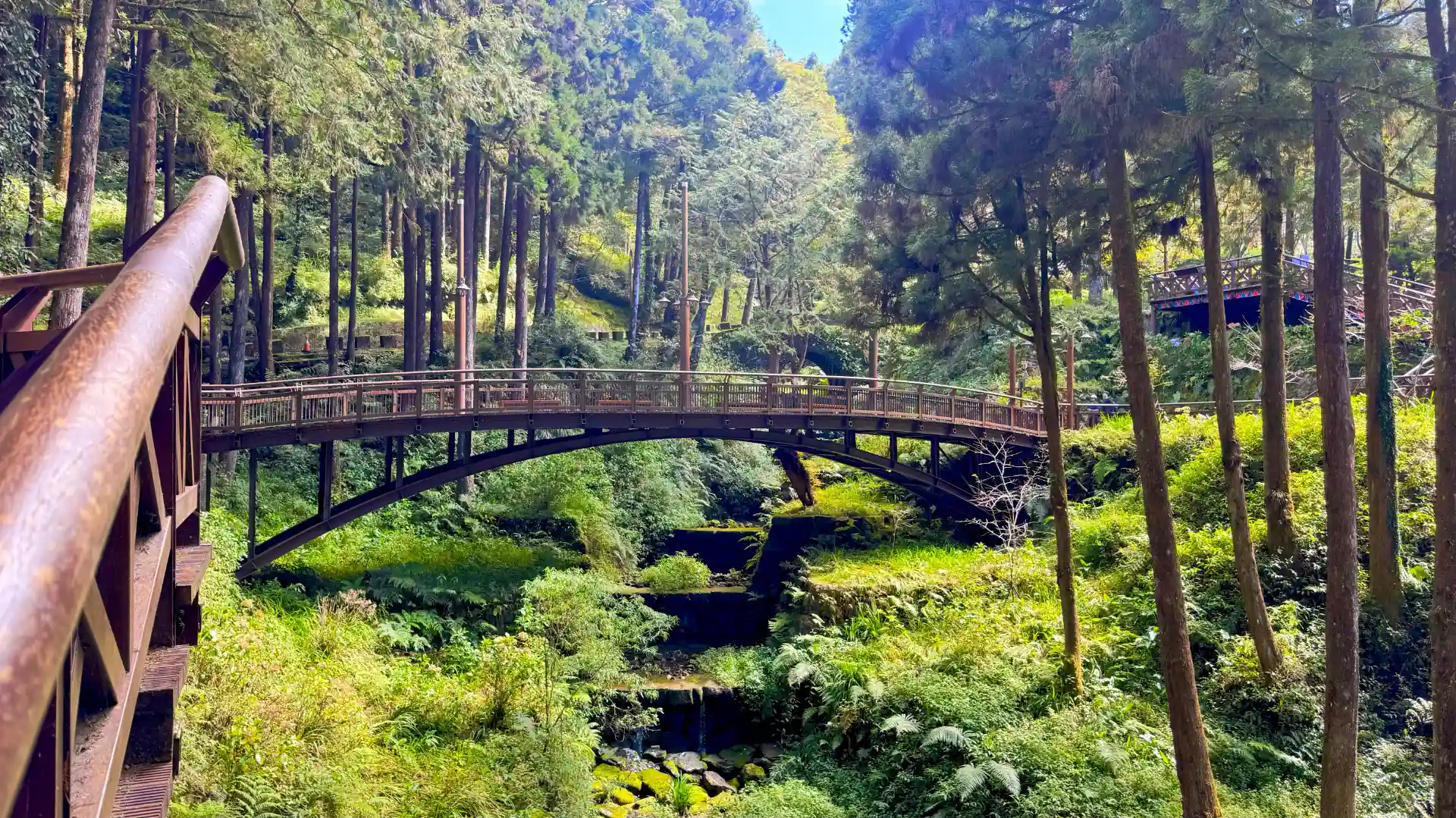
The terminal station is at the start of a famous boardwalk which passes giant ancient trees.Here’s the view back to the station, after the train’s departure.This Formosan red cypress is the oldest amongst the giant trees. It’s 45 meters tall and around 1,100 years old.We followed the boardwalk up and through the forest, expectedly emerging at……This unexpected temple (and carpark) in the middle of nowhere.
0:00
/0:10
An event was starting just as we arrived.
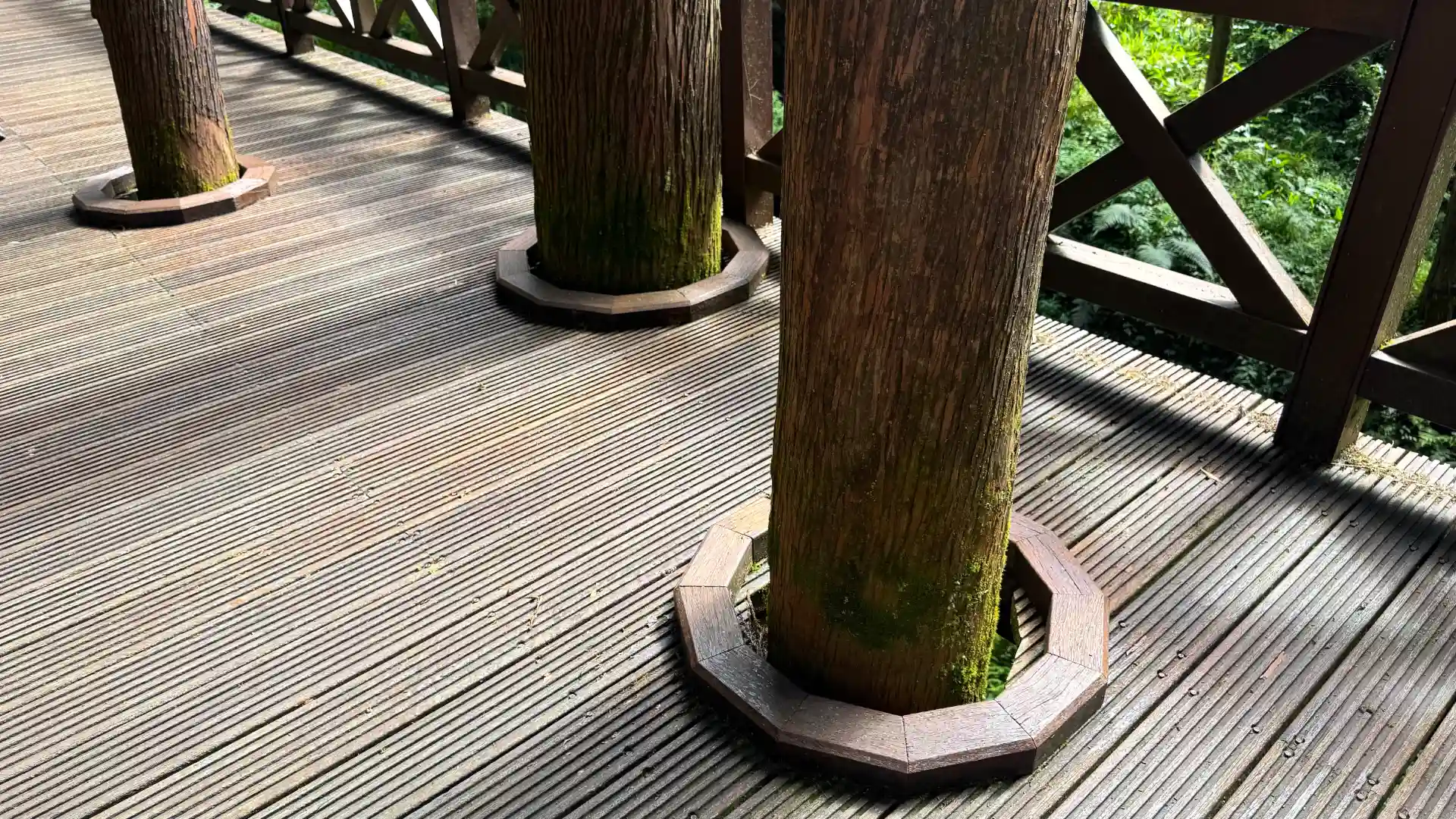
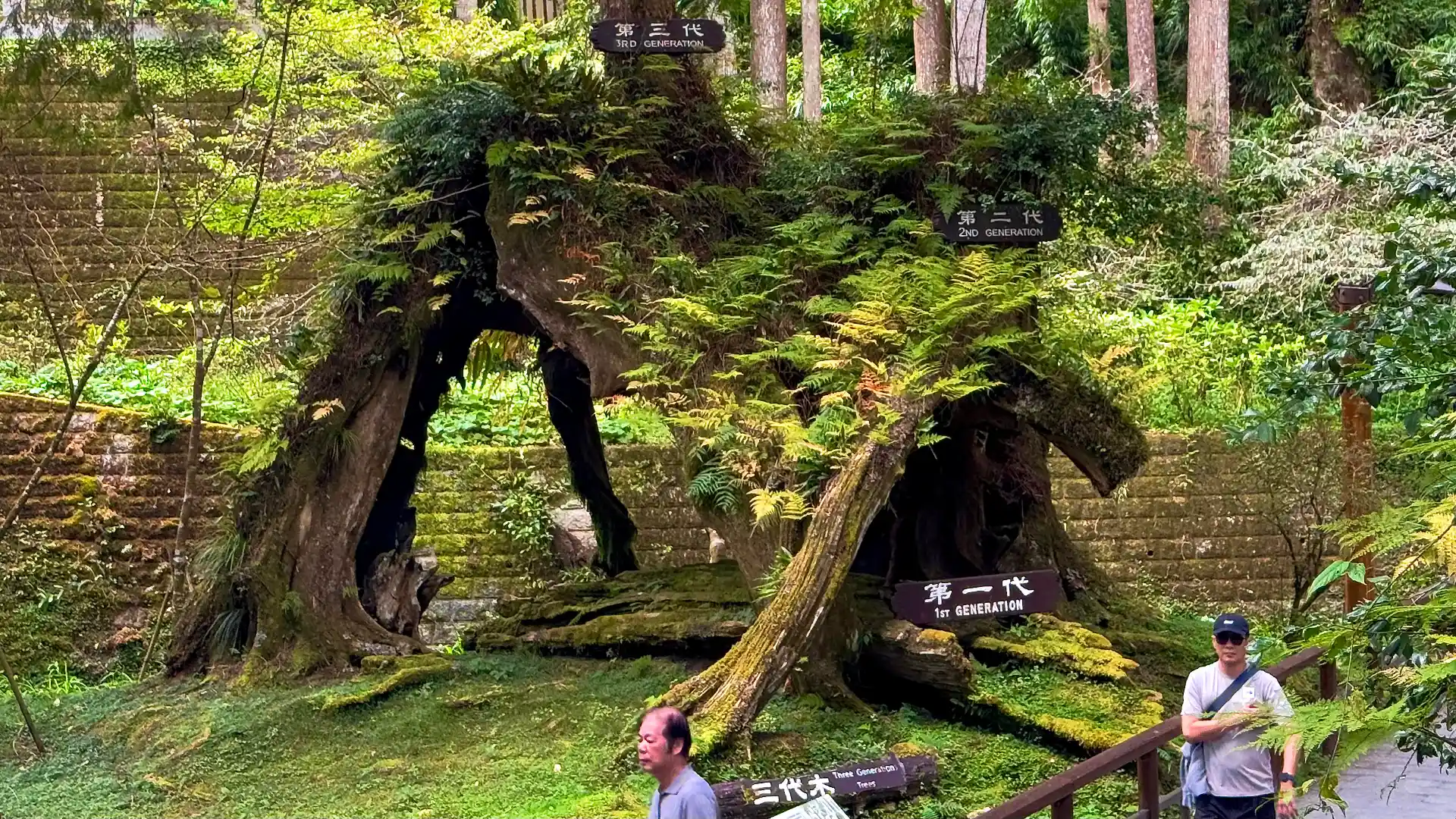
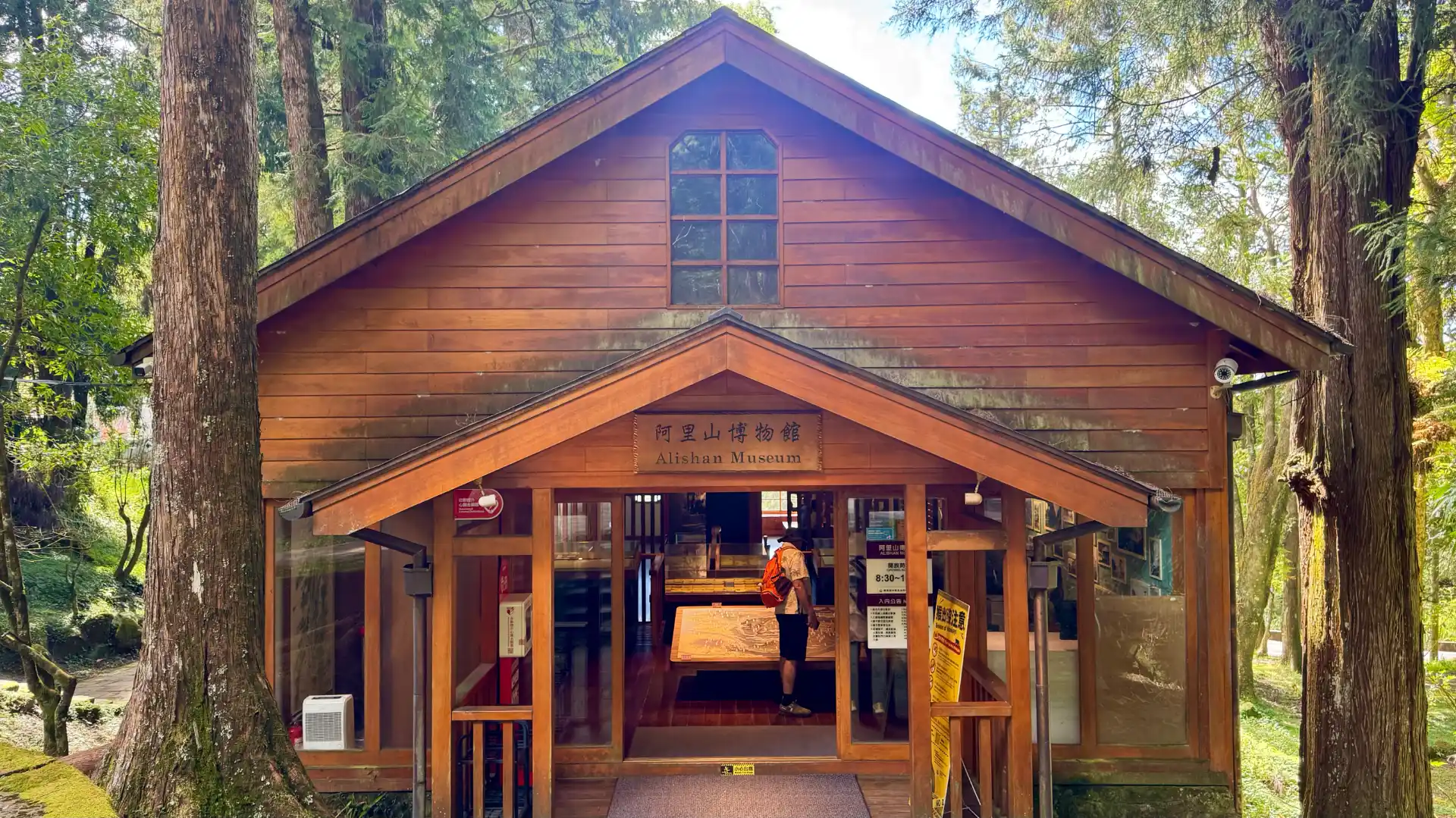
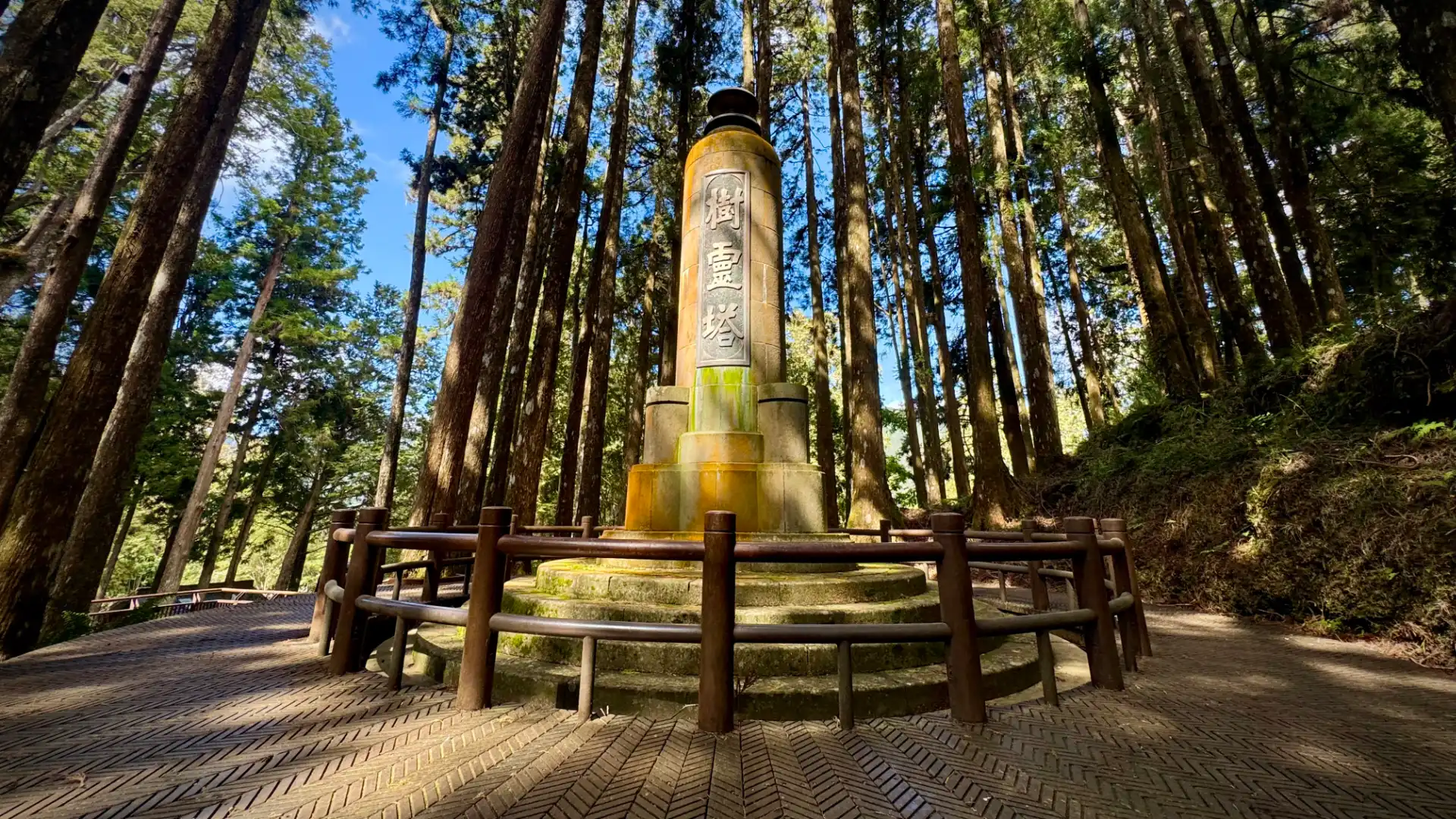
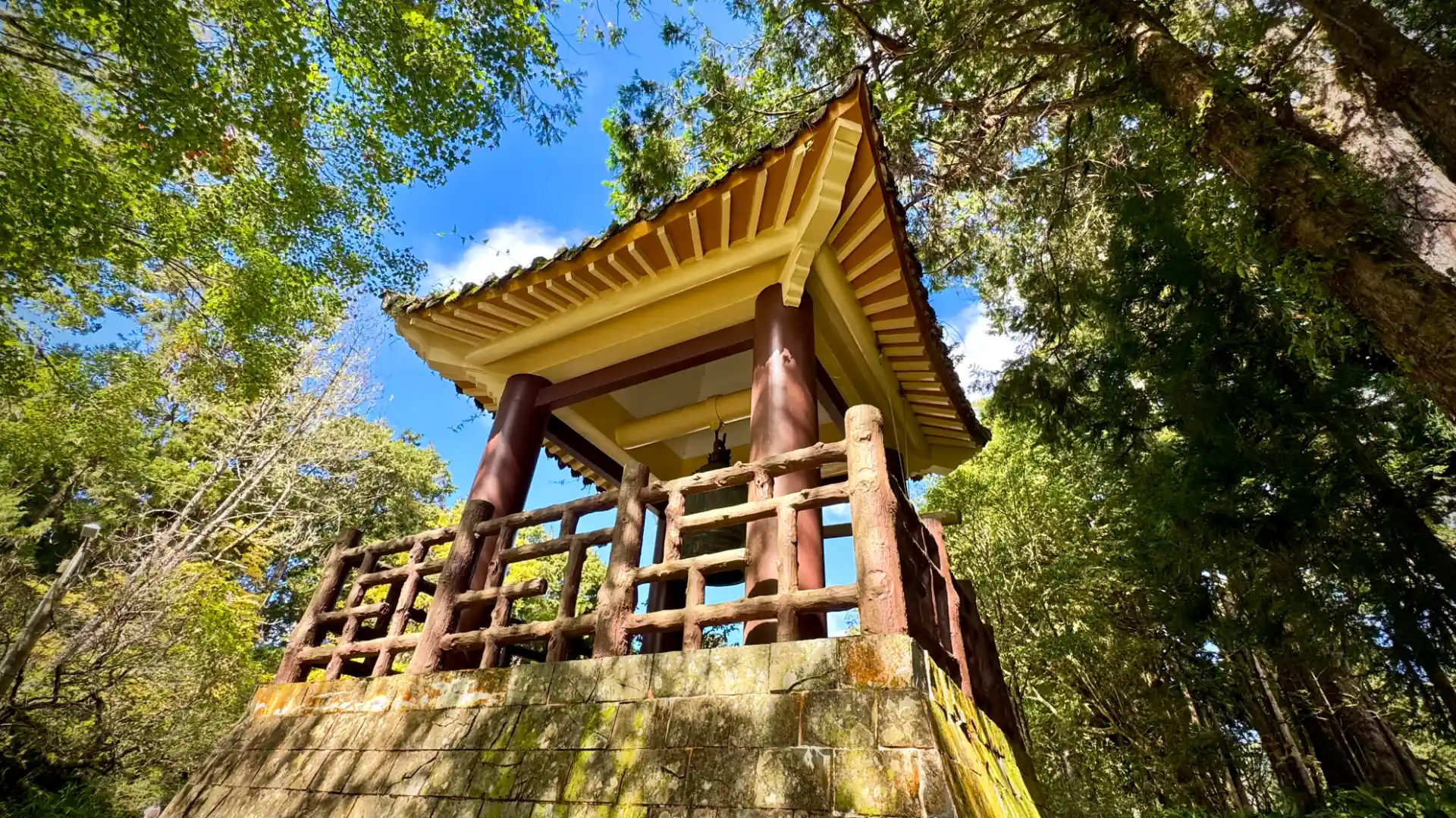
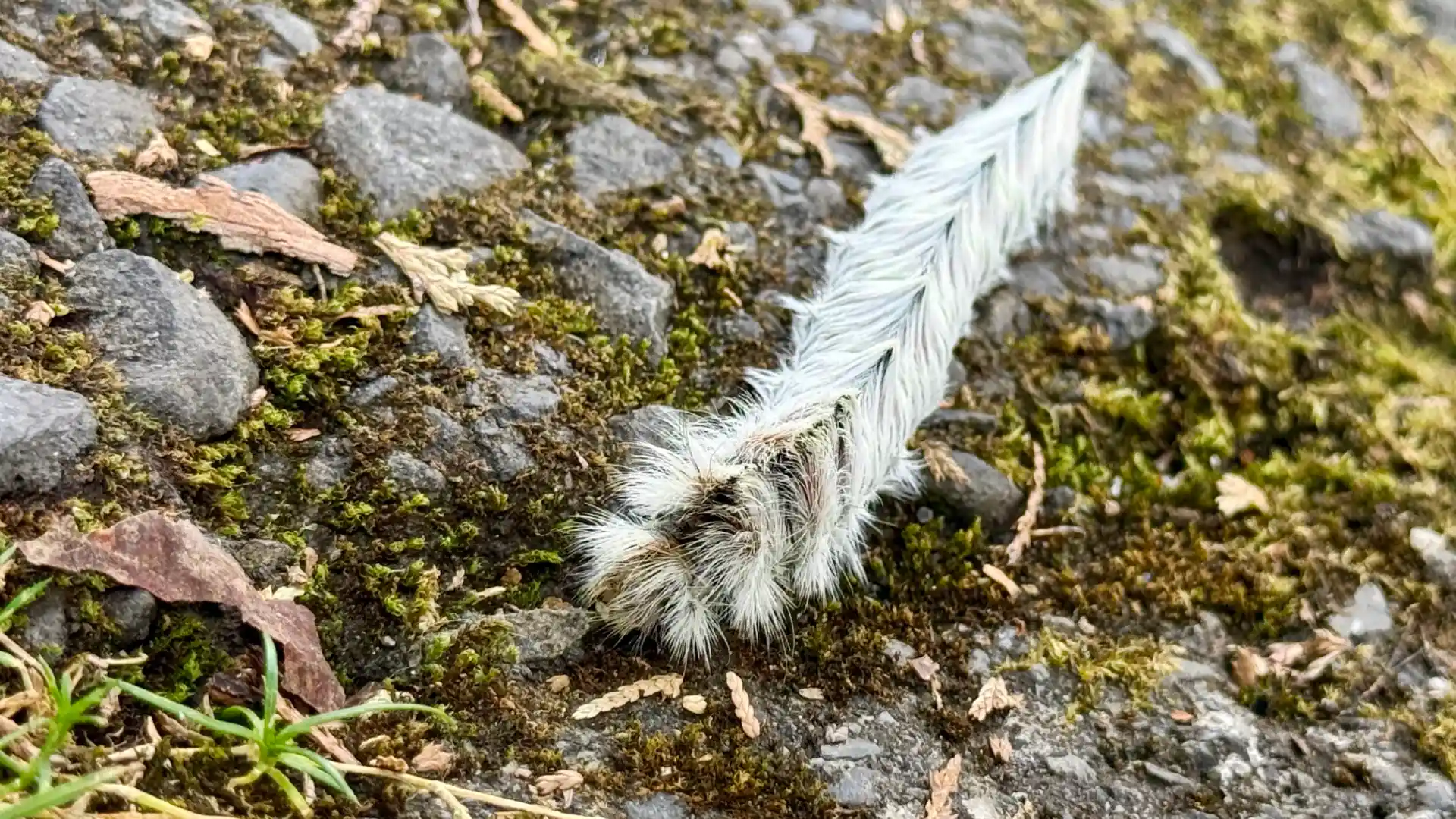
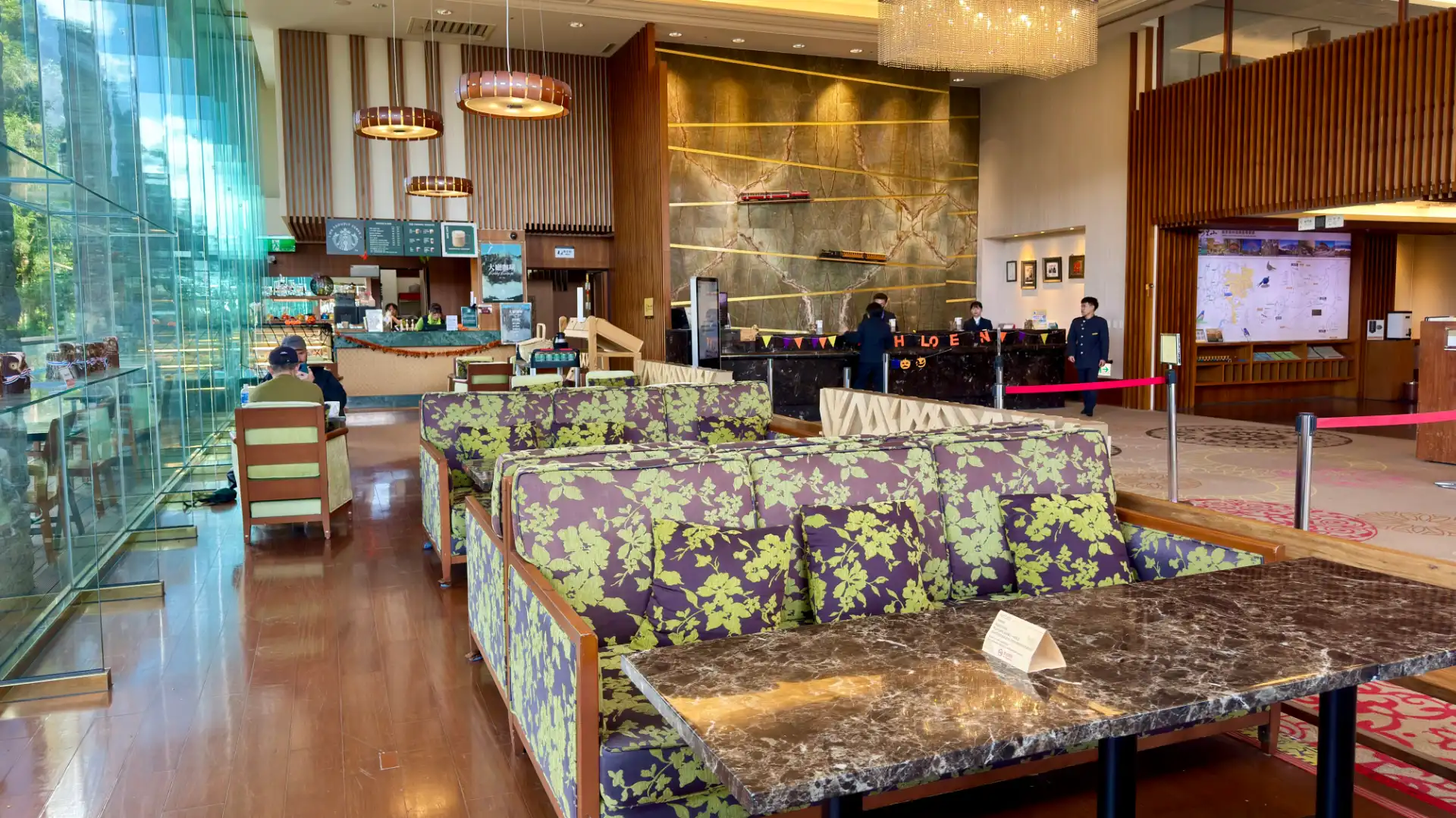
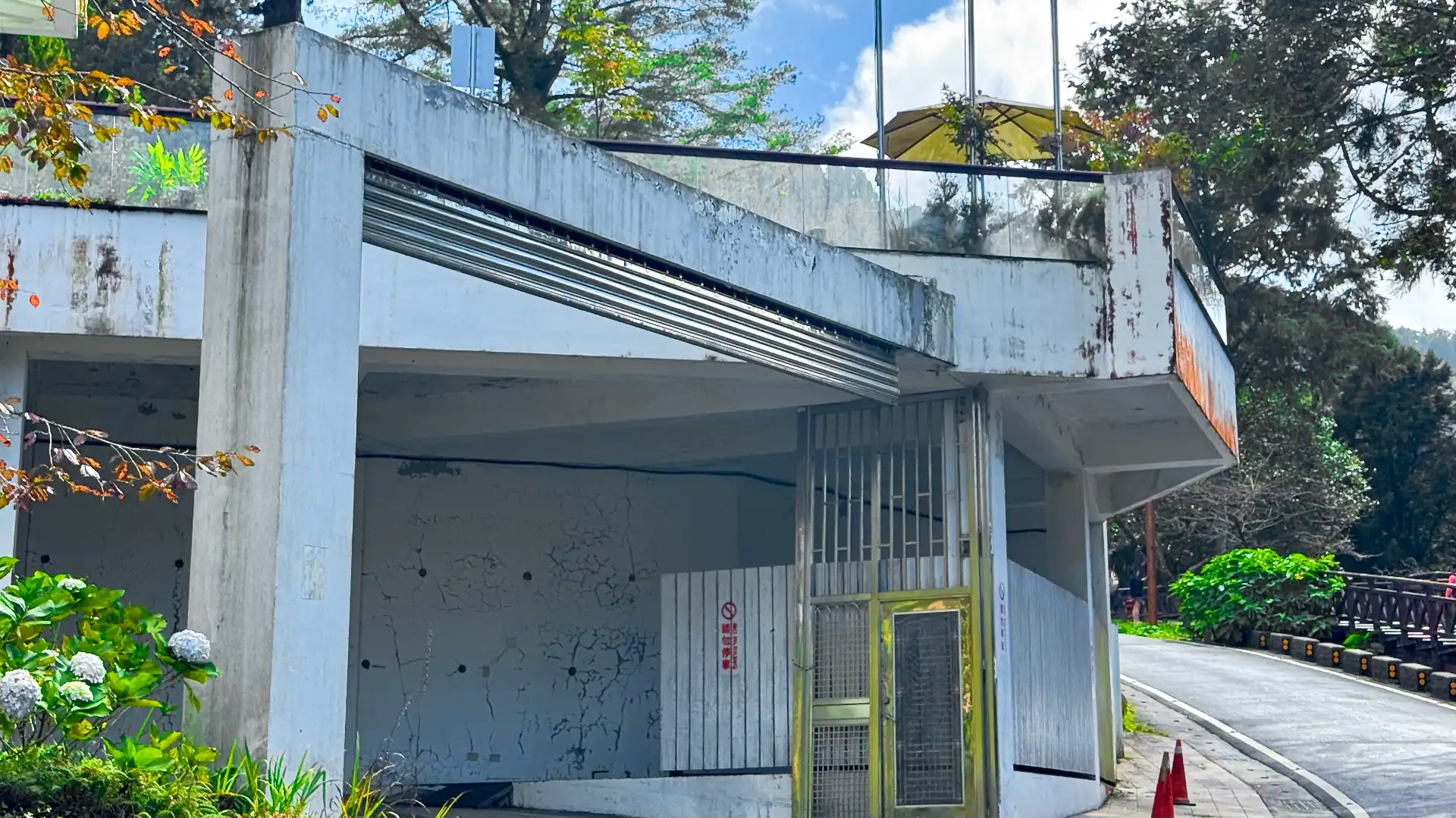
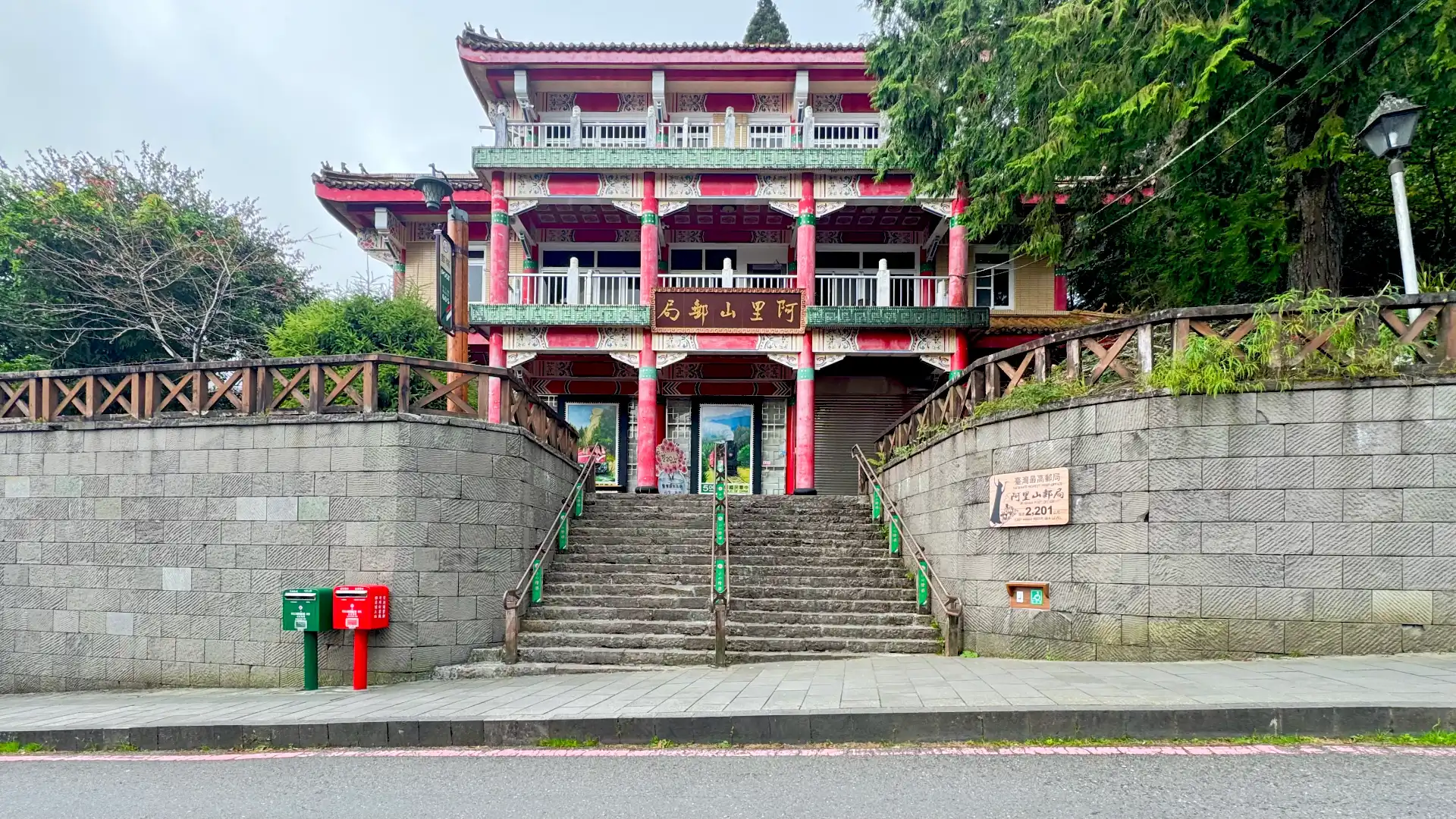
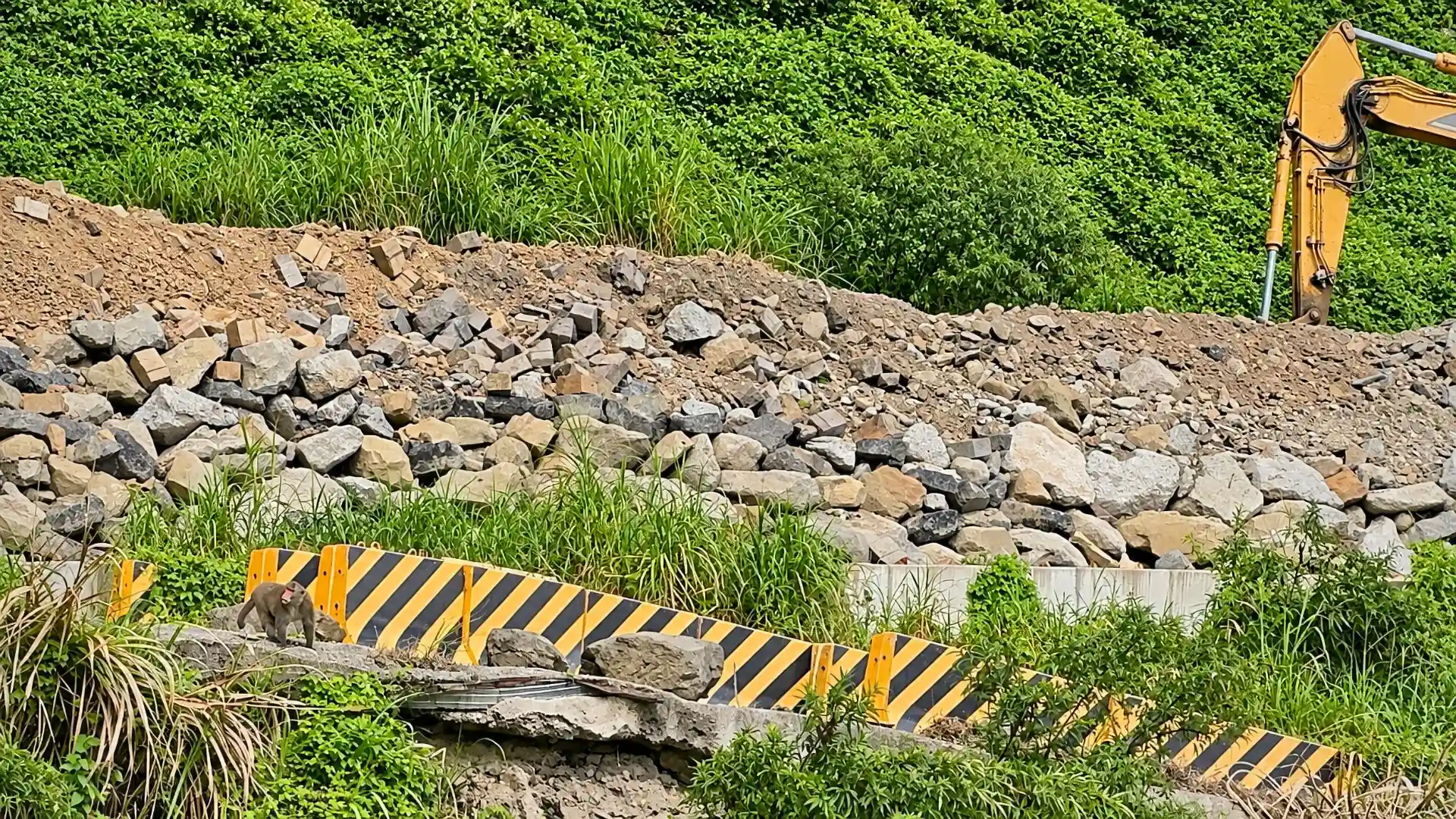
We continued uphill. It’s not obvious, but red-and-blue indigenous patterns are visible on the platform at the upper-right.There were holes in the boardwalk to accommodate existing trees.This is a three-generation tree, where the 2nd and 3rd generations grew out of the 1st. They range in age from 900 to 1,500 years old.There were a few abandoned buildings amongst the trees.We happened across the Alishan Museum, built during the Japanese Era, in 1935.This monument was also built by the Japanese, in 1935. Named Pagoda of the Tree Spirit, it was built to remember 77 loggers (Japanese and Taiwanese) who died on the job, and to “placate the spirits of the 100,000 trees that had been felled”.We also came across a Japanese bell tower……And a fuzzy white caterpillar (my first time seeing one of these).We had lunch at Alishan Hotel. At the time we researched accommodation for our trip, it was charging NT$14,000 (NZ$700) per night……Which would’ve surprised me had I not been inside, because parts of the exterior looked borderline abandoned.On reaching Alishan Station, I noticed Taiwan’s highest post office (2,201m ASL). But it was Sunday so it was closed.On the downhill drive, we saw a lone monkey (at bottom-left). Not quite as cool as the Mikado pheasant, but still, a monkey!
An excellent weekend
My partner was working in Taipei the next day, so I dropped him off at the Chiayi High Speed Rail Station at around 7pm. From there, it was a 90-minute freeway drive back to Kaohsiung. This was my first time driving a car solo in Taiwan, and everything went fine.
On returning the rental, I had to pay a gas fee of NT$3.1 (NZ$0.16) per kilometer.
(Rental cars in Taiwan come with a fuel card so you don’t pay directly for gas; instead you use the fuel card to buy gas, then pay a per-kilometer fee later. This seems bizarre to me, and unfair for anyone renting a hybrid, but oh well.)
Gas fee aside, it was an excellent weekend.
Sun Moon Lake is now my second-favorite spot in Taiwan.